Physical Address
304 North Cardinal St.
Dorchester Center, MA 02124
Physical Address
304 North Cardinal St.
Dorchester Center, MA 02124

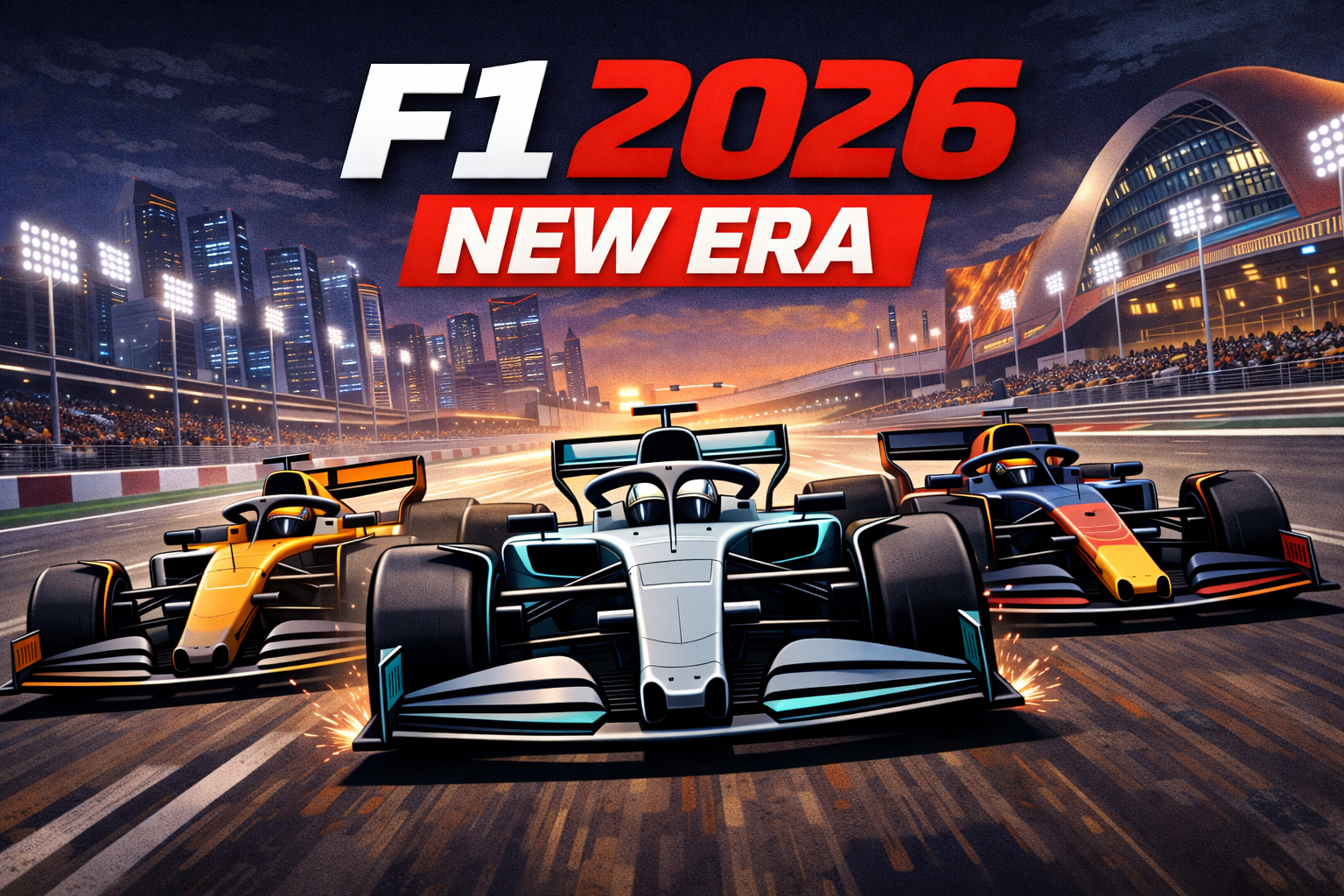
The 2026 Formula 1 season marks the start of a new era, with radically different technical regulations, a reshaped driver market and strategic shifts at top teams like McLaren, Ferrari, Mercedes and Red Bull setting the stage for one of the most anticipated campaigns in modern F1.
The 2026 Formula 1 season is widely seen as the biggest reset since the hybrid era began in 2014, combining a complete overhaul of the technical regulations with a new power unit formula and a more aggressive sustainability roadmap. The FIA’s 2026 ruleset targets lighter, more agile cars, a near 50/50 split between internal combustion and electric power, and fully sustainable fuels, all while trying to improve wheel‑to‑wheel racing.
For fans and teams alike, this means that the competitive order established in 2025 is not guaranteed to carry over. Organisations that have built long‑term projects – such as McLaren around champions like Lando Norris, or Red Bull around Max Verstappen – must now prove they can interpret a fresh regulations book better than aggressive challengers like Ferrari, Mercedes, Williams and Haas. The off‑season between 2025 and 2026 has therefore been less about headlines and more about quiet, data‑driven preparation.
At the heart of the 2026 Formula 1 regulations is a new chassis and power unit philosophy designed to make cars smaller, lighter and more efficient without sacrificing speed or spectacle. The new cars are set to be around 30 kg lighter than their predecessors, with trimmed dimensions and reduced aerodynamic drag to improve agility and reduce the “cruise and save” racing feel of recent years.
On the power unit side, the headline change is a far more electrified hybrid system. The internal combustion engine output is reduced compared to current levels, while the MGU‑K’s contribution increases significantly, pushing the balance towards roughly equal power from combustion and electric components. This shift will change how drivers like Oscar Piastri, Charles Leclerc, George Russell and others manage deployment, harvesting and race strategy over a grand prix distance.
Another defining feature of the F1 2026 rulebook is the introduction of active aerodynamics and the departure from the traditional DRS system fans have known since 2011. From 2026, cars will use moveable front and rear wings to switch between high‑downforce “cornering” modes and low‑drag “straight‑line” modes, controlled in specific zones rather than via a simple rear‑wing flap.
This means drivers will have to think more strategically about how they position the car in different phases of the lap, combining battery deployment and aero modes. Overtaking will rely on a mix of energy management, “attack” modes and car placement, ideally rewarding drivers with the racecraft of a Lewis Hamilton or Fernando Alonso, rather than purely DRS train dynamics. For fans, this should make the racing in 2026 feel different not only in pace but also in tactical depth.
The 2026 power unit regulations have attracted a record roster of manufacturers, giving the grid a more diverse technological base than at any time in the hybrid era. Established names remain, but the balance of power between works teams and customer outfits could change significantly as the new formula beds in.
Teams aligned with strong factory engine programmes – such as Red Bull, Mercedes and Ferrari – will try to leverage close integration between chassis and power unit, while customer teams like Williams, Haas and Aston Martin will look to extract value from more mature, plug‑and‑play solutions. The off‑season has therefore been dominated by dyno running, simulation work and correlation checks, rather than public statements or driver‑market shocks.
One of the striking aspects of the 2025–2026 off‑season has been how relatively calm the driver market has appeared on the surface. Many top teams moved early to secure continuity: Mercedes locked in George Russell and rising star Andrea Kimi Antonelli, while Haas committed long‑term to Oliver Bearman and Esteban Ocon as the core of its new‑look project.
Williams built around the experience of Alexander Albon and the race‑winning pedigree of Carlos Sainz, while Ferrari continued with the high‑profile pairing of Lewis Hamilton and Charles Leclerc. Rather than headline‑grabbing swaps, the 2025–2026 break has been about contract options, escape clauses and alignment with 2026 performance expectations.
After the intense title battles of 2024 and 2025, McLaren and Red Bull head into 2026 carrying both momentum and pressure. McLaren’s pairing of Lando Norris and Oscar Piastri has become one of the most effective line‑ups on the grid, combining consistency, qualifying pace and strategic sharpness.
Red Bull, structured around the relentless speed of Max Verstappen, has spent the off‑season balancing optimisation of its final 2025 package with committing resources to the 2026 concept. For both teams, the question isn’t whether they will be competitive, but whether their interpretation of the new rules maintains an edge over an improved Ferrari, a resurgent Mercedes, and ambitious challengers like Williams and Aston Martin.
For Ferrari, the 2026 season is another chance to convert a strong driver pairing into a sustained title challenge. With Lewis Hamilton bringing vast experience and technical feedback, and Charles Leclerc providing raw qualifying speed, the Scuderia’s off‑season work has focused on ironing out operational weaknesses and improving tyre management under varied conditions.
Mercedes, meanwhile, is entering 2026 with a clear long‑term vision: build a new winning cycle around George Russell and Kimi Antonelli. Their off‑season has been characterised by an intense focus on simulation tools, correlation between wind tunnel and track, and integration of the new power unit package. The 2026 car will show whether their conservative 2025 development approach was the right call in view of the reset.
In the midfield, the 2026 off‑season has been about deciding whether to take big conceptual risks or to pursue a more incremental evolution into the new rule cycle. Williams has invested heavily in aerodynamics and simulation, hoping that the combination of Alexander Albon and Carlos Sainz can turn a promising 2025 into consistent top‑six contention in 2026.
Haas has leaned into youth and long‑term upside, building around Oliver Bearman and Esteban Ocon, and using the off‑season to strengthen its technical structure and correlation with suppliers. Aston Martin continues to blend the experience of Fernando Alonso with long‑term investment in facilities, while Alpine evaluates how best to support drivers like Pierre Gasly and Franco Colapinto in a tighter, more efficiency‑focused regulations era.
Beyond the visible elements of the 2026 Formula 1 cars, much of the competitive difference will come from how effectively teams use data, simulation and race‑weekend decision making. With active aero, more complex hybrid deployment and multiple “modes” to manage, strategy groups will face a more multi‑dimensional optimisation problem every lap.
This off‑season has therefore been packed with correlation work between CFD, wind tunnel, hardware‑in‑the‑loop simulators and driver‑in‑the‑loop sessions for racers like Lando Norris, Oscar Piastri, Max Verstappen, Lewis Hamilton and Charles Leclerc. Teams that can translate this digital preparation into predictable on‑track behaviour will gain a crucial early‑season edge in the 2026 campaign.
When the 2026 season begins, the opening rounds will answer several key questions that have been building all off‑season. Fans should pay close attention to which teams manage to keep battery deployment strong all the way down the straights, and which cars can switch between active aero modes without compromising stability on corner entry.
The early races will also reveal whether the new rules successfully reduce dirty‑air sensitivity and enable closer following through medium‑speed sections. The way drivers such as George Russell, Kimi Antonelli, Oliver Bearman and Isack Hadjar attack and defend using energy and aero modes will be a key indicator of how successful the 2026 concept is at improving racing.
The 2026 Formula 1 season will not just be about raw lap times; it will be defined by overlapping storylines. Can McLaren and Lando Norris defend their hard‑won position at the top under a new ruleset? Will Max Verstappen and Red Bull reassert dominance in a more electrified era? Can Ferrari finally convert potential into a sustained title campaign with Lewis Hamilton and Charles Leclerc at the helm?
At the same time, the progress of projects at Mercedes, Williams, Haas, Aston Martin and Alpine will define the shape of the midfield and determine which teams become the next consistent podium threats. Young talents like Andrea Kimi Antonelli, Oliver Bearman, Franco Colapinto and Gabriel Bortoleto will be under the spotlight as they adapt to machinery that demands even more precision and energy management.
The off‑season between 2025 and 2026 has been less about dramatic headlines and more about methodical preparation for a reset that will define the next generation of Formula 1. With new regulations, a transformed power unit package, active aero, and an evolved driver and team landscape, the 2026 Formula 1 season is poised to reshape the competitive order and test every organisation’s ability to innovate under pressure.
For fans who follow the sport beyond race weekends, 2026 offers a rare chance to see how concepts discussed in technical briefings, regulation documents and simulator sessions translate into on‑track performance. From the first laps of pre‑season running to the title decider, the stories of Oscar Piastri, Lando Norris, Max Verstappen, Lewis Hamilton, Charles Leclerc and the next wave of F1 stars will unfold against the backdrop of this new rulebook. For in‑depth analysis, data‑driven insights and race‑by‑race coverage of the 2026 Formula 1 World Championship, fans can follow every development all season long on RukiF1.

