

NEXT RACE
Loading…
starts in
—
Your Time
Track Time
local time
“We are racers. We have always been racers. And we will be again.” – Frank Williams
Williams are Formula 1’s most complicated love story.
Seven Constructors’ Championships, sixteen seasons with at least one race win, a heritage so rich it borders on mythological – and then a long, painful decline that turned one of the sport’s great names into a byword for struggle.
The recovery has been slow, deliberate, and occasionally agonising to watch for anyone who remembers what Williams once represented. But it is real. Dorilton Capital’s acquisition in 2020 provided financial stability. A restructured technical operation has produced cars that are no longer simply making up the numbers. And the arrival of Carlos Sainz in 2026 – a race winner, a Ferrari alumnus, a driver who could have gone anywhere – signals that the outside world has noticed the trajectory is pointing in the right direction.
Williams aren’t back yet. But for the first time in a long time, back feels genuinely possible.
Frank Williams founded the team in 1977 after an earlier, less successful Formula 1 venture, and the story of what he built from almost nothing remains one of the sport’s most remarkable personal narratives. Operating from modest facilities in Oxfordshire with a clear-eyed technical vision and an absolute refusal to accept limitations, Williams grew into a dominant force through the 1980s and 1990s that won championships with a consistency that only Ferrari could match across that era.
The drivers who carried the Williams name during its peak years constitute a list that reads like a Formula 1 hall of fame. Alan Jones, Keke Rosberg, Nelson Piquet, Nigel Mansell, Alain Prost, Damon Hill, Jacques Villeneuve – seven drivers’ championships claimed between 1980 and 1997. The FW14B of 1992, driven by Nigel Mansell to one of the most dominant title wins in history, is widely considered one of the greatest Formula 1 cars ever built.
The 1994 season brought the sport’s darkest weekend. Ayrton Senna, in a Williams, died at Tamburello corner during the San Marino Grand Prix. The impact on the team – and on Formula 1 as a whole – was profound and lasting. Williams continued to compete and win, but something shifted in the sport’s relationship with speed and danger that weekend that permanently altered the context in which everything else happened.
The decline began gradually after 1997 and accelerated through the 2000s as the sport’s financial dynamics shifted toward manufacturer-backed operations that Williams, as an independent, could not match. A series of increasingly difficult seasons, interrupted only occasionally by flashes of the old competitiveness, culminated in a 2019 campaign where the car arrived late to testing and spent much of the season at the back of the grid. Frank Williams stepped back from the business in 2012, and his daughter Claire served as deputy team principal before the Dorilton sale in 2020. Frank Williams died in November 2021, closing a chapter that the sport will not see repeated.
Williams matter because they are the standard bearer for what an independent constructor can achieve in Formula 1. Their history proves that you don’t need a manufacturer’s budget or a billionaire’s cheque book to win championships – you need intelligence, commitment, and the right people making the right decisions at the right time. That proof matters in a sport that has become increasingly dominated by factory-backed operations.
They also carry an emotional weight that no other team quite replicates. Supporting Williams has always meant supporting something beyond results – a set of values about how racing should be done that Frank Williams embodied personally, and the team has tried to maintain institutionally. The fanbase that stayed through the difficult years did so because of what the name represents, not what the car was capable of.
Williams, at their current stage of development, race with a pragmatism that reflects where they are in the rebuild. The approach under James Vowles has been to establish solid operational foundations before chasing performance – pit stop reliability, strategic coherence, point-scoring consistency. Results have improved incrementally but meaningfully, and the car has developed from genuinely uncompetitive to capable of troubling the midfield on circuits that suit its characteristics.
Sainz’s arrival changes the dynamic considerably. He is a driver who extracts more from machinery than the machinery sometimes deserves, who pushes technical development with the kind of specific, detailed feedback that accelerates a car’s improvement trajectory. Alex Albon has been doing exactly that for several seasons – his contribution to Williams’s technical development has been consistently undervalued by observers focused on results rather than process. The two of them together represent a development pairing that most teams outside the top three would envy.
James Vowles joined as Team Principal in early 2023 from Mercedes, where he had served as Chief Strategist – the architect of much of the Silver Arrows’ strategic excellence during the dominant years. His arrival represented Williams’s most significant leadership appointment in decades, and his impact has been visible in the operational discipline and cultural shift the team has undergone since.
Vowles has been transparent about the scale of the rebuild required and realistic about the timeline involved. That honesty – unusual in a sport where optimism is the default public position – has earned him credibility with both the fanbase and the paddock. He understands what a winning team looks like from the inside, and he is methodically building the structures that Williams currently lacks.
Carlos Sainz and Alex Albon is a pairing that would have seemed improbable three years ago and feels entirely logical now. Sainz brings race-winning experience, Ferrari-level technical standards, and the credibility that attracts further investment and talent to a project. His decision to join Williams was a statement of belief in the direction Vowles is taking the team – a driver of his calibre makes that choice with open eyes.
Albon has been Williams’s most important asset through the difficult seasons, consistently outperforming the car and providing the technical leadership that kept the development programme moving forward when results provided little encouragement. His retention alongside Sainz reflects the team’s recognition of what he has contributed and what he continues to offer.
The dynamic between them should be productive. Both are technically intelligent, both are racers rather than politicians, and both have strong enough characters to push each other without the relationship becoming destructive.
Williams enter 2026 at the most interesting point in their recent history. The infrastructure investment is ongoing, the leadership is stable and credible, and the driver lineup is the strongest they have assembled in decades. The new regulations provide an opportunity that Vowles and his technical team have been preparing for with the kind of methodical attention that characterises everything Mercedes-trained personnel bring to their work.
A return to regular points finishes is the minimum expectation. A podium would be celebrated as a genuine milestone. Anything beyond that in 2026 would suggest the timeline is accelerating in ways that even the most optimistic Williams supporter hasn’t quite dared to articulate yet.
Frank Williams built this team on the belief that persistence and intelligence could overcome almost any disadvantage. The people running it now carry that belief forward. The sport is watching to see if they can prove it again.
At the British Grand Prix on 2026-07-05, Carlos Sainz finished P17 and Alexander Albon finished P21. No constructor points were scored.
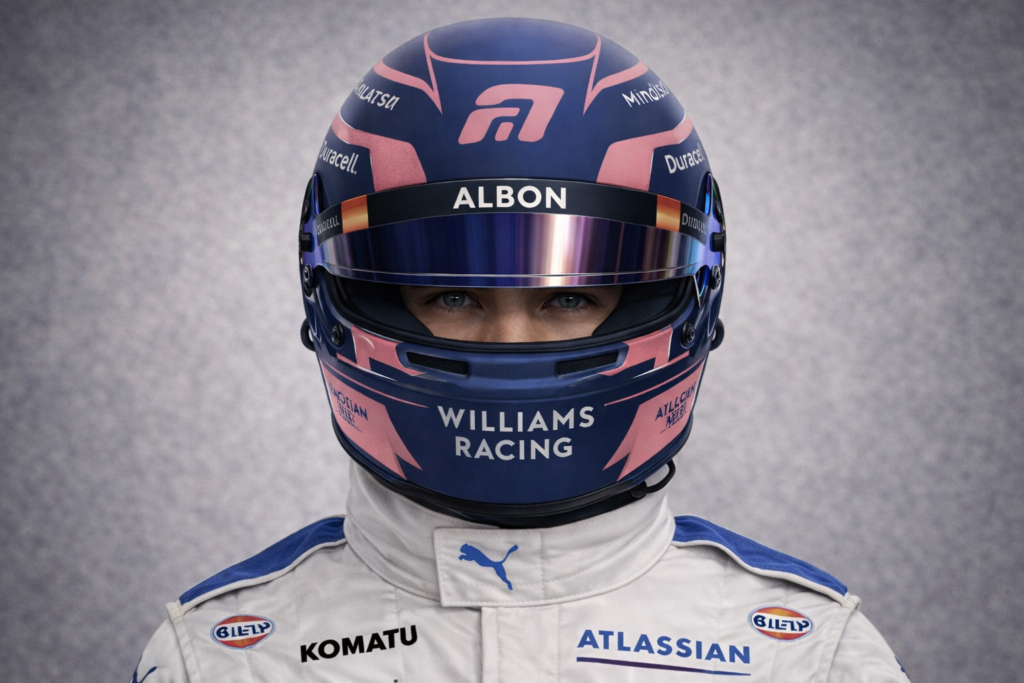
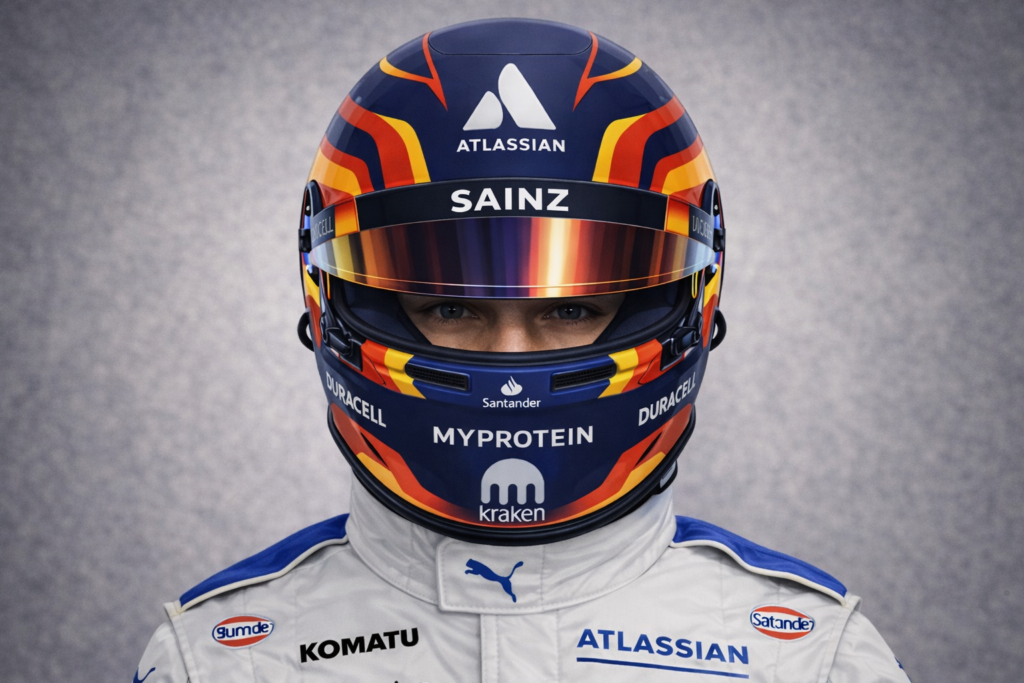
Williams Racing’s 2026 driver lineup consists of Alexander Albon, carrying car number 23, and Carlos Sainz, carrying car number 55.
Williams Racing’s most recent race win came at the 2012 Spanish Grand Prix, where Pastor Maldonado took victory. That remains the team’s last Formula 1 win to date.
James Vowles is the team principal of Williams Racing.
Williams Racing is based in Grove, United Kingdom.
Williams Racing uses a Mercedes power unit in the 2026 Formula 1 season.
Williams Racing’s 2026 car is designated the FW48.
Williams Racing made its first Formula 1 entry in 1978.
At the British Grand Prix on 5 July 2026, Carlos Sainz finished in 17th place and Alexander Albon finished in 21st place.
In recent history, Williams race wins have been taken by Pastor Maldonado, Juan Pablo Montoya, and Ralf Schumacher. Montoya won the 2004 Brazilian Grand Prix and the 2003 German Grand Prix, Schumacher won the 2003 French and European Grands Prix, and Maldonado won the 2012 Spanish Grand Prix.