
NEXT RACE
Loading…
starts in
—
Your Time
Track Time
local time
“I don’t think about the past. I think about what’s next.” – Max Verstappen
Red Bull Racing are the most disruptive force Formula 1 has produced in the modern era. A drinks company that bought a struggling midfield team in 2005 and turned it into a championship dynasty – twice – is either the sport’s greatest underdog story or its most audacious corporate takeover, depending on your perspective. Probably both.
In 2026, Oracle Red Bull Racing arrive at a regulation reset, carrying the world’s best driver, a technical rebuild following the departure of their architect, and the particular pressure of a team that has made winning look so routine that anything less now feels like failure.
The story begins not with Red Bull but with Stewart Grand Prix, founded by three-time world champion Jackie Stewart in 1997. Ford bought it, rebranded it as Jaguar Racing, spent several years and considerable money achieving very little, and eventually sold it to Red Bull for the nominal sum of one dollar in 2005. What followed was one of the sport’s more remarkable transformations.
The early Red Bull years were promising rather than dominant. Sebastian Vettel announced himself as extraordinary with a debut podium in the wet at Monza in 2008, and a first win at Monza in 2008, but the car wasn’t yet at the very front. That changed in 2009, when a new aerodynamic philosophy began to take shape under Adrian Newey – widely regarded as the greatest Formula 1 car designer who has ever lived.
From 2010 to 2013, Red Bull won four consecutive Constructors’ and Drivers’ Championships. Vettel’s 2011 season was a masterclass in controlled domination. The 2013 campaign, where Vettel won nine consecutive races to close the season, was the kind of performance that redefines benchmarks. Then the turbo-hybrid era arrived, Mercedes obliterated everyone, and Red Bull spent several years being very fast but not quite fast enough.
The second coming arrived with Max Verstappen and Honda power. A disqualification-marred 2021 championship that went to the final lap of the final race. Then 2022 and 2023, where Verstappen and Red Bull didn’t so much win championships as administer them. The 2023 season – 21 wins from 22 races – was the most dominant single season in the sport’s history. Adrian Newey’s RB19 was essentially a cheat code.
Then the wheels began to complicate. Newey announced his departure. The RB20 was quick but not untouchable. Verstappen still won the 2024 title, but he had to fight for it in a way 2023 never required. The era of effortless dominance had an expiry date after all.
Red Bull matter because they proved that heritage is not a prerequisite for success in Formula 1. They arrived without history, without a famous factory, without decades of motorsport pedigree – and built a trophy cabinet that embarrasses teams who have been here since the beginning. That model – talent acquisition, creative culture, willingness to think differently – changed how the sport understands what a winning team actually needs.
They also brought something Formula 1 had been missing for years: genuine personality. The garage culture, the driver development programme that produced Vettel, Verstappen, and a generation of talent, the willingness to be irreverent in a sport that can take itself very seriously. Red Bull made winning look like it was actually enjoyable.
At their best, Red Bull operate with a fluency that makes racing look deceptively simple. Verstappen’s ability to manage tyres, control race pace, and deliver when it matters combines with a strategic operation that rarely makes elementary errors. The car tends to be exceptional in high-speed corners – Newey’s aerodynamic fingerprints, even now – and the team’s ability to read race situations and react quickly has been a consistent strength.
The 2026 car will be the first to be developed substantially without Newey’s direct oversight, which makes it one of the most technically intriguing machines on the grid. Whether his successors can maintain that aerodynamic edge is the question everyone in the paddock wants answering.
Christian Horner has been Team Principal since the team’s first race in 2005, making him one of the longest-serving principals in the modern paddock. His management of the team through multiple championship cycles, driver politics, and the inevitable turbulence of a high-pressure environment has been central to their sustained success. The 2024 off-season brought significant scrutiny and internal turbulence around Horner personally, but he emerged with his position intact.
Adrian Newey’s shadow looms large even in his absence. The technical leadership has been redistributed across Pierre Waché and a broader engineering group that must now prove it can innovate without its most famous creative force.
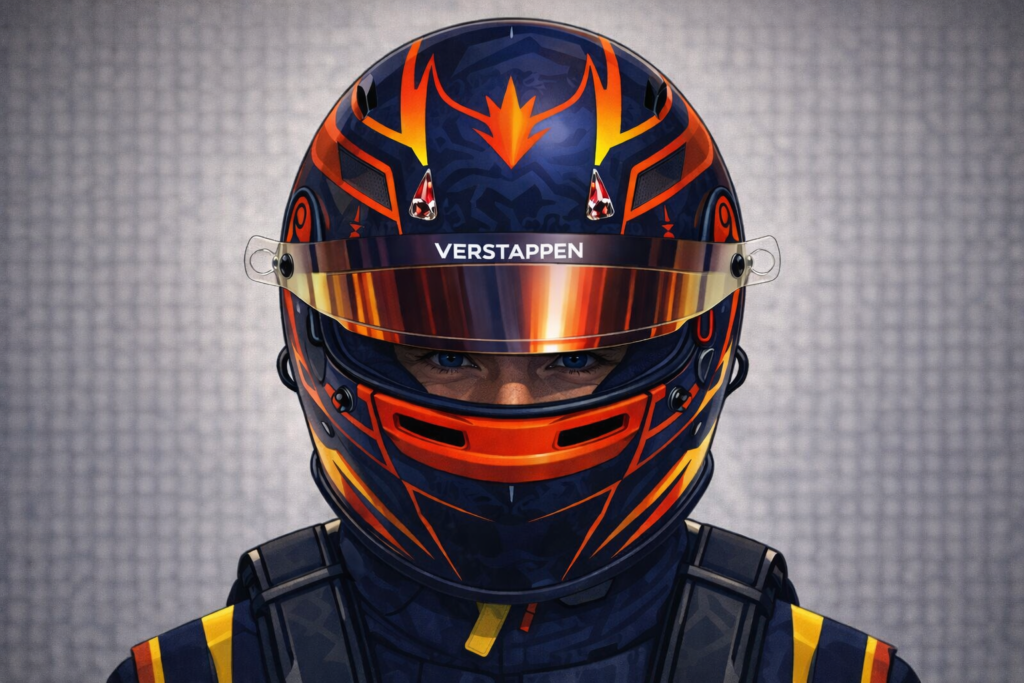
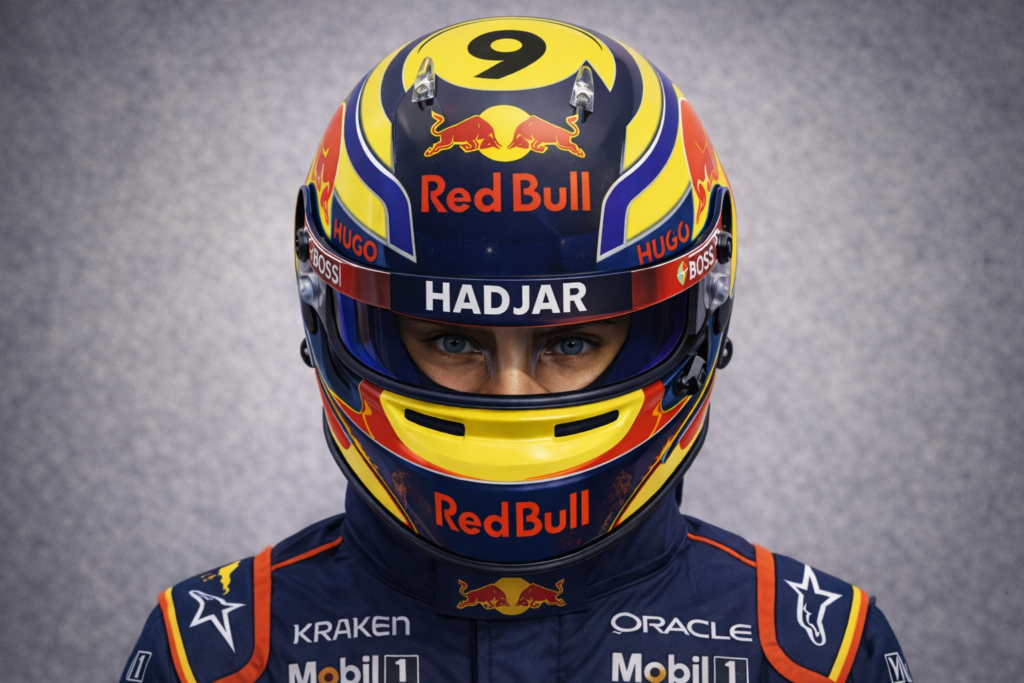
Max Verstappen and Isack Hadjar form one of the grid’s most asymmetric pairings. Verstappen is the four-time reigning world champion, widely considered the fastest driver on the grid, and at 28 still operating at the absolute peak of his abilities. Hadjar is a 20-year-old rookie who impressed thoroughly in his junior career and earned his Red Bull promotion through results rather than politics – he graduated from the RB junior team after demonstrating he was ready for the senior operation.
The dynamic is straightforward on paper: Verstappen leads, Hadjar learns. In practice, these situations are never quite that clean, particularly when the rookie in question is genuinely talented and has nothing to lose.
The 2026 regulation reset is simultaneously Red Bull’s greatest opportunity and their most significant test. New power unit rules mean the Honda partnership – rebranded and restructured as Red Bull Powertrains – enters territory where their engine advantage is less certain. The chassis side faces its first major design cycle without Newey at the drawing board in any meaningful sense.
Verstappen has made clear that his future at Red Bull is not unconditional. He wants a competitive car. If Red Bull can deliver one, he stays, and the dynasty continues. If they cannot, the most coveted driver in the paddock becomes available – and every team principal knows it.
Red Bull built an empire on defying expectations. In 2026, they need to do it again.
At the British Grand Prix on 2026-07-05, Isack Hadjar finished P5 and Max Verstappen finished P20. The team scored 10 constructor points.
Oracle Red Bull Racing’s 2026 driver lineup consists of Max Verstappen, carrying race number 3, and Isack Hadjar, carrying race number 6.
Oracle Red Bull Racing’s most recent race win was the 2025 Abu Dhabi Grand Prix, taken by Max Verstappen. Prior to that, Verstappen also won the 2025 Qatar, Las Vegas, United States, and Azerbaijan Grands Prix.
Laurent Mekies is the team principal of Oracle Red Bull Racing.
Oracle Red Bull Racing is based in Brackley, United Kingdom.
Oracle Red Bull Racing uses a Red Bull Ford power unit in the 2026 season.
The team competes with the RB22 chassis during the 2026 Formula 1 season.
Oracle Red Bull Racing made its Formula 1 debut in 2005.
At the British Grand Prix on 5 July 2026, Isack Hadjar finished in fifth place while Max Verstappen finished in twentieth place.