

NEXT RACE
Loading…
starts in
—
Your Time
Track Time
local time
“Ferrari is not just a team. It is a religion.” – Enzo Ferrari
No team in Formula 1 carries the weight that Ferrari carries. Not the history, not the expectation, not the pressure that comes with representing a nation’s identity as much as a racing organisation.
Scuderia Ferrari has competed in every single World Championship season since 1950 – a record of continuous presence that no other team comes close to matching. They are the sport’s permanent fixture, its emotional core, and depending on the year, either its greatest story or its most frustrating soap opera.
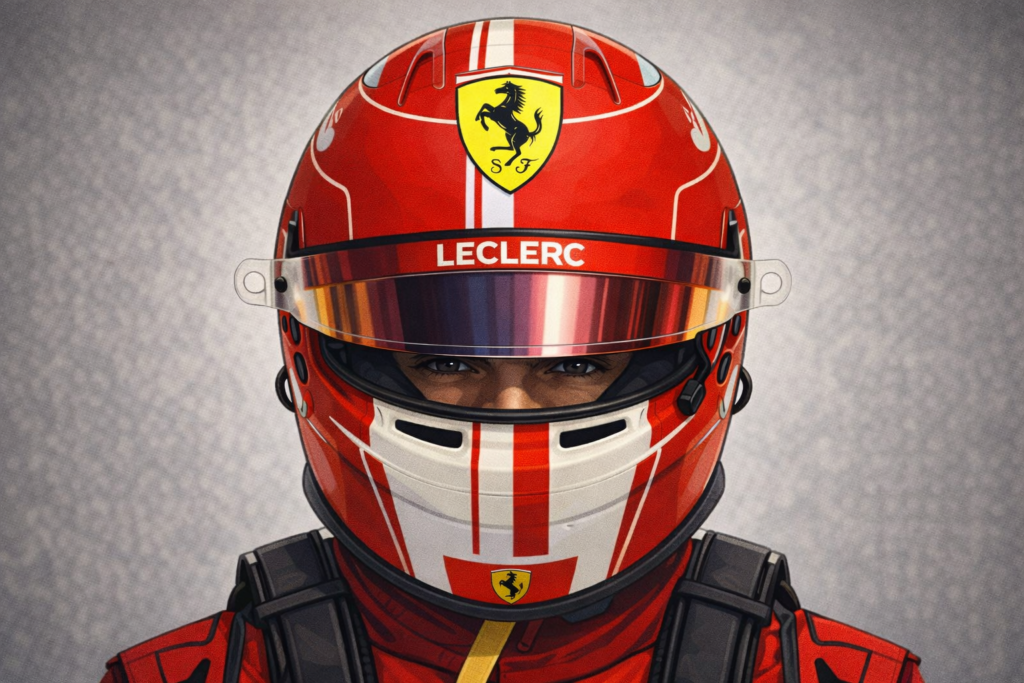
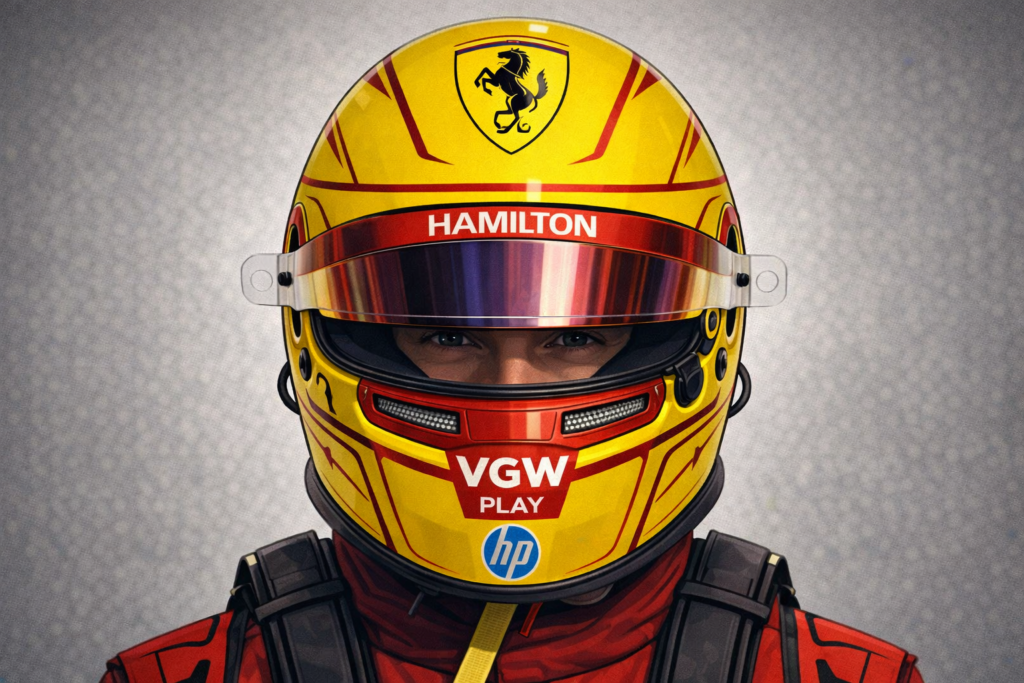
In 2026, with Lewis Hamilton finally in red alongside Charles Leclerc, Ferrari arrive at the new regulation era with a driver pairing that has no obvious weakness – and an entire fanbase holding its breath.
Ferrari’s origins are inseparable from the man who built them. Enzo Ferrari raced himself before founding the Scuderia in 1929, initially as an Alfa Romeo satellite team before breaking away to produce his own machinery. The Ferrari name appeared on a Formula 1 grid for the first time in 1950, and it’s never left.
The early decades produced genuine legends. Alberto Ascari delivered back-to-back championships in 1952 and 1953. John Surtees became the only man to win world titles on both two wheels and four, doing the latter in a Ferrari in 1964. Niki Lauda’s story – the near-fatal fire at the Nurburgring in 1976, the return six weeks later, the championship narrowly lost to James Hunt – became one of sport’s most extraordinary narratives, and Ferrari was at the centre of it.
The Schumacher era redefined the ceiling. Between 2000 and 2004, Michael Schumacher and Ferrari won five consecutive Drivers’ Championships and six consecutive Constructors’ titles. The combination of Schumacher’s obsessive preparation, Ross Brawn’s strategic genius, and Rory Byrne’s design brilliance produced the most dominant team Formula 1 had ever seen at that point. It was a period that set a benchmark Mercedes would eventually surpass – but only just.
The years since have been defined by near-misses, internal dysfunction, and the particular anguish of a team that regularly produces competitive machinery but finds ways to complicate the inevitable. Fernando Alonso’s years were brilliant but fractious. Sebastian Vettel came closest to ending the drought, finishing runner-up in both 2017 and 2018 before the relationship deteriorated. Charles Leclerc arrived in 2019 and immediately looked like the real thing – fast, emotionally intelligent, built for the long haul. The title, though, kept finding reasons to go elsewhere.
Ferrari matter in a way that transcends sport. The Tifosi – Ferrari’s global fanbase – don’t merely support a racing team. They maintain a relationship with it that involves genuine grief, genuine fury, and genuine joy in proportions that no rational observer could fully explain. When Ferrari wins, circuits erupt. When Ferrari collapses from the lead on strategy, the collective groan is audible from orbit.
For Formula 1 itself, Ferrari’s commercial value is immeasurable. Their presence guarantees a baseline level of passion and engagement that the sport relies on. A Ferrari that isn’t competitive is bad for the whole grid – even rival teams understand this implicitly.
Ferrari racing at their best is visually and emotionally spectacular. The SF-26 in Rosso Corsa through high-speed corners, Leclerc’s qualifying laps where he appears to find tenths from somewhere nobody else can locate, Hamilton’s race-craft threading through traffic with the kind of spatial intelligence that borders on supernatural – when it works, there is nothing better in the sport.
When it doesn’t work, Ferrari remain compulsive viewing for entirely different reasons. Strategy calls that defy explanation. Pit stop timing that invites forensic analysis. The sense, occasionally, that the weight of history is pressing down on the pitwall at precisely the wrong moment. Ferrari are never boring. Sometimes that’s a compliment.
Frédéric Vasseur took the reins as Team Principal in 2023, replacing Mattia Binotto after years of mounting frustration. Vasseur is direct, unflappable publicly, and brings a driver management background that has proved invaluable in handling two world-class egos without creating the kind of internal warfare that defined earlier Ferrari eras. His relationship with Leclerc is long-standing and built on genuine trust – which matters enormously when the season starts applying pressure.
On the technical side, Loic Serra and Enrico Gualtieri head the chassis and power unit operations respectively, overseeing a Ferrari technical structure that has been quietly but significantly rebuilt over recent seasons.
The Leclerc-Hamilton pairing is the most talked-about driver combination on the 2026 grid, and with good reason. Leclerc brings years of Ferrari-specific knowledge, deep technical fluency with the team’s development processes, and a qualifying pace that remains among the very best in the sport. Hamilton brings seven world championships, an unmatched race-craft education, and the somewhat uncomfortable motivation of a man who needs to prove that his Ferrari move wasn’t a romantic error.
The dynamic between them will be fascinating to observe. Both are fast enough to win. Both will want to be the number one. Vasseur’s job – keeping that tension productive rather than destructive – may be the most delicate management task in Formula 1 this season.
The 2026 regulations represent Ferrari’s most credible championship opportunity in over two decades. Their power unit programme has been rebuilt from the ground up following the token-limited struggles of the early hybrid era. The chassis department has been restructured. The strategic operations have been tightened, though Ferrari fans will be watching that particular area with the vigilance of people who have been hurt before.
Hamilton joined for a reason. Leclerc stayed for a reason. Both believed the project was ready. Whether Maranello can finally convert that belief into a championship – and end a drought stretching back to 2008 – is the question that will define this season and possibly the next several.
The ingredients are there. Ferrari have had ingredients before – what they need now is execution.
At the British Grand Prix on 2026-07-05, Charles Leclerc finished P1 and Lewis Hamilton finished P3. The team scored 40 constructor points.
Scuderia Ferrari HP’s 2026 driver lineup consists of Charles Leclerc, who carries car number 16, and Lewis Hamilton, who carries car number 44.
Scuderia Ferrari HP’s most recent race win was at the 2026 British Grand Prix on 2026-07-05, where Charles Leclerc took first place. Lewis Hamilton also finished on the podium in third position at that same race.
Scuderia Ferrari HP’s team principal is Frédéric Vasseur.
Scuderia Ferrari HP is based in Maranello, Italy.
Scuderia Ferrari HP competes in the 2026 Formula 1 season with the SF-26 chassis, which is powered by a Ferrari power unit.
Scuderia Ferrari HP first entered Formula 1 in 1950, making it one of the longest-standing teams in the sport.
In 2024, Scuderia Ferrari HP claimed three race victories: Charles Leclerc won the Italian Grand Prix and the United States Grand Prix, while Carlos Sainz won the Mexico City Grand Prix.
Yes, Lewis Hamilton won the 2026 Barcelona Grand Prix for Scuderia Ferrari HP.
Scuderia Ferrari HP uses a Ferrari power unit in the 2026 Formula 1 season.
At the most recent race, the 2026 British Grand Prix held on 2026-07-05, Scuderia Ferrari HP had a strong result with Charles Leclerc finishing first and Lewis Hamilton finishing third.