

NEXT RACE
Loading…
starts in
—
Your Time
Track Time
local time
“We never stop. We never give up. That’s the Mercedes way.” – Toto Wolff
There are teams in Formula 1, and then there is Mercedes.
For a decade, the Silver Arrows didn’t just win – they redefined what dominance looked like in modern motorsport.
Eight consecutive Constructors’ Championships between 2014 and 2021 is a number that still doesn’t quite feel real when you say it out loud. But records alone don’t tell the full story of what this team represents. Mercedes-AMG Petronas is a machine built on engineering obsession, relentless self-criticism, and a culture that treats finishing second as a problem requiring immediate explanation. In 2026, the dynasty is no longer the undisputed force it once was – but dismissing Mercedes as anything other than a genuine title threat would be a serious mistake.
Mercedes-Benz’s relationship with motorsport predates Formula 1 itself. The Silver Arrows nickname originates from the 1930s, when German racing cars stripped their white paint to meet weight limits, revealing bare aluminium beneath. That silver identity stuck, and the mythology around it grew for decades before the modern chapter even began.
The current works team was born from the ashes of Brawn GP – one of the sport’s great fairy tales – when Mercedes acquired the championship-winning operation ahead of the 2010 season. The early years were productive without being spectacular. Michael Schumacher returned from retirement, Nico Rosberg developed steadily, and the foundations were quietly being laid for something much larger.
Those foundations revealed themselves in 2014. When Formula 1 introduced the turbo-hybrid power unit regulations, Mercedes arrived better prepared than anyone. The W05 was in a different category to everything else on the grid, and the team proceeded to win seven consecutive Constructors’ Championships – a record that may never be broken. Lewis Hamilton claimed six Drivers’ titles during this period, with Nico Rosberg claiming one in 2016 before retiring, in one of the sport’s more stunning plot twists, literally the week after winning the championship.
The 2022 regulations reset hit Mercedes harder than expected. The W13 porpoised violently, the team finished third in the Constructors’ that year, and for the first time in nearly a decade, they were genuinely off the pace. It was uncomfortable viewing for a fanbase accustomed to Silver Arrow dominance. Recovery came gradually through 2023 and 2024, and by the time Lewis Hamilton made his seismic move to Ferrari for 2025, Mercedes had rebuilt enough to remain competitive – just no longer untouchable.
Mercedes matter because they set the standard against which everything else in Formula 1 is measured. Their engineering infrastructure, their data processing capabilities, their pit stop execution, their strategic precision – these aren’t just team strengths, they’re industry benchmarks. When other teams want to understand what best-in-class looks like operationally, they study Mercedes.
Beyond performance, they’ve shaped the sport’s commercial and cultural identity in the hybrid era in ways that extend well beyond race results. The Hamilton years turned Mercedes into a global brand that resonated far outside traditional motorsport audiences. That influence doesn’t disappear overnight.
Mercedes race with a controlled aggression that reflects the culture Toto Wolff has built. Strategy is rarely reckless but seldom passive either. They manage tyres intelligently, execute pit stops with mechanical precision, and tend to make their moves when the data tells them to rather than when emotion suggests it. When the car is right, there’s an inevitability to a Mercedes race weekend that other teams find deeply frustrating.
What’s changed post-dominance is that they now have to fight for it rather than simply administering it. That’s actually made them more interesting to watch – the occasional vulnerability adds tension that seven years of comfortable winning never provided.
Toto Wolff has been Team Principal and CEO since 2013, and his influence on this team cannot be overstated. He is simultaneously the strategist, the psychologist, the dealmaker, and the public face of the operation – a combination that is genuinely rare in any sport. His ability to maintain a winning culture through internal rivalries, regulatory upheaval, and the inevitable pressure of expectation has been the defining human element of the Mercedes era.
On the technical side, the departure of James Allison to a broader Motorsport role created a reshuffle, with Mike Elliott and, later, a restructured technical leadership group taking the reins. Mercedes have the depth to absorb those transitions in ways smaller teams simply cannot.
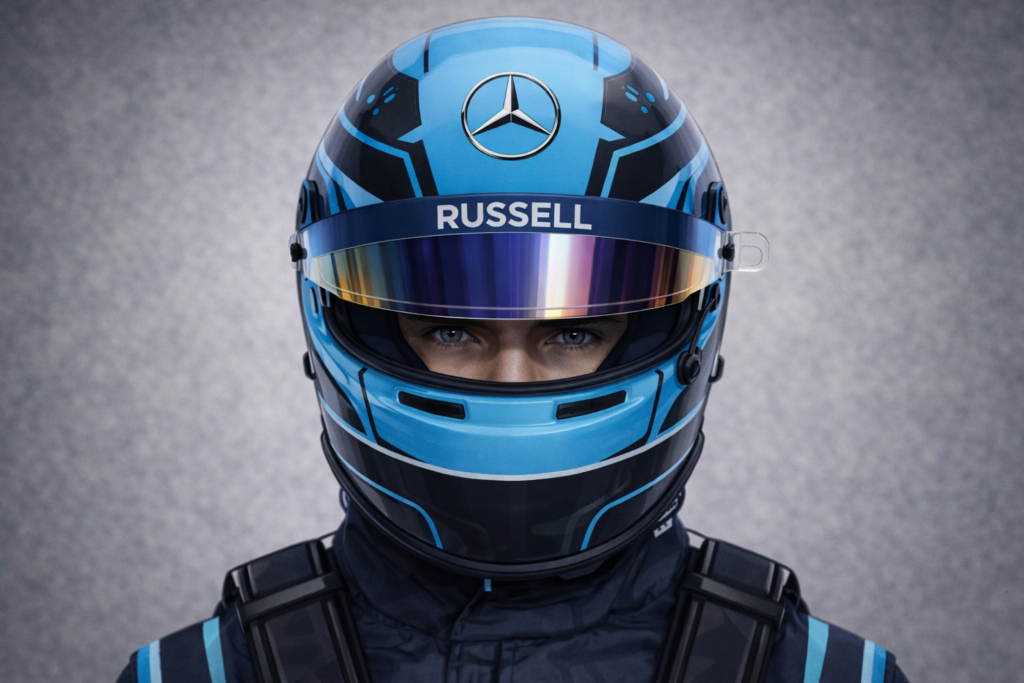
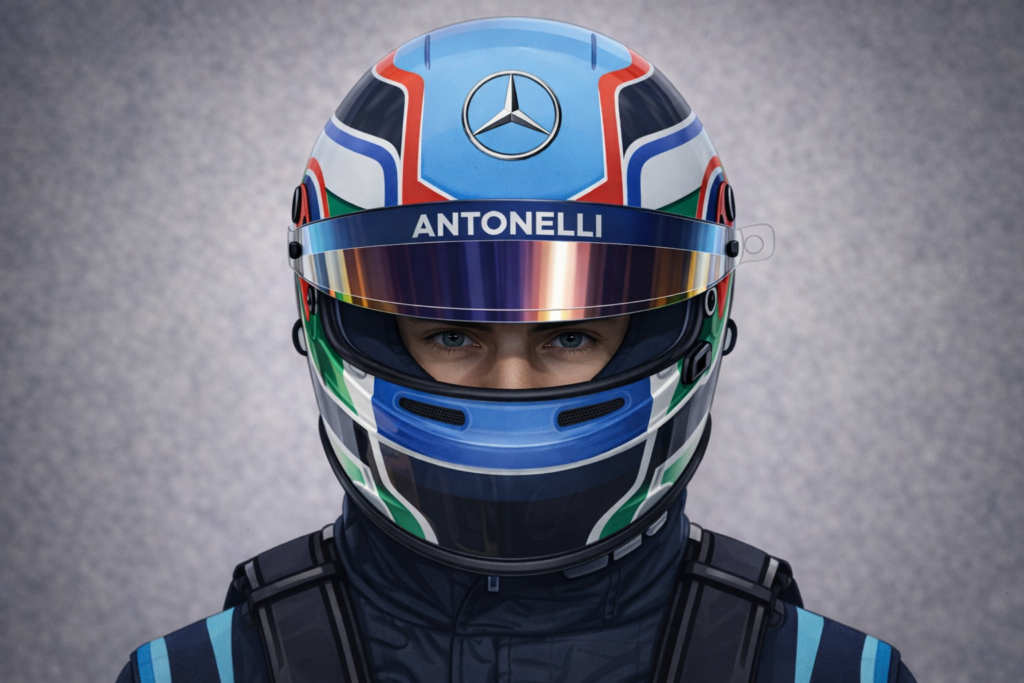
George Russell and Andrea Kimi Antonelli represent one of the more intriguing pairings on the 2026 grid. Russell is established, technically meticulous, and has been waiting patiently for a car capable of delivering a title challenge he clearly has the ability to pursue. Antonelli is nineteen, Italian, and carries the weight of being Lewis Hamilton’s chosen successor at the team – a burden that would flatten most people but appears to energise him.
The pairing is young, hungry, and unencumbered by the internal politics that complicated the Hamilton-Rosberg and Hamilton-Bottas years. Whether that translates into a genuine championship push depends heavily on what the W16 can actually deliver.
Mercedes enter 2026 at a crossroads that is more interesting than threatening.
The new power unit regulations – which they helped shape through years of lobbying for the hybrid formula – represent a genuine opportunity to reassert technical authority. Their engine division, Mercedes High Performance Powertrains in Brixworth, has been preparing for this regulation set for years.
If there’s any team capable of arriving at a new formula better prepared than the competition, history suggests it’s this one.
The dynasty may be paused. It isn’t finished.
At the Brazilian Grand Prix on 2026-11-08, George Russell finished P4 and Andrea Kimi Antonelli finished P5 (fastest lap). The team scored 22 constructor points.
George Russell (#63) and Kimi Antonelli (#12) drive for Mercedes-AMG Petronas in 2026. Russell is the senior driver, while Antonelli stepped up to the team as a teenager and has already taken four wins this season.
Mercedes’ most recent win came at the 2026 United States Grand Prix, taken by Kimi Antonelli. It was his fourth victory of the 2026 season, following wins in Spain, Italy and Belgium.
Toto Wolff is the team principal of Mercedes-AMG Petronas F1 Team. He’s held the role since 2013 and remains one of the most recognisable figures in the paddock.
Mercedes-AMG Petronas F1 Team is based in Brackley, United Kingdom. The factory sits in Northamptonshire, close to several other F1 operations.
Mercedes races the W17 in 2026. It’s powered by a Mercedes power unit, keeping the team fully in-house on both the chassis and engine side.
Mercedes first entered Formula 1 in 1970. The team’s modern works chapter began decades later but that 1970 entry marks the official start of their F1 history.
George Russell finished fourth and Kimi Antonelli fifth at the Brazilian Grand Prix on 8 November 2026. Both cars scored points but neither could break into the podium positions.