

NEXT RACE
Loading…
starts in
—
Your Time
Track Time
local time
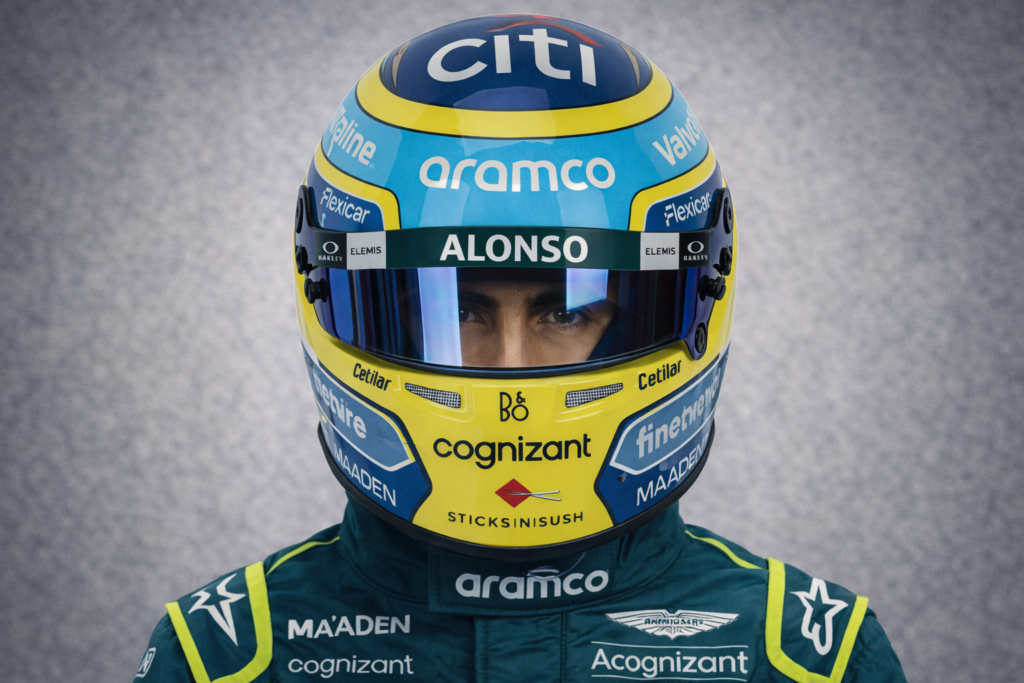
“I still have the hunger. I still have the passion. And I still believe I can win.” – Fernando Alonso
Aston Martin are Formula 1’s most ambitious renovation project.
Lawrence Stroll didn’t buy a struggling midfield team in 2018 because he needed a hobby – he bought it because he saw an undervalued asset with the right bones, then proceeded to spend the kind of money required to rebuild it from the ground up.
New factory, new wind tunnel, new personnel pipeline, new identity. The transformation from the modest Racing Point operation to the gleaming Aston Martin campus in Silverstone is visually striking and financially significant.
In 2026, with Fernando Alonso entering what may genuinely be the final chapter of the greatest career Formula 1 has produced, and Lance Stroll developing into a more complete driver than his early years suggested, the team arrives at a regulation reset with infrastructure that genuinely belongs at the front – and the pressure that comes with having spent enough money to justify expecting to be there.
The thread that connects Aston Martin to its origins runs through several identities and two decades of survival against the odds.
The Silverstone-based team began as Jordan Grand Prix in 1991, Eddie Jordan’s charismatic Irish operation that introduced Michael Schumacher to Formula 1 in a single unforgettable weekend before losing him to Benetton the following race. Jordan produced genuine results – Damon Hill’s emotional 1998 win in Belgium, Ralf Schumacher’s first victory – before financial pressure led to a sale to Midland Group in 2005.
What followed was a succession of ownership changes that would confuse anyone without a detailed timeline. Midland became Spyker, Spyker became Force India – and Force India, against considerable odds, became one of the midfield’s most effective operators.
Under Vijay Mallya’s ownership and with a tight, intelligent technical operation, Force India regularly finished fourth or fifth in the Constructors’ Championship on a fraction of the budget their rivals deployed. The team entered administration in 2018, was rescued by a Lawrence Stroll-led consortium, and rebranded as Racing Point.
The Aston Martin era began in 2021, coinciding with the arrival of Sebastian Vettel alongside Lance Stroll. Vettel’s four years at Ferrari had ended in disappointment, but his impact at Aston Martin was quietly significant – his experience, his engineering feedback, and his influence on team culture left an imprint that outlasted his 2022 retirement. Fernando Alonso arrived in 2023 and immediately delivered results that reminded everyone why, at any age, he remains one of the most complete operators the sport has ever produced.
Aston Martin matter because they represent a specific and increasingly rare Formula 1 model: a privately funded, genuinely independent constructor with serious ambitions.
Lawrence Stroll’s investment – reportedly over a billion pounds across the infrastructure rebuild alone – demonstrates a commitment level that most team owners, even wealthy ones, simply don’t match. That level of resource deployment changes what is possible.
They also matter because Fernando Alonso matters. His presence on any grid elevates it. His presence at a team with genuine championship aspirations creates the tantalising possibility that the sport’s most decorated driver without a title in the hybrid era might finally get the machinery to match his ability in the closing years of his career.
Aston Martin race with a strategic intelligence that reflects the experienced drivers they’ve built their recent identity around. Alonso, in particular, has turned the art of the undercut, the strategic overtake, and the defence of position into something approaching performance art.
He extracts from the car what others cannot, identifies opportunities before the pitwall does, and has the racecraft to capitalise when circumstances align.
The team’s weakness in recent seasons has been translating genuine pace in some conditions into consistent results across varied circuits. The AMR25 showed promising signs but also frustrating inconsistency – fast in one specification of corner, exposed in another.
The 2026 car, developed within a substantially upgraded facility, is the first genuine product of the full Aston Martin infrastructure investment. How it performs will answer questions that have been building for three years.
Adrian Newy serves as Team Principal and Managing Technical Partner for the 2026 season, taking over from Andy Cowell, who held the role through 2025 following Mike Krack’s departure. It’s a unique arrangement that combines both technical and operational leadership in a single figure, and reflects just how central Newey is to everything Aston Martin is building.
Newey’s arrival from Red Bull was the most significant personnel move the paddock has seen in years. His presence changes not just what Aston Martin can produce technically, but what the rest of the grid believes they might eventually become.
Fernando Alonso and Lance Stroll present one of the grid’s more layered dynamics.
Alonso at 44 is operating on a timeline that nobody – possibly including himself – can precisely define. What is clear is that he hasn’t diminished. His qualifying pace, his ability to find performance in unexpected places, and his sheer competitive intelligence remain at a level that drivers half his age cannot match. He is here because he believes this project can deliver a car capable of winning, and that belief is not irrational.
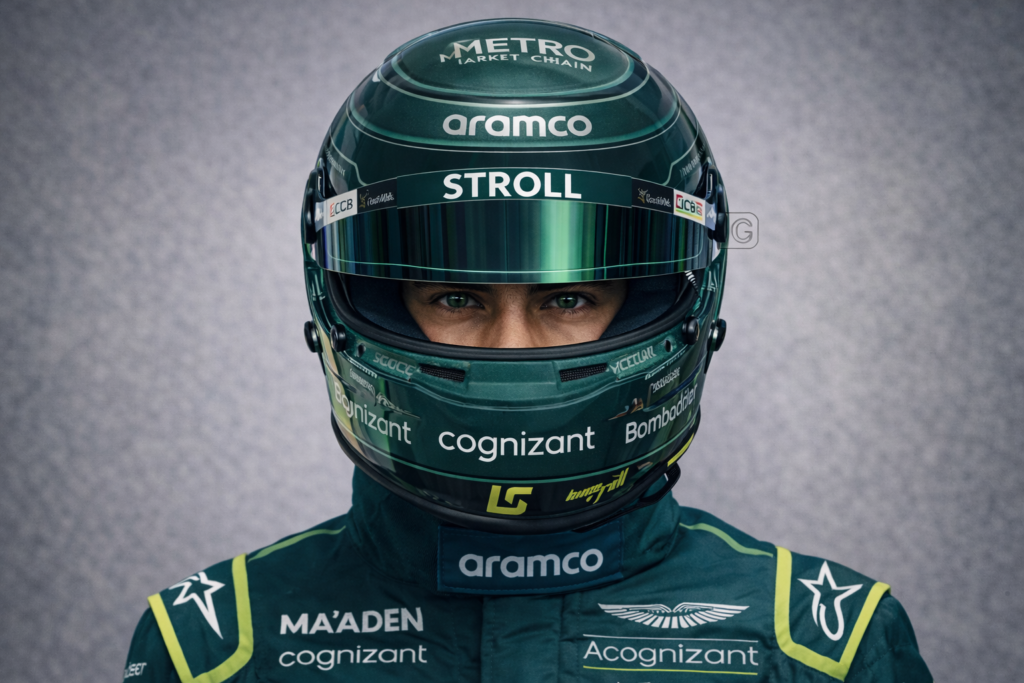
Stroll has developed more than his critics acknowledge. The early caricature of the team owner’s son has given way to a driver who has matured into a genuine midfield operator with specific strengths – he is particularly effective in street circuits and in wet conditions, and his consistency over race distances has improved markedly.
The partnership with Alonso has been more productive than many predicted, though the gap between them in raw pace remains real.
The 2026 season is the one Aston Martin have been building toward since the infrastructure investment began in earnest. Adrian Newey’s first design input will begin to appear in the car’s development direction, though the full expression of that influence will take time to materialise.
The regulation reset theoretically levels the playing field in ways that favour teams who have invested heavily in new facilities – which describes Aston Martin precisely.
The expectation now matches the investment. Lawrence Stroll has spent what is required to compete at the front. The personnel are in place. The question that 2026 begins to answer is whether all of that translates into the one thing that ultimately matters in Formula 1: performance on Sunday afternoon.
Alonso, more than anyone, knows that resources alone don’t win championships. But he also knows that without them, you never get the chance to find out.
At the British Grand Prix on 2026-07-05, Fernando Alonso finished P18 and Lance Stroll finished P19. No constructor points were scored.
The 2026 driver lineup consists of Fernando Alonso, carrying car number 14, and Lance Stroll, carrying car number 18.
Aston Martin Aramco F1 Team has not recorded a race win in their Formula 1 history.
Adrian Newey serves as the team principal of Aston Martin Aramco F1 Team.
The team is based in Silverstone, United Kingdom.
The team competes with the AMR26 chassis during the 2026 Formula 1 season.
Aston Martin Aramco F1 Team is powered by Honda power units in 2026.
The team made their first Formula 1 entry in 2018.
At the British Grand Prix on 5 July 2026, Fernando Alonso finished in P18 and Lance Stroll finished in P19.