
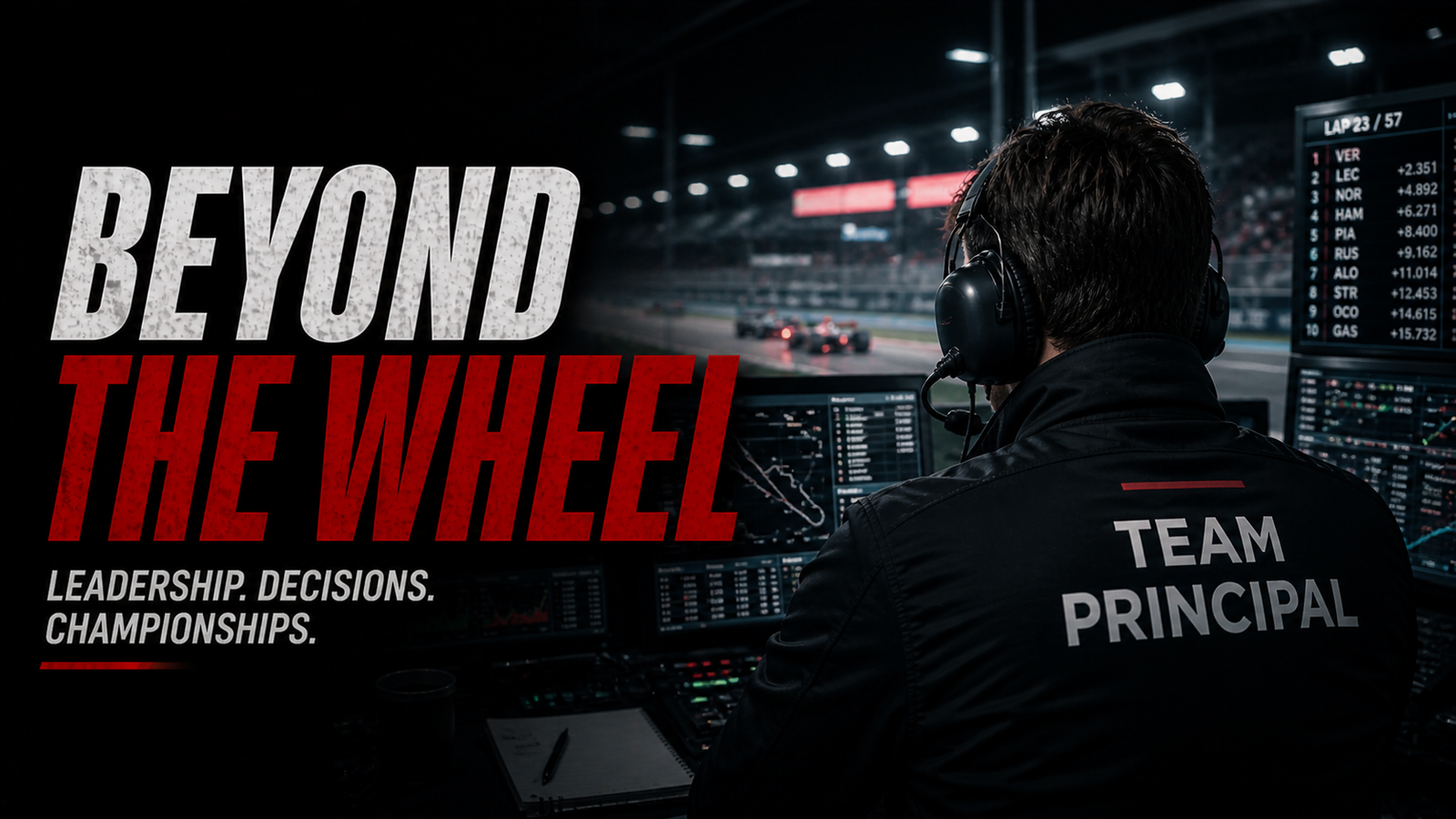

“The team principal is the conductor. Without them, you just have noise.” – Toto Wolff
The Most Important Person You’re Not Watching
When the lights go out at a Formula 1 grand prix, the cameras follow the cars.
They follow the wheel-to-wheel battles, the pit stops, the safety car restarts, the moments of triumph and disaster that define a race weekend. What they rarely show, at least not in real time, is the person whose decisions are shaping much of what you are watching.
The team principal sits at the pitwall or in the garage, communicating with drivers, coordinating with strategists, making calls under pressure that have consequences measured in championship points and occasionally in careers. They are the most important person at a grand prix that most casual fans could not name.
That is changing. And the change says something important about where Formula 1 is going.
What a Team Principal Actually Does
The job description of a Formula 1 team principal has never been simple, but it has expanded significantly in the modern era.
At its core, the role is about translating resources into performance. A team principal has to manage the relationship between the technical side of the operation, the engineers, the designers, the aerodynamicists, and the commercial side – the sponsors, the manufacturers, and the parent companies. They have to manage drivers who are among the most competitive and highly paid athletes in any sport. They have to represent the team in the paddock’s political environment, which is as complex and consequential as any boardroom.
And they have to do all of this whilst making real-time decisions during a race that can determine the outcome of a championship.
The Wolff and Horner Effect
The elevation of team principals into genuine public figures is largely the product of two people: Toto Wolff and Christian Horner.
Their rivalry during the Mercedes and Red Bull dominance years turned the team principal role into must-watch content. Their press conference exchanges, their public statements about each other, their very different personalities and styles, gave Formula 1 a narrative layer that went beyond the cars and the drivers. Drive to Survive on Netflix amplified this dramatically, placing cameras in rooms and conversations that had previously been private and showing audiences that the drama behind the pitwall was as compelling as anything happening on track.
The result was a generation of Formula 1 fans who arrived knowing who Toto Wolff was before they could name half the drivers on the grid – that’s a significant shift in how the sport is consumed, and it has placed the team principal role under a level of scrutiny that it had never previously experienced.
The New Generation of Team Principals
The current crop of team principals reflects how much the role has evolved.
Frederic Vasseur at Ferrari brings a background in driver development and a directness that stands in contrast to some of his more media-trained predecessors. Andrea Stella at McLaren is a racing engineer by background whose instincts are rooted in the technical realities of a race weekend. Andy Cowell’s time at Aston Martin demonstrated how a power unit specialist brings a different perspective to operational leadership. Adrian Newey‘s elevation to Team Principal at Aston Martin is perhaps the most unconventional appointment in the role’s recent history, combining technical genius with operational responsibility in a way that has no real precedent.
Each of these figures brings something different – each is navigating a version of the same fundamental challenge: translating talented people and significant resources into consistent performance in the most competitive engineering environment on the planet.
Why the Role Has Never Mattered More
The 2026 regulation reset has made the team principal’s job more consequential than it has been in years.
When the regulations change significantly, the decisions made at the top of an organisation about resource allocation, technical direction, and personnel determine whether a team emerges from the transition as a frontrunner or spends years chasing the ones that got it right – those decisions are made by or heavily influenced by the team principal.
The teams that navigate 2026 most successfully will not just be the ones with the fastest cars in February – they will be the ones whose leadership made the right calls in 2023 and 2024 about what the 2026 car needed to be, who to hire, where to invest, and when to commit to a direction even when the data was still uncertain.
That is team principal work. It is unglamorous, it is mostly invisible, and it is the difference between winning and watching others win.
The Public Face and the Private Reality
There is a version of the team principal role that exists for the cameras, the press conference persona, the carefully managed public statements, the Drive to Survive moments that build a narrative around a personality.
And there is the private reality: the late nights, the difficult conversations with drivers who are not performing, the negotiations with manufacturers and sponsors, the management of egos and ambitions within a confined and pressurised environment.
The best team principals do both well – they understand that the public dimension of the role now matters in ways it did not twenty years ago, that their personality and communication style shape how their team is perceived and consequently how it attracts talent, sponsors, and opportunity.
But they never mistake the public performance for the job itself – the job is performance on Sunday afternoon. Everything else is in service of that.
In 2026, with the grid as competitive and uncertain as it has been in a generation, the team principals who understand that distinction most clearly will be the ones leading the championship conversation by the summer.
