

“America has always done things its own way. Formula 1 is about to find out what that means.” – Mario Andretti
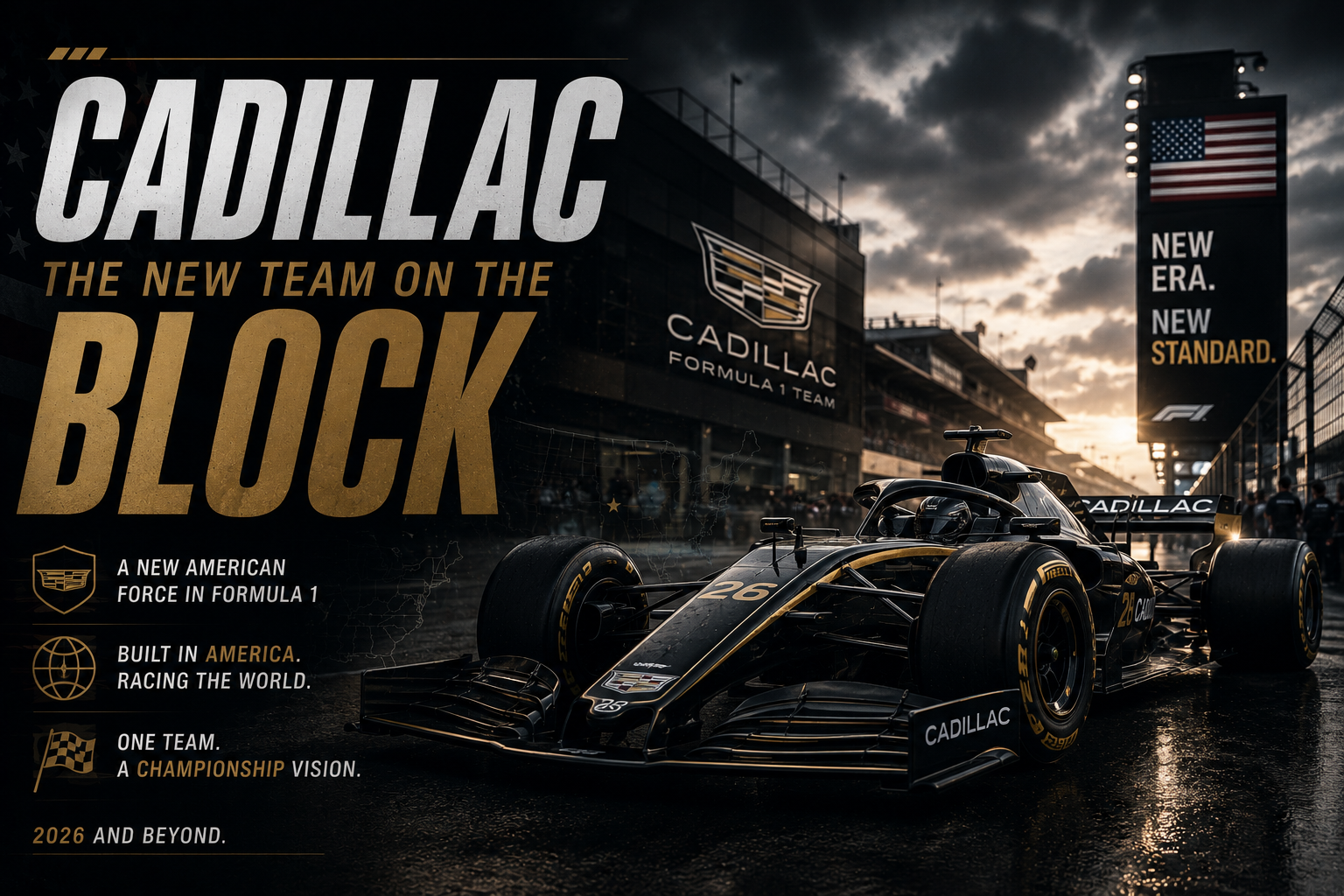
The New Team on the Block
Formula 1 has not had a new constructor join the grid since Haas in 2016, and Haas arrived with a business model specifically designed to minimise the risks of a new entry by outsourcing as much of the car’s development as possible to an established manufacturer partner.
Cadillac‘s arrival in 2026 is different in almost every meaningful way. A full manufacturer entry backed by General Motors, one of the world’s largest automotive companies, with genuine ambitions that go beyond simply being present on the grid and a timeline that is measured in championships rather than just race starts.
Six races in, the question is no longer whether Cadillac belongs in Formula 1. That question was always going to answer itself with time and resources. The question that the opening rounds have begun to answer is what kind of Formula 1 team Cadillac actually is, and what the rest of the grid should expect from them as the season develops.
What Cadillac Brought to the Grid
The scale of General Motors’ investment in the Cadillac Formula 1 project is significant enough that the numbers themselves are less informative than the evidence of what that investment has produced.
The factory in Banbury, which serves as the team’s primary operational base, has been substantially upgraded to meet the demands of a full constructor programme. The personnel pipeline, built through a combination of experienced hires from established teams and the development of internal talent, reflects an organisation that is serious about the long term rather than focused on the immediate optics of a new entry.
The power unit situation for 2026 is Ferrari-supplied, which gives Cadillac a competitive baseline that Haas demonstrated can be sufficient for midfield results from the beginning. The longer term plan, transitioning to a General Motors developed power unit in collaboration with TWG Motorsports from 2029, is the part of the project that will ultimately determine whether Cadillac can compete for championships rather than points finishes.
The driver pairing reflects the same dual timeline. One experienced operator providing stability, one younger talent representing the team’s future.
Six Races In: The Results
The results across the first six rounds have placed Cadillac in a position that is creditable without being spectacular, which is exactly where a new constructor in their first season should aspire to be.
Points finishes have arrived, not consistently but often enough to demonstrate that the car is capable of operating in the competitive zone rather than simply making up the numbers at the back of the grid. The gap to the midfield teams that they are directly competing with has closed across the opening rounds as the team’s understanding of the car has developed, which is the pattern that every new constructor follows and Cadillac is following it at a rate that suggests the learning curve is being managed effectively.
The reliability picture has been mixed, with some mechanical issues in the early rounds that cost points in races where the pace was sufficient to have scored them. This is not unusual for a new team with a new car, and the trajectory of those reliability issues across the six rounds has been toward improvement rather than persistence.
The American Dimension
Cadillac’s significance to Formula 1’s American expansion is a thread that runs through every conversation about the team’s presence on the grid, and it is worth examining honestly rather than simply as a commercial narrative.
The presence of an American constructor in the championship changes the dynamic of the sport’s relationship with its fastest growing market in a way that no amount of race hosting or Drive to Survive episodes can replicate. Formula 1 can visit America. Cadillac is America in Formula 1, and that distinction matters to an audience that has historically found it difficult to fully invest in a sport where the teams, the drivers, and the culture are predominantly European.
The reception that Cadillac has received at the American rounds, in Miami particularly, has demonstrated that this dimension is real rather than theoretical. The crowd engagement with an American team is qualitatively different from the engagement with the established constructors, and Formula 1’s commercial operation has noticed that difference and is working to amplify it.
What the Rest of the Season Holds
Six races is enough to form an initial verdict on a new team but not enough to draw conclusions that will hold through an entire season.
The European phase of the calendar, which begins with Monaco in June and runs through to the summer break, will test Cadillac in ways that the flyaway rounds have not. The circuits are more technically demanding for the car’s setup, the competition is more intense as teams bring their major upgrade packages, and the logistical demands of back-to-back European races are different from the longer gaps between the flyaway rounds.
How Cadillac performs through this stretch will do more to define their season than the first six races have done, because it will reveal whether the pace and reliability they have shown is consistent across varied conditions or dependent on the specific characteristics of the opening rounds.
The power unit story also continues to develop. The changes that came into effect at Miami, as the manufacturers refine their understanding of the fifty-fifty split, have affected all teams, and Cadillac’s ability to extract the maximum from their Ferrari power unit through this period of development will influence their competitive position in ways that their own aerodynamic work cannot fully compensate for.
The Verdict
Six races in, Cadillac has done what a serious new constructor needs to do in its opening season. They have shown they belong on the grid, demonstrated the potential to score points consistently, and built the operational foundations that sustained competitiveness requires.
They have not yet shown that they can challenge the established midfield teams every weekend, and they have not yet demonstrated the reliability that points finishes require on a consistent basis rather than an occasional one.
Both of those things were always going to take time. The question is whether the time they take is measured in months or in years, and the answer to that question will define whether Cadillac’s 2026 is remembered as a successful debut or merely a promising one.
The ingredients are there – General Motors has the resources, the team has the intent. The sport has the audience that makes success commercially meaningful in a way that it has not been for an American constructor since the days when the United States was central to Formula 1’s competitive identity rather than its commercial ambitions.
The first six races have not answered the Cadillac question. They have made it more interesting.
