

NEXT RACE
Loading…
starts in
—
Your Time
Track Time
local time
“We’re not here to make up the numbers. We’re here to race.” – Graeme Lowdon
Cadillac’s arrival in Formula 1 is the sport’s most politically charged new entry in decades.
The American manufacturer spent years fighting for a place on the grid against resistance from existing teams who, understandably, had no interest in sharing prize money and resources with a new competitor. That resistance was eventually overcome through a combination of regulatory process, FIA support, and the kind of persistent institutional pressure that only a General Motors subsidiary can sustain.
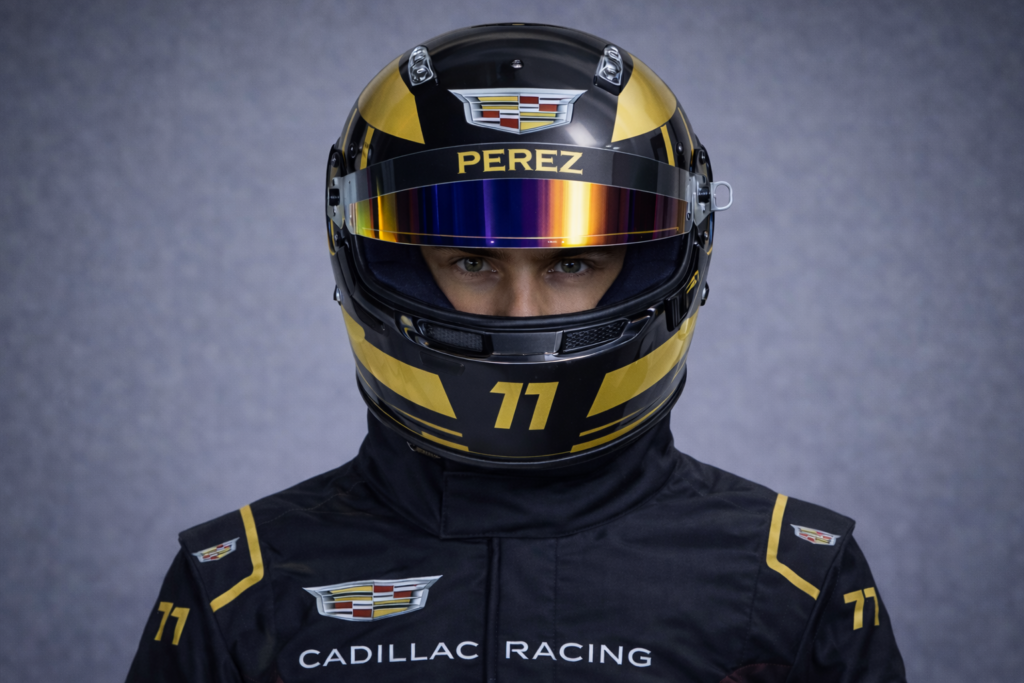
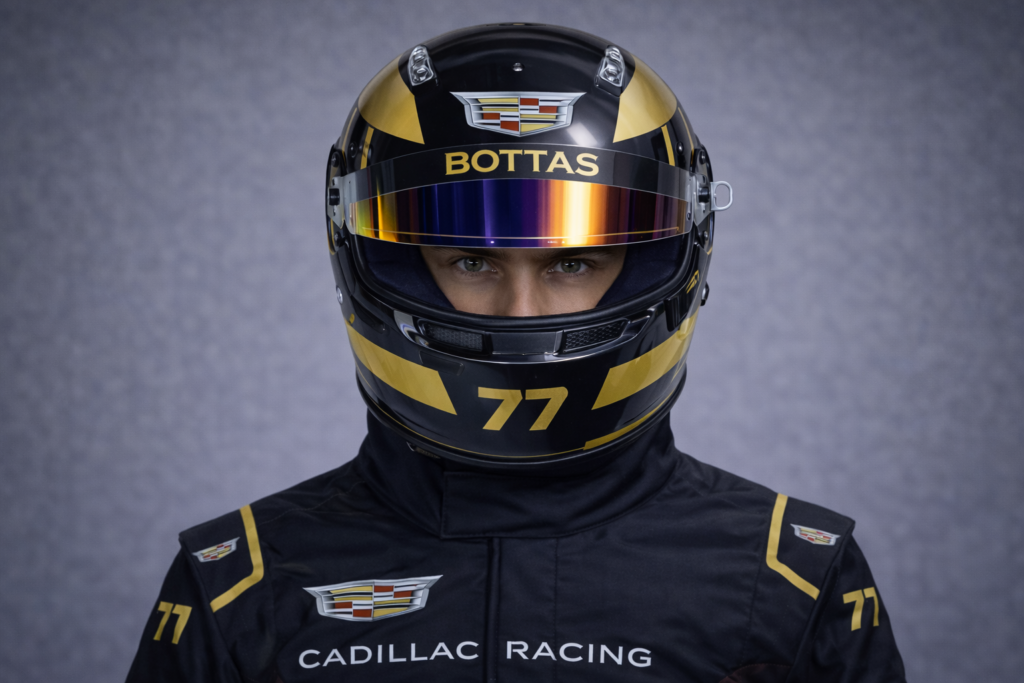
In 2026, Cadillac line up on the grid for the first time with Sergio Pérez and Valtteri Bottas – two experienced operators who between them have forgotten more about Formula 1 than most rookies will ever learn.
The question isn’t whether Cadillac belong here – they’re here. The question is, how quickly they can become relevant.
The Cadillac Formula 1 story is short by the sport’s standards, measured in years of lobbying rather than decades of racing.
General Motors and Andretti Autosport – the American racing operation founded by Mario Andretti’s son Michael – began pursuing a Formula 1 entry seriously around 2021, submitting an application to the FIA that was eventually approved in principle before hitting the wall of existing team opposition.
The existing constructors, operating through the Formula 1 commercial framework, resisted the entry on the grounds that a new team would dilute the prize fund without adding sufficient commercial value.
It was a nakedly self-interested argument, and it was made with considerable conviction. The FIA ultimately overruled the commercial objections, and the entry was confirmed – though the process left a residue of tension between Cadillac and several established teams that will take time to fully dissipate.
General Motors’ decision to badge the entry as Cadillac rather than Andretti reflected a strategic calculation about brand value and global reach. Cadillac carries recognition in markets that Andretti, as a name, simply doesn’t. The racing heritage of the Andretti family remains central to the operation’s DNA – Mario Andretti’s 1978 World Championship is the foundation myth the team carries with them – but the commercial face presented to the world is unmistakably American luxury automotive.
Cadillac matter because American involvement in Formula 1 at the constructor level has been absent for a very long time, and the sport’s current American audience boom – driven substantially by the Drive to Survive documentary series and the addition of the Las Vegas Grand Prix – has created demand for a team that American fans can genuinely claim as their own. That commercial dynamic is real and significant.
Beyond the marketing narrative, they matter because new entries force the established order to remain honest. A grid of ten teams operating within a comfortable hierarchy serves nobody particularly well.
The discomfort Cadillac’s presence creates in certain paddock conversations is arguably healthy for the sport’s long-term competitiveness.
It is impossible to define a Cadillac racing identity with any precision before they’ve completed a competitive season, which is simply the honest reality of assessing a brand new constructor.
What can be said is that the driver pairing suggests a team that prioritises experience and racecraft over youth and potential – a sensible approach for an operation that needs reliable data and consistent finishing positions before it can think about anything more ambitious.
Pérez’s tyre management and strategic intelligence will be valuable assets in the early races, where understanding how the car behaves over long stints matters more than outright qualifying pace.
Bottas brings a different but complementary set of skills – clean, technical, precise, unlikely to cause the kind of first-lap incidents that can derail a new team’s development programme before it has properly begun.
The operational leadership draws on both the Andretti motorsport background and newly recruited Formula 1 expertise. Building a Formula 1 team from scratch – or close to it – requires importing knowledge that can only be found inside the existing paddock, which means Cadillac have spent considerable energy and resource attracting personnel who understand how this particular world works.
The General Motors engineering division provides a power unit development pathway that is central to the team’s long-term ambitions. Running customer power units in the early seasons is a practical necessity. Developing their own is the stated objective, and the timeline for that transition will define the project’s ultimate ceiling.
Sergio Pérez and Valtteri Bottas is a pairing that would have looked very different on paper five years ago – both were then operating inside championship-contending teams, Pérez at Red Bull and Bottas at Mercedes.
In 2026 they find themselves at a new constructor together, which says something about the cyclical nature of Formula 1 careers and the speed with which the grid can shift.
Pérez brings the race intelligence and tyre management detail that has defined his career – skills that are genuinely transferable to a new car and particularly valuable during a development programme.
Bottas is measured, technically communicative, and experienced enough to understand that his role in this chapter is about building something rather than expecting immediate results.
Neither driver arrived at Cadillac expecting to fight for a championship in year one. Both arrived understanding that the opportunity is about longevity – being part of something that grows – rather than instant gratification.
Cadillac’s realistic 2026 objectives involve establishing themselves as a functioning, credible Formula 1 constructor rather than chasing results that the machinery won’t yet support.
Consistent points finishes would represent genuine progress. A top-ten constructors’ position would be celebrated as a milestone. Anything beyond that in year one would be a bonus rather than an expectation.
The longer arc matters more. General Motors are not in Formula 1 for a single regulation cycle. They are here for the commercial opportunity that sustained presence at the front of the world’s most watched motorsport series represents. Getting there will take time, investment, and the patience to absorb difficult weekends without losing faith in the direction.
The existing teams fought hard to keep Cadillac off this grid. The most satisfying response to that is simply becoming too good to ignore.
At the British Grand Prix on 2026-07-05, Sergio Pérez finished P14 and Valtteri Bottas finished P16. No constructor points were scored.
Cadillac Formula 1 Team’s 2026 driver lineup consists of Sergio Perez carrying car number 11 and Valtteri Bottas carrying car number 77.
Cadillac Formula 1 Team has not yet won a Formula 1 race. The team only entered Formula 1 in 2026 and has no race victories in its history to date.
Graeme Lowdon serves as the team principal of Cadillac Formula 1 Team.
Cadillac Formula 1 Team is based in Silverstone, United Kingdom.
Cadillac Formula 1 Team made its Formula 1 debut in 2026, making it one of the newest teams on the grid.
Cadillac Formula 1 Team competes with the MAC-26 chassis during the 2026 Formula 1 season.
Cadillac Formula 1 Team is powered by a Ferrari power unit in the 2026 season.
At the British Grand Prix on 5 July 2026, Sergio Perez finished in 14th place and Valtteri Bottas finished in 16th place.