

“Pressure doesn't define you. It tests you.”
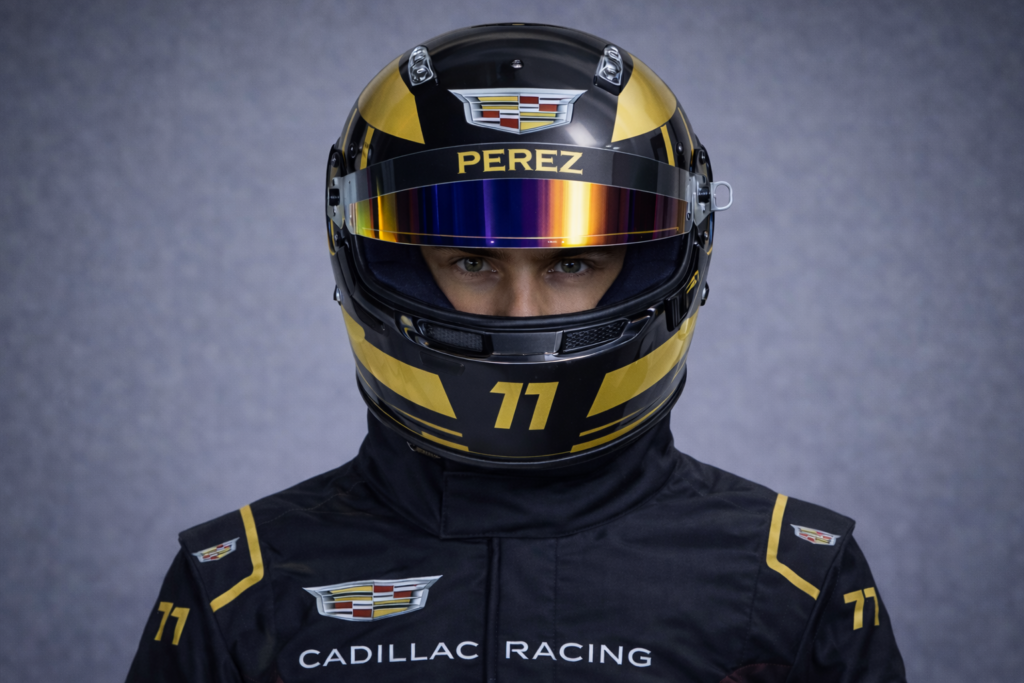
Biography
Recent Form
Sergio Pérez has endured a difficult run of five races, failing to score a single point across all of them. Two retirements — at the Canadian Grand Prix and the Austrian Grand Prix — have punctuated a stretch that has otherwise seen him finish outside the points in the lower reaches of the midfield, with P14 finishes at the Barcelona Grand Prix and the British Grand Prix representing his best results in that period.
The pattern across these five races tells a consistent story: Pérez has generally started from the back rows of the grid and, while he has at times made modest progress through the field, he has not been able to break into the top ten. A lapped finish in Barcelona underlined the scale of the challenge he and the Cadillac F1 Team are currently facing.
Latest Race
At the British Grand Prix on 2026-07-05, Pérez started from P20 — the back of the grid — and worked his way forward to finish P14, crossing the line without points but recording one of his more composed drives of the recent run. The result offered a marginal improvement in terms of positions gained, though it still left him well outside the scoring zone and did little to alter his overall championship standing.
2026 So Far
Pérez sits P21 in the Drivers’ Championship with zero points, a position that reflects a season in which neither pace nor reliability has been on his side. With retirements, lapped finishes, and a string of results outside the top ten, the trajectory has been difficult to read as anything other than a significant struggle, and a turnaround will require a marked step forward from both driver and team in the races ahead.
The Snapshot
Sergio Pérez’s Formula 1 career has been constructed on something far more valuable than raw speed: the ability to survive and thrive under pressure at the highest level.
He has fought for seats when others might have disappeared into lower categories. He has won races that nobody expected him to win. He has operated inside a championship-winning team where every decision is scrutinised and every lap is measured against a teammate operating at elite level. He has navigated some of the most intense internal comparisons the grid has ever produced – and remained competitive through all of it.
In 2026, stepping into Cadillac at a manufacturer’s launch phase fundamentally shifts his position. He’s no longer the second driver inside a dominant structure, measured against someone in a superior machine. Instead, he becomes part of a project with genuine ambition but incomplete infrastructure. That distinction changes the dynamic entirely, and perhaps more importantly, it resets the narrative around what he can actually deliver.
Why He Matters
Pérez matters precisely because he understands pressure from both ends of the grid. He has led midfield teams to podiums through tyre management that borders on wizardry and strategic patience that most drivers simply don’t possess. He has also operated under the relentless scrutiny of a front-running outfit where the margins between success and failure are microscopic and the comparisons against your teammate are genuinely merciless.
For Cadillac, what he brings is race intelligence, something you can’t manufacture or download. Few drivers manage tyres as effectively over long stints without surrendering pace early on. Few read strategic gambles as instinctively when track conditions shift unexpectedly mid-race. He’s opportunistic without being reckless, which means he takes calculated risks rather than gambling away positions through desperation. That combination is genuinely valuable for a team likely to spend early seasons navigating tight midfield battles where a single strategic call or one lap of tyre management can mean the difference between points and nothing.
The Rise – The Long Route
Pérez’s junior career showed genuine promise, but his Formula 1 breakthrough came through something far less glamorous than immediate dominance: pure persistence. At Sauber and Force India, he built a reputation for something that sounds simple but is genuinely rare – extracting podiums from scenarios that looked impossible on paper. He would stretch tyre life beyond what the data suggested possible, time overtakes in the final laps when everyone had given up, and capitalise on chaos with the instincts of a genuine racer.
His move to a front-running team brought wins, which validated him, and scrutiny, which tested him. Operating inside that pressure cooker exposed volatility at times; there were races where he simply didn’t have the answers. But it also demonstrated something equally important: genuine resilience. He stayed competitive through seasons that could have broken a weaker driver mentally. He stayed in the fight when it would have been easier to accept a support role. And crucially, he stayed on the grid when others in similar situations found themselves out of opportunities.
What He’s Actually Like to Watch
Pérez is fundamentally strategic behind the wheel in ways that casual observers often miss. He will frequently sacrifice early stint pace to preserve tyre life for the phases where it actually matters – the final stint, the closing laps, the moments when others are fading. This approach means he rarely looks spectacular in the first hour, but by hour two, when the field is stretched and tyres are degraded, he’s often the driver making progress while everyone else is managing decline.
His wheel-to-wheel combat is confident but calculated. He rarely makes reckless moves, which isn’t a criticism; it’s a strength. Instead, he positions the car intelligently through braking zones and tends to defend his position through clever placement rather than aggressive blocking. On circuits with heavy tyre degradation, places like Mexico City or Singapore, he becomes genuinely dangerous because his entire skillset is built for exactly those conditions. He doesn’t always dominate qualifying sessions. But Sundays, particularly when tyre management becomes the deciding factor, are where he does his actual damage.
Off-Track: The Perspective
Pérez carries the weight of experience and a composure that comes from navigating extremes. He understands the commercial and cultural significance of being Formula 1’s most prominent Latin American figure, which brings its own pressure. Publicly, he handles scrutiny with calmness that suggests he’s made peace with it. Privately, he remains fiercely competitive, someone who hasn’t softened through his career but has learned to channel intensity productively rather than destructively.
He’s been through genuine highs – wins – championship-contending seasons, moments of genuine glory – and genuine lows – moments of doubt, questions about his future, seasons where everything felt uncertain. That perspective, hard-won through years in the sport, stabilises him in ways that pure talent alone never could.
The Cadillac Chapter
At Cadillac, Pérez enters a chapter defined by construction rather than comparison. He won’t be measured against a dominant teammate operating in a championship machine, constantly fighting for scraps. Instead, he’ll be measured against something arguably more interesting, the growth trajectory of an entire project.
If Cadillac builds steadily – and there’s no guarantee it will – his race craft and strategic intelligence could convert genuine opportunities into early milestones that matter for a young team. And if Cadillac eventually finds itself fighting at the front of the grid? He already knows exactly what that world looks like, and more importantly, he knows how to operate inside it.
2026 So Far
Nine rounds into the 2026 Formula 1 season, Sergio Pérez currently sits P21 in the drivers’ championship with zero points, zero wins, and zero podiums for Cadillac F1 Team. The American manufacturer’s debut season is running exactly to the pattern most experienced observers predicted for a new-entry constructor — reliability issues, incomplete package development, and a car that requires the driver to extract more than the machine is naturally offering.
For Pérez, the situation reads like the opposite bookend to his Red Bull years. Where the 2021-2024 seasons were about managing pressure inside a championship-winning structure, 2026 is about extracting whatever is available on a race-by-race basis. His recent 14th-place finishes at Barcelona and Silverstone are the kind of results that read as a win on paper for a Cadillac still finding its feet — genuine race distance completed, points inches away rather than laps away.
Career Milestones
Pérez has amassed 6 Grand Prix victories and 39 podium finishes across a career that has now spanned three full decades on the Formula 1 grid.
- 2011 — Formula 1 debut with Sauber at the Australian Grand Prix.
- 2012 — First career podium (P2, Malaysian Grand Prix, in the rain, for Sauber).
- 2013-2019 — Consolidation years at McLaren and Force India / Racing Point, building a reputation as the field’s most reliable tyre manager.
- 2020 — First Formula 1 victory at the Sakhir Grand Prix, from P18 on the grid after a lap-1 incident (Racing Point).
- 2021-2024 — Four seasons at Red Bull Racing alongside Max Verstappen. Five further race wins, back-to-back constructors’ titles, career-best P2 in the 2023 drivers’ championship.
- 2026 — Joins Cadillac F1 Team for their inaugural season, bringing race intelligence and championship-team experience to a project in its foundation phase.
Recent Form
A snapshot of Pérez’s most recent race weekends in the 2026 Cadillac:
- British Grand Prix (5 July 2026) — P14, race completed on the lead lap.
- Austrian Grand Prix (28 June 2026) — P21, mechanical retirement after ~40 laps.
- Barcelona Grand Prix (14 June 2026) — P14, one lap down at the flag.
- Monaco Grand Prix (7 June 2026) — P15, race completed on the lead lap.
- Canadian Grand Prix (24 May 2026) — P17, retirement.
- Miami Grand Prix (3 May 2026) — P16, one lap down.
The pattern across the last six weekends is consistent with an early-life project car: solid race distance when the mechanical package holds together, sudden retirements when it doesn’t, and finishing positions in the P14-17 window on the days it completes the race.
Watch: Pérez’s 10 Best Career Overtakes

Where to Follow Pérez
Follow Sergio Pérez on Instagram (@schecoperez) and X (@SChecoPerez), or shop official Formula 1 merchandise at the F1 Store.
Sergio Pérez – Frequently Asked Questions
Who does Sergio Pérez drive for in 2026?
As of the 2026 Formula 1 season, Sergio Pérez drives for Cadillac.
What nationality is Sergio Pérez?
Sergio Pérez is Mexican.
How old is Sergio Pérez in the 2026 season?
Sergio Pérez is 36 years old during most of the 2026 season.
What race number does Sergio Pérez use in Formula 1?
Sergio Pérez races with number 11.
Who is Sergio Pérez’s team mate in 2026?
Team mates can change by season; for 2026, confirm Cadillac’s official driver line-up to see Pérez’s team mate.
How many Formula 1 wins does Sergio Pérez have?
As of 2026, Sergio Pérez has six Grand Prix wins in Formula 1.
Did Sergio Pérez race for Red Bull in Formula 1?
Yes. Pérez raced for Red Bull Racing and won multiple races with the team.
When did Sergio Pérez make his Formula 1 debut?
Sergio Pérez made his Formula 1 debut in 2011.
What is Sergio Pérez known for as a driver?
He is known for tyre management, smart race strategy execution, and making the most of difficult situations across long races.
What is Sergio Pérez like off the track?
Off the track, Pérez is known for a friendly, approachable style and strong connection with fans, especially in Mexico.
How many F1 podium finishes does Sergio Pérez have?
As of the 2026 season, Sergio Pérez has 39 career Formula 1 podium finishes — six wins, seventeen second places, and sixteen third places.
What was Sergio Pérez’s first F1 win?
Pérez’s first Formula 1 victory came at the 2020 Sakhir Grand Prix, driving for Racing Point. He climbed from P18 on the grid after a lap-one incident to take the win.
What was Sergio Pérez’s best championship finish?
Pérez’s best drivers’ championship result was P2 in 2023, driving for Red Bull Racing alongside Max Verstappen.
What is Sergio Pérez’s home Grand Prix?
His home race is the Mexico City Grand Prix at the Autódromo Hermanos Rodríguez — one of the most vocally supported home crowds on the Formula 1 calendar.
What is Sergio Pérez known for as a race driver?
Tyre management and long-stint pace. He built his reputation at Sauber and Force India by extracting podiums from strategies most drivers wouldn’t attempt — regularly making single-stop races work at circuits where the field was on two stops.
What is Sergio Pérez’s current championship position?
In the 2026 season, Pérez currently sits P21 in the drivers’ championship with zero points, driving for the debut-year Cadillac F1 Team.