

“Consistency wins more than headlines.”
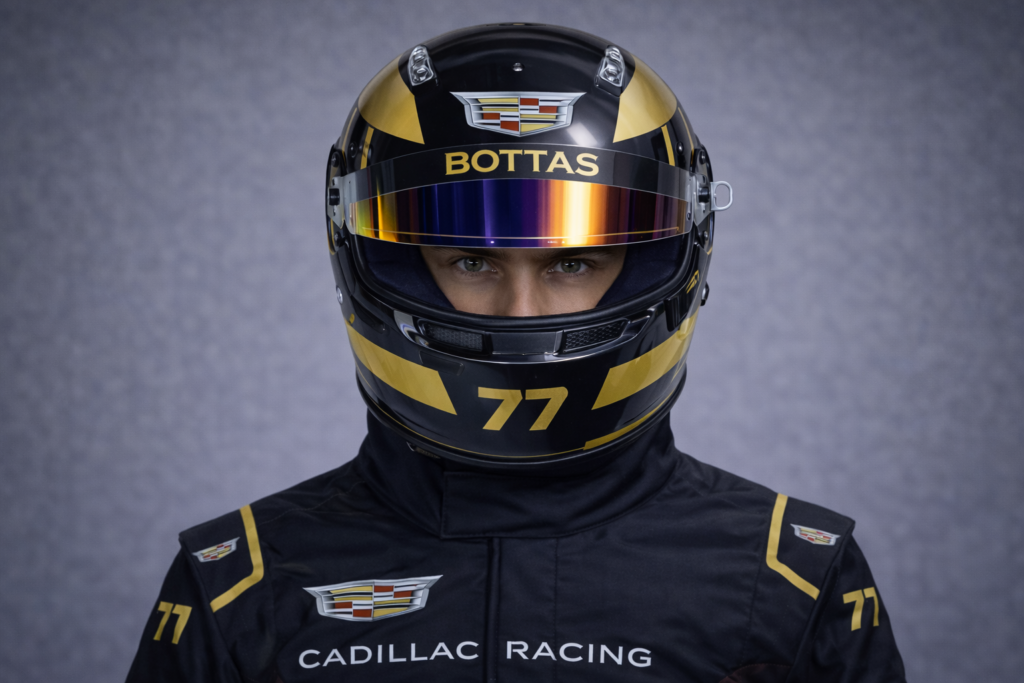
Biography
Recent Form
Valtteri Bottas has endured a deeply difficult run of form across his last five races, collecting zero points in every outing and failing to finish three of them. Retirements in Monaco, Barcelona, and Austria have punctuated a stretch that has offered little encouragement, with the Cadillac F1 Team struggling to find the pace and reliability needed to compete in the points-paying positions.
The two races where Bottas did see the chequered flag — the Canadian Grand Prix and the British Grand Prix — brought finishes of P16, both outside the top ten and well short of the points. Starting from the back of the grid has been a recurring theme, and while he has shown some ability to gain positions during races, the margins remain too large to bridge given the car’s current performance level.
Latest Race
At the British Grand Prix on 5 July 2026, Bottas started from P18 on the grid and crossed the line in P16 — a modest two-place gain that nonetheless left him outside the points for the fifth consecutive race. It was at least a clean run to the finish after a run of retirements, but the result did little to alter the broader picture for Bottas and the Cadillac F1 Team, who remain rooted to the foot of the constructors’ standings.
2026 So Far
Bottas sits P20 in the drivers’ championship with zero points, a position that reflects the considerable gap between the Cadillac F1 Team and the rest of the field at this stage of the 2026 season. With retirements and lapped finishes defining much of his campaign so far, the trajectory has been difficult to read positively, and a significant step forward in both reliability and outright performance will be needed if he is to register his first points of the year in the races ahead.
The Snapshot
Valtteri Bottas arrives at Cadillac in 2026 carrying something increasingly rare in Formula 1: a genuine, proven track record.
Multiple race wins. Championship runner-up finishes. Years spent embedded inside Mercedes, one of the most systematically dominant structures the sport has ever produced. And crucially, later experience leading midfield projects through genuine rebuild phases – not just parachuting in and hoping things work out.
He isn’t here chasing personal reinvention or looking for one last career narrative boost. He’s here to build something tangible from the ground up, and that distinction matters more than most realise.
Why He Matters
Bottas matters because Cadillac needs something most new teams lack: reference pace and institutional knowledge from day one. Launching a Formula 1 team requires far more than money and ambition. You need clarity, understanding where your car actually sits relative to the grid, where the gaps are, and how to structure development cycles so you’re not chasing your own tail. Bottas has lived inside elite engineering environments. He understands process, not just performance. He knows the difference between looking fast and actually being fast, and more importantly, he knows how to communicate that difference to engineers building something new.
He also brings something less tangible but equally valuable: composure under pressure. New teams are inherently volatile – reliability swings between weekends, strategy errors born from inexperience, and performance gaps that feel insurmountable. Bottas doesn’t amplify that chaos through reactive driving or political drama. He absorbs it. He’s experienced enough to know what stable looks like and patient enough to help build toward it rather than demanding it immediately.
The Rise – The Measured Climb
Bottas’s journey to Formula 1 was steady rather than explosive, which is exactly the point. Strong junior results, disciplined integration into Williams, then elevation to Mercedes, where he became part of a championship-winning machine. That sounds simple on paper. In reality, it was anything but.
He was consistently measured against Lewis Hamilton – a generational talent, which meant some of his achievements got quietly buried under headlines about his teammate. Sometimes that comparison was unfair; sometimes it was just circumstance. But within that Mercedes structure, he delivered poles, wins, and the kind of consistent points hauls that championships are actually built on, not just won. More importantly, he learned what separates champions from everyone else: the margins. The tiny adjustments in setup, the half-tenth improvements that compound over a season, the mental discipline required when you’re not the headline driver but still need to deliver.
Later moves to midfield teams reshaped his entire role. He went from being a supporting driver in a championship team to being the reference point for an entire project. That wasn’t a demotion; it was a fundamental shift in responsibility. Guiding car development, mentoring younger teammates, and understanding how to extract performance from machinery that simply isn’t dominant. That dual perspective, having won at the highest level while also knowing how to build at the midfield, is precisely what defines him now.
What He’s Actually Like to Watch
Bottas is smooth in the way that’s almost boring if you don’t understand what you’re watching. He prefers a stable rear end and builds confidence through clean, efficient braking phases rather than heroic last-lap desperation. His qualifying laps are typically sharp – when he hooks up a car properly, he extracts precise lap time without unnecessary drama or risk.
In races, he’s measured rather than aggressive. He positions intelligently through corners, reads competitors accurately, and avoids unnecessary wheel-to-wheel risk when long-term points are available. He rarely overdrives. Equally rare is when he implodes under pressure. What you get instead is consistency – not the flashiest driver on the grid, but reliably one of the most dependable.
Off-Track: The Details
Bottas is considerably more layered than his reserved public persona suggests. Away from the circuit, he leans into endurance sports, gravel cycling, and personal projects that reflect genuine independence and the kind of balance most drivers struggle to find. The quieter environment of a brand-new team, with fewer political layers and less established hierarchy, may suit him far better than the complex politics of larger operations. He’s also detailed and thoughtful in technical feedback – collaborative in debrief rooms rather than domineering or dismissive. He doesn’t need to dominate conversations to add value to them.
Where to Follow Valtteri
Follow Valtteri directly for behind-the-scenes updates, training clips, and race weekend content: Instagram (@valtteribottas) · X / Twitter (@ValtteriBottas) · Official merchandise. For fixtures and the wider championship picture, our race calendar tracks every round and standings update.
The Cadillac Foundation
For Cadillac, Bottas functions as scaffolding. If the team progresses steadily through development, his experience and feedback accelerate the learning curve dramatically. If the early seasons prove difficult, which, honestly, statistically they probably will be, his composure and refusal to panic stabilise the project rather than destabilising it further.
He may never be the long-term marketing centrepiece that sponsors dream about. But he could very well be the reason the foundation actually holds together while the team builds toward something genuinely competitive.
Valtteri Bottas – Frequently Asked Questions
Who does Valtteri Bottas drive for in 2026?
As of the 2026 Formula 1 season, Valtteri Bottas drives for Cadillac.
What nationality is Valtteri Bottas?
Valtteri Bottas is Finnish.
How old is Valtteri Bottas in the 2026 season?
Valtteri Bottas is 36 years old for most of the 2026 season.
What race number does Valtteri Bottas use in Formula 1?
Valtteri Bottas races with number 77.
Who is Valtteri Bottas’s team mate in 2026?
Team mates can change by season; for 2026, confirm Cadillac’s official driver line-up to see Bottas’s team mate.
How many Formula 1 wins does Valtteri Bottas have?
As of 2026, Bottas has 10 Grand Prix wins from his time on the F1 grid.
Has Valtteri Bottas ever driven for Mercedes in Formula 1?
Yes. Bottas drove for Mercedes for multiple seasons and won races with the team.
When did Valtteri Bottas make his Formula 1 debut?
Valtteri Bottas made his Formula 1 debut in 2013.
What is Valtteri Bottas known for as a driver?
He is known for strong qualifying pace, smooth driving, and detailed technical feedback that teams value for development.
What is Valtteri Bottas like off the track?
Off the track, Bottas is known for cycling and endurance sports, plus a dry sense of humour and a low-key personality.