Physical Address
304 North Cardinal St.
Dorchester Center, MA 02124
Physical Address
304 North Cardinal St.
Dorchester Center, MA 02124

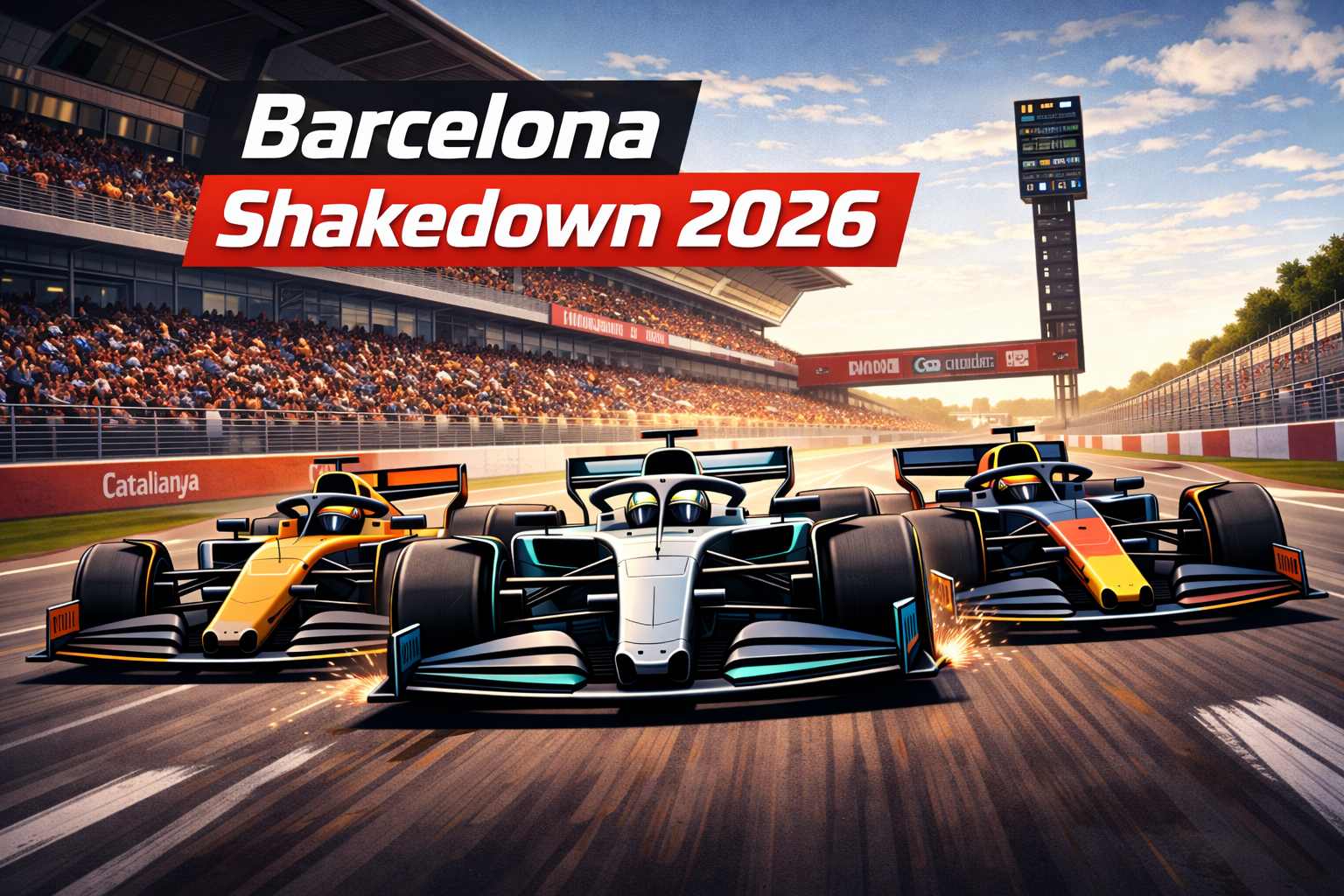
The 2026 Barcelona Shakedown at Circuit de Barcelona-Catalunya offered the first meaningful look at the radical new-generation Formula 1 cars, with teams focusing on reliability, system checks and understanding the new power units rather than chasing outright lap time, yet still revealing intriguing early form for Mercedes, Ferrari, Red Bull, McLaren and the rest of the grid.
The Barcelona Shakedown 2026 brought all active Formula 1 teams to Circuit de Barcelona-Catalunya for a multi-day private test aimed at validating the new 2026 cars and power units under real track conditions.
With sweeping regulation changes arriving for 2026, the shakedown was less about headline times and more about confirming correlation between wind tunnel, simulator and on-track behaviour, as well as ensuring that the dramatically revised powertrains and energy management systems worked as intended.
Across the five days, teams cycled through long runs, system checks and installation laps, while the likes of Lewis Hamilton, Charles Leclerc, Max Verstappen, Lando Norris and Oscar Piastri all gained valuable mileage and initial impressions of how the new-spec machinery behaves on a familiar circuit.
Although unofficial, the final day’s running gave fans and analysts a reference point, with Hamilton topping the times on Day 5 and Mercedes logging the most mileage overall, underlining the Silver Arrows’ intent to start the new era strongly.
Unlike an official qualifying session, the Barcelona Shakedown 2026 did not feature a formal grid-deciding hour, but several teams used low-fuel, softer-tyre runs late in the week that resembled qualifying simulations and provided an early performance snapshot.
Hamilton’s late switch to soft tyres on Day 5 produced an unofficial benchmark lap in the low 1m16s, edging earlier efforts from George Russell and underlining Ferrari’s one-lap potential with the Briton now embedded at Maranello alongside Leclerc.
Red Bull and McLaren also dipped into performance-focused modes at times, with Verstappen and Norris using short stints to explore the upper limits of grip and balance, but both teams consistently stressed that outright speed was secondary to validating cooling, energy deployment and aerodynamic stability.
The absence of a standardised qualifying format means the “fastest lap” charts from Barcelona should be treated cautiously, yet the pattern of Mercedes setting strong times on multiple days, Ferrari finding gains late in the week, and Red Bull maintaining solid consistency will not go unnoticed in the build-up to Bahrain testing.
Race start simulations formed a key part of the Barcelona Shakedown 2026, with multiple teams practising launches from the grid and pit lane to fine-tune clutch bite points and throttle maps suited to the new power unit characteristics.
Mercedes stood out by completing a full race simulation with young star Kimi Antonelli on the second day of its programme, allowing the team to stress-test energy deployment strategies, tyre degradation and cooling behaviour over a full race distance equivalent.
Ferrari, Red Bull and McLaren also completed extended long-run sequences, but spread their simulations across different days and drivers, mixing in virtual safety car phases and high-fuel starts to understand how the cars react in traffic and under varying levels of energy harvesting and deployment.
The starts themselves appeared generally clean, with no major clutch-related drama reported, suggesting that teams have quickly adapted to the torque delivery quirks of the 2026 power units even as they continue to refine software and drivability before the first race of the season.
Strategically, the Barcelona Shakedown 2026 was dominated by reliability and learning, with teams prioritising how to manage the more complex power units, tighter energy budgets and revised aerodynamic profiles rather than refining detailed race strategies.
Mercedes, Ferrari and Red Bull all reported that the test was about validating “fundamentals” – cooling layouts, brake-by-wire calibration, energy deployment maps and correlation to simulation tools – building a foundation before fine-tuning stint lengths and undercut/overcut windows in Bahrain.
Midfield outfits such as Haas, Audi and Aston Martin used the mileage to identify early weaknesses, from minor reliability gremlins to balance inconsistencies across fuel loads, treating each issue as a data point for rapid factory feedback loops.
One of the big strategic stories of the week was simply who ran, and who did not: while most of the grid took advantage of the Barcelona opportunity, non-participation for Williams left the team at least one full test behind on learning with the new 2026 regulations.
The Barcelona Shakedown 2026 passed without any headline-shocking crashes or major red-flag pile-ups, but there were enough small incidents and stoppages to remind everyone that these are fundamentally new cars and systems.
Aston Martin, running its new Honda power unit and distinctive sidepod and engine cover concept, endured a difficult Thursday when Lance Stroll triggered a late red flag after completing only a handful of laps, before Fernando Alonso delivered a much more productive Friday with close to 50 tours.
Elsewhere, occasional technical niggles – from sensor glitches to minor hydraulic issues – briefly halted running for several teams, but these were generally understood, fixable and precisely the kind of problems that shakedowns are designed to uncover before the pressure of official pre-season testing.
The broader reliability picture was encouraging: most teams completed solid lap counts across multiple days, and there were no indications of systemic failures with the new power units, lending confidence that the field will arrive in Bahrain ready to log heavy mileage.
McLaren arrived at the Barcelona Shakedown 2026 as reigning world champions after Lando Norris and McLaren clinched both titles in the 2025 season, and the team’s focus was firmly on confirming that its new car maintains the strong platform that powered its recent success.
Norris and Piastri shared driving duties over multiple days, logging high lap counts and gradually increasing the intensity of their runs, from installation laps to longer stints and finally shorter, more aggressive efforts as confidence grew in the car’s balance and reliability.
Public comments from the McLaren camp emphasised steady progress and a growing understanding of how to extract performance from the new package, with both drivers reporting that the car responded predictably to set-up changes – an encouraging sign given the regulatory reset.
While McLaren did not chase headline times as aggressively as some rivals, the combination of solid reliability, flexible set-up windows and calm feedback from Norris and Piastri suggests the team remains well-positioned to contend at the front once the 2026 season begins in earnest.
Ferrari entered the Barcelona Shakedown 2026 under intense scrutiny as Hamilton joined Leclerc in a blockbuster driver pairing designed to return the Scuderia to sustained title contention in the new rules cycle.
Throughout the week, Ferrari steadily built up mileage and confidence, culminating in Hamilton’s eye-catching Day 5 effort, where he topped the unofficial timesheets after bolting on soft tyres for a late “glory run” following promising work from Leclerc earlier in the day.
Both drivers spoke positively about the team’s mentality and the progress made with the 2026 car, hinting at improved consistency and a stronger development direction compared to some of Ferrari’s more erratic previous seasons.
Crucially, Ferrari’s week appeared to balance reliability with exploration of the performance window, giving the team a valuable dataset to refine in Maranello before returning to the track in Bahrain, where track temperatures and conditions will be very different from cool, wintery Barcelona.
Mercedes sent a strong message at the Barcelona Shakedown 2026 by completing the most mileage of any team, surpassing 500 laps across its three permitted days of running and underlining its operational strength under the new regulations.
Russell delivered some of the most impressive laps of the week with an unofficial 1m16.4s that stood as the benchmark for much of Day 4, while Antonelli’s race simulation showcased both the car’s durability and the young Italian’s growing importance in Mercedes’ long-term plans.
The team’s methodical programme, mixing high-fuel endurance sequences with more aggressive, low-fuel stints, suggests Mercedes believes it has started the 2026 cycle in a strong competitive window, building on the momentum of its successful 2025 campaign.
With the Silver Arrows already seen as favourites for both the 2026 constructors’ and drivers’ titles in some quarters, their commanding Barcelona mileage only reinforces the impression that the team is exceptionally well-prepared for the new era.
In the midfield, the Barcelona Shakedown 2026 provided a fascinating early glimpse into which projects might be poised to overdeliver and which still face steep development curves before the season opener.
Aston Martin’s new Honda-powered car, featuring a striking sidepod and engine cover philosophy associated with Adrian Newey’s influence, attracted significant attention, even as the team worked through reliability disruptions before Alonso enjoyed a more representative final day.
Audi’s programme with drivers including Nico Hulkenberg focused on streamlining operations for what is still a very young works effort, with team management emphasising how each day improved procedures and integration within the expanded factory and trackside structure.
Haas, Cadillac and others prioritised system reliability and establishing a baseline balance rather than pursuing times, but all stressed that there is still a “mountain to climb” before they can consistently challenge the bigger names under the new rules.
While no championships are won at a shakedown, the Barcelona Shakedown 2026 offers important clues about the competitive landscape as teams transition from the 2025 Formula 1 World Championship into a radically different technical era.
Mercedes’ combination of huge mileage, strong times and a stable driver line-up suggests the team will begin the 2026 season as early favourites, with Russell and Antonelli well-placed to build on the organisation’s title-winning culture and deep understanding of the new rules.
Ferrari’s encouraging pace with Hamilton and Leclerc, Red Bull’s solid baseline and McLaren’s calm confidence with Norris and Piastri point towards a tightly packed leading group, where development speed and in-season upgrades could decide the destination of both titles.
In the midfield, the test underlined how much work remains for newer projects like Audi and Cadillac and for teams adapting to major changes such as Aston Martin’s Honda switch, while non-participation for Williams risks leaving the team on the back foot compared to rivals who have already banked hundreds of laps of real-world data.
For fans and analysts alike, the Barcelona Shakedown 2026 was a compelling first chapter of the new era, and as more insight and data emerge ahead of Bahrain, you will find detailed analysis, news and features on RukiF1 following every step of Formula 1’s latest transformation.

