
“Experience doesn't slow you down. It sharpens you.”
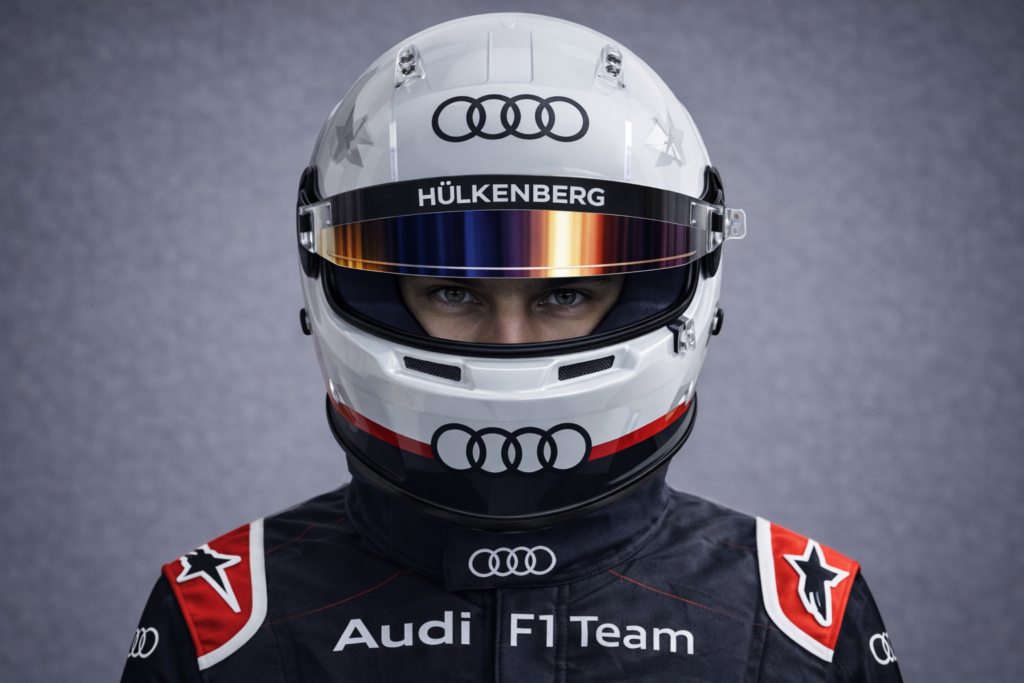
Biography
Recent Form
Nico Hülkenberg’s last five races have painted a difficult picture for the Audi outfit, with retirements and lapped finishes dominating the recent run of results. Across the Canadian Grand Prix, Monaco Grand Prix, Austrian Grand Prix, Barcelona Grand Prix, and British Grand Prix, Hülkenberg has failed to score a single point, with two retirements and two lapped finishes among the five outings.
The pace shown in qualifying has not translated to race day — Hülkenberg has frequently started inside the top fifteen, including a P9 grid slot in Barcelona and P12 in Britain, only for the race to unravel before the chequered flag. The gap between one-lap performance and race-day reliability or race pace remains the defining challenge of this difficult stretch of the season.
Latest Race
The British Grand Prix on 2026-07-05 was another frustrating afternoon for Hülkenberg, who had qualified a respectable P12 on the grid but was ultimately classified P22 after retiring from the race. The retirement extended his run without points and underlined the reliability concerns that have plagued his recent outings, leaving the team with little to show from what had looked like a promising starting position.
2026 So Far
Hülkenberg currently sits P19 in the Drivers’ Championship with zero points to his name, a position that reflects the broader struggles Audi have faced in translating grid presence into race-day results. With retirements and lapped finishes stacking up across recent rounds, the trajectory heading into the second half of the season is a concern, and a first points finish of the year remains an urgent priority for both driver and team.
The Snapshot
Nico Hülkenberg’s Formula 1 career has been defined as much by endurance as by pace, and that’s not a flaw – it’s precisely what makes him valuable. He’s navigated multiple teams, weathered regulatory overhauls, survived competitive highs and midfield plateaus without losing either his edge or his perspective.
In 2026, as part of Audi’s works project, he provides something that new manufacturer entries desperately need: reference. He knows what Formula 1 feels like when the machinery is working, when the infrastructure is solid, when everything aligns. Equally important, he knows what it feels like when none of those things are true. That clarity, that ability to distinguish between car problems, strategy problems, and driver problems, matters far more than raw pace in a project’s early years.
Why He Matters
Hülkenberg matters because he stabilises projects at their most fragile point. Audi’s entry into Formula 1 will demand feedback, precision and emotional steadiness in equal measure. Hülkenberg brings both. He understands development arcs because he’s lived through them. He grasps resource limitations because he’s competed in teams with genuine constraints. He comprehends the reality of incremental improvement because he’s built entire seasons on marginal gains rather than dramatic leaps forward.
What he doesn’t bring is flash, but that’s exactly the point. He’s been defined throughout his career by reliability – the kind that teams build around. For a new manufacturer navigating its first seasons in the sport, watching resources, managing expectations, and building credibility incrementally, that’s not a secondary asset. It’s foundational. It’s the difference between a team that learns and a team that fractures.
The Rise – Talent That Stayed
Hülkenberg’s junior career marked him as elite early. His GP2 title wasn’t marginal – it was dominant. His early Formula 1 years promised genuine things: poles, strong points finishes, flashes of genuine top-tier performance. But team circumstances often limited what those flashes could become. He landed at competitive moments in less competitive cars, or cars that simply weren’t developed in his favour. Rather than chasing the headline move or fighting publicly for better machinery, he became one of the grid’s most respected midfield operators instead.
Always quick. Always technically sharp. Frequently extracting results that seemed to exceed what the machinery deserved. Over time, that reputation hardened from promise into credibility. He may not carry the narrative weight of a championship contender. He carries something arguably more valuable: trust. Engineers trust his feedback. Team principals trust his judgment. Rivals respect his professionalism. In a sport built on ego and statement-making, that currency compounds.
What He’s Actually Like to Watch
Hülkenberg is precise in a way that doesn’t announce itself. His qualifying laps are clean and measured, efficient in their execution. He tends to maximise track evolution intelligently rather than gambling everything on a final run. In races, his approach is strategic rather than aggressive – he positions the car intelligently through traffic and has the discipline to avoid the unnecessary damage that younger drivers often accumulate in crowded midfield battles.
His steering style is tidy, his throttle application progressive rather than binary. You watch him, and you see someone calculating margins: fuel, tyres, DRS windows, brake-lock potential, gap management. He drives like someone who has learned that small margins decide weekends. Over a race distance, that approach translates into consistency – the kind where he’s still there at the end, still making intelligent moves, still extracting value long after others have either crashed, overheated, or simply given up ground through impatience.
Off-Track: The Steadiness
Hülkenberg is grounded in ways that matter for team culture. He maintains strong technical relationships across his teams and is known for clear, actionable feedback – the kind that engineers can actually work with rather than emotional complaints. He doesn’t dramatise setbacks publicly, preferring to solve problems internally where they can actually be addressed.
There’s a maturity to how he handles adversity that’s become increasingly rare. No emotional spikes. No public volatility. No taking losses personally in ways that poison a team’s mood. He views Formula 1 as craft, something to be refined, understood, and improved, rather than theatre requiring constant performance and narrative management – a perspective that creates space for others to do their jobs without navigating his emotional weather.
Where to Follow Nico
Follow Nico directly for behind-the-scenes updates, training clips, and race weekend content: Instagram (@hulkhulkenberg) · X / Twitter (@HulkHulkenberg) · Official merchandise. For fixtures and the wider championship picture, our race calendar tracks every round and standings update.
The Audi Chapter
At Audi, Hülkenberg plays a dual role: mentor and measuring stick. His job isn’t to carry the brand’s long-term identity or prove some grand narrative. It’s to help build the structure that allows real competition to emerge. If Audi accelerates quickly through development and finds genuine pace, his experience becomes leverage – the difference between a new team stumbling through basic infrastructure and one that skips ahead. If the project struggles through its first seasons, his steadiness becomes a shield – a stabilising presence that prevents panic and fracture.
Either way, in 2026, Nico Hülkenberg is exactly what a new team needs: not a saviour, but a foundation.
Nico Hülkenberg – Frequently Asked Questions
Who does Nico Hülkenberg drive for in 2026?
As of 2026, Nico Hülkenberg drives for the Audi works entry that transitioned from Sauber.
How old is Nico Hülkenberg in the 2026 season?
Nico Hülkenberg is 38 years old for most of the 2026 season.
What nationality is Nico Hülkenberg?
Nico Hülkenberg is German.
What race number does Nico Hülkenberg use in Formula 1?
Nico Hülkenberg races with number 27.
Who is Nico Hülkenberg’s team mate in 2026?
Driver line-ups can change; for 2026, check the team’s official entry list for Hülkenberg’s confirmed team mate.
Has Nico Hülkenberg ever taken a pole position in Formula 1?
Yes. Hülkenberg has taken a pole position in Formula 1 during his career.
Has Nico Hülkenberg ever scored an F1 podium?
As of 2026, Hülkenberg has recorded a Formula 1 podium finish in his career.
When did Nico Hülkenberg make his Formula 1 debut?
Nico Hülkenberg made his Formula 1 debut in 2010.
What is Nico Hülkenberg known for as a driver?
He is known for solid one-lap pace, strong technical feedback, and consistent execution in midfield machinery.
Why is Nico Hülkenberg linked with Audi’s 2026 project?
Audi’s 2026 entry builds on Sauber’s team structure, and Hülkenberg is an experienced driver expected to help with development and leadership during the transition.