

The Hard Part Starts Now
“When you are fitted in a racing car and you race to win, second or third place is not enough.” — Ayrton Senna
Junior categories are a controlled environment. The cars are spec or near-spec, the expectations are managed, the mistakes are absorbed by a development programme designed to protect promising talent from permanent damage to their reputation.
Formula 1 is none of those things.
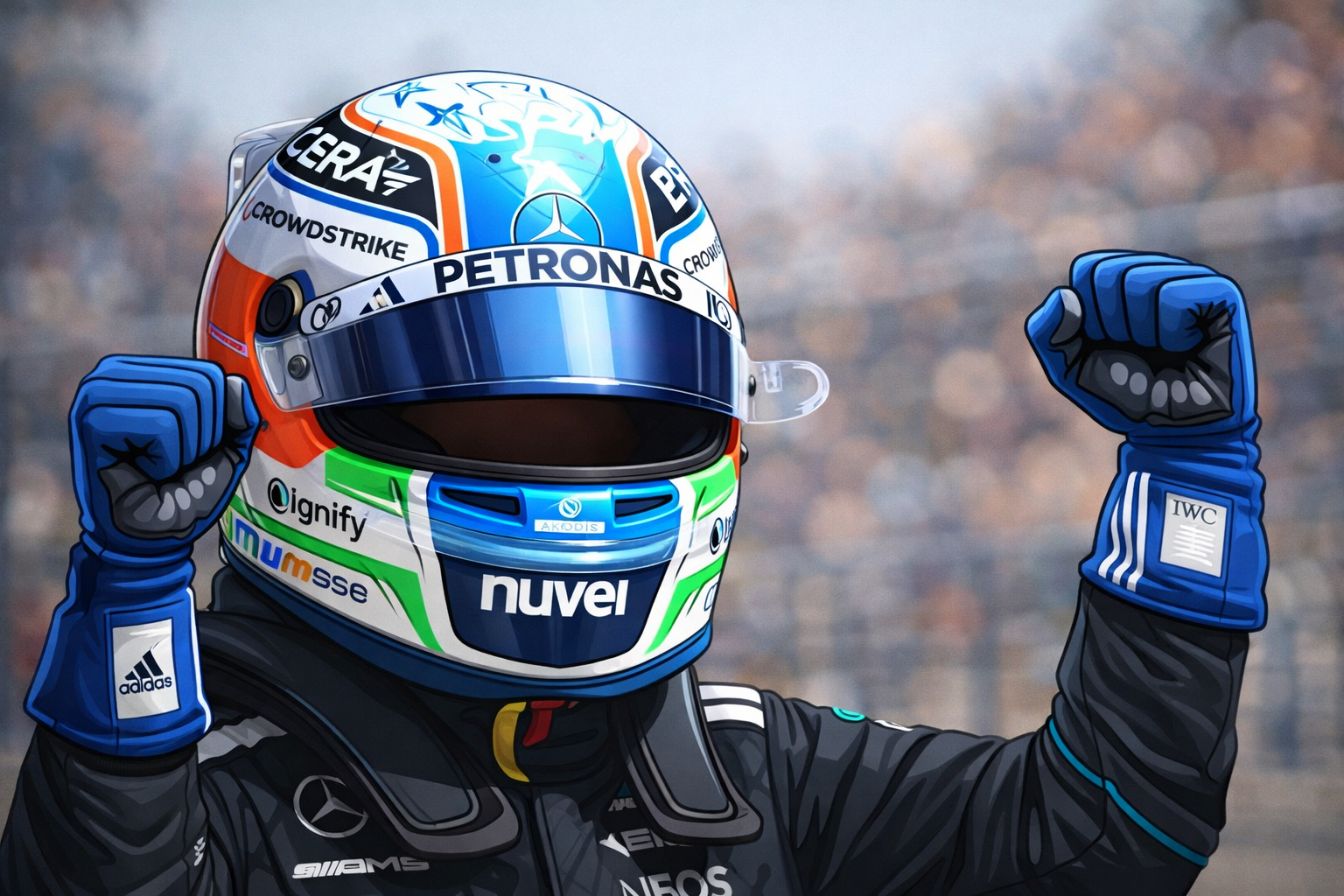
The 2026 grid introduces two rookies who arrive with more pre-season noise around them than most drivers generate in an entire career. Andrea Kimi Antonelli steps into the seat Lewis Hamilton vacated at Mercedes. Isack Hadjar joins Red Bull‘s junior team with the weight of one of the sport’s most demanding organisations behind him and a microscope on everything he does.
Both are genuinely talented. Both are genuinely untested at this level. Here are five things we need to see from them before we can say with any confidence that the hype is justified.
1. Antonelli Needs to Demonstrate He Can Handle the Weight of the Seat
This is not about lap times. Not yet.
The Mercedes seat that Antonelli has inherited carries a specific kind of gravity that no other driver on the grid can match. Hamilton occupied it for twelve years, won six championships in it, and turned it into something that felt permanent. Antonelli is 18 years old and is being asked to make it feel normal.
The first thing we need to see is composure. Not perfection. Not podiums in the opening races. Composure. The ability to absorb a difficult weekend, communicate clearly with his engineers, reset, and come back the following fortnight without visible damage to his confidence.
The rookies who fail at this level rarely fail because they are not fast enough. They fail because the accumulation of pressure, expectation and public scrutiny becomes something they cannot process productively. Antonelli’s junior career suggested someone equipped to handle it. 2026 is where that suggestion gets tested in the real world.
2. Hadjar Needs to Establish Himself Quickly Within the Red Bull System
Red Bull‘s junior programme is unlike anything else in the paddock. It is demanding, it is unsentimentally results-focused, and it has ended careers as quickly as it has launched them. Drivers who do not perform to the organisation’s internal benchmarks find themselves reassigned or released with a speed that sends a clear message to everyone watching.
Hadjar needs to show early that he understands this environment and can thrive within it rather than being consumed by it. That means points finishes in the opening races, a clear technical voice in engineer debriefs, and the kind of measured weekend-by-weekend progression that tells the organisation they have made the right call.
The Red Bull system rewards drivers who make themselves indispensable quickly. Hadjar’s priority in the first third of the season is to become exactly that.
3. Both Rookies Need to Demonstrate Racecraft Under Pressure, Not Just Qualifying Pace
Junior categories reward qualifying pace disproportionately. Formula 1 rewards what you do in the race, under pressure, over distance, when the tyres are degrading, and the driver behind you is faster, and the team is asking questions through the radio that require answers in real time.
Qualifying pace is the easiest thing to assess and the least meaningful in isolation. What we need to see from both Antonelli and Hadjar is evidence that they can manage a grand prix, not just a flying lap.
That means tyre management in the closing stages. It means making the right call in wheel-to-wheel situations — knowing when to defend, when to yield, and when to commit. It means not losing positions in the pit cycle through avoidable errors.
These are learnable skills, but they take time to develop at this level. The rookies who show them early are the ones who stick around.
4. Antonelli Needs a Result That Silences the Conversation
At some point in 2026, Antonelli needs a weekend that changes the narrative.
Not a points finish. Not a solid Sunday in the midfield. A result. A podium, a front row start, a drive in difficult conditions that makes the paddock stop and pay attention in a way that goes beyond managing expectations.
Hamilton had his early in his career. Verstappen had his. The moment that shifts the conversation from “promising rookie” to “this person is genuinely special” is identifiable in retrospect, and it tends to arrive earlier than anyone expects when the talent is real.
We are not setting a deadline. We are simply noting that Mercedes did not put Antonelli in that car to be a solid points scorer. They put him there because they believe he is a future world champion. 2026 is the first year that belief gets tested against reality.
5. Hadjar Needs to Close the Gap to His Teammate
The most honest measure of any rookie’s first season is not their absolute performance. It is their performance relative to the driver alongside them.
Hadjar‘s teammate situation will define how his 2026 is judged internally and externally. The gap in qualifying, the gap in race pace, the gap in the moments that matter — these will tell Red Bull everything they need to know about where he is in his development and what comes next.
Closing that gap does not mean beating his teammate every weekend. It means showing a trajectory that points in the right direction — improvement that is visible and measurable across the season, rather than occasional flashes separated by difficult weekends.
Red Bull are patient with the right drivers. The way to earn that patience is to show you deserve it.
The Bigger Picture: Two Rookies, One Season, Zero Certainties
Antonelli and Hadjar are not the only rookies on the 2026 Formula 1 grid, but they are the ones carrying the most expectation into the season opener. Both have the talent. Both have the preparation. Both have been placed in environments designed, in theory, to give them the best possible chance of succeeding.
What neither of them has yet is the one thing that cannot be simulated, coached, or prepared for in advance.
A Formula 1 season.
That starts now.
