
NEXT RACE
Loading…
starts in
—
Your Time
Track Time
local time
“Alpine is not just a racing team. It is a dream that refuses to die.” – Luca de Meo
Alpine’s identity crisis has been one of Formula 1’s more public and protracted dramas of recent seasons.
A team that has existed under four different names in fifteen years, cycled through team principals with unsettling regularity, and oscillated between genuine ambition and operational dysfunction depending on which particular quarter you happened to be watching.
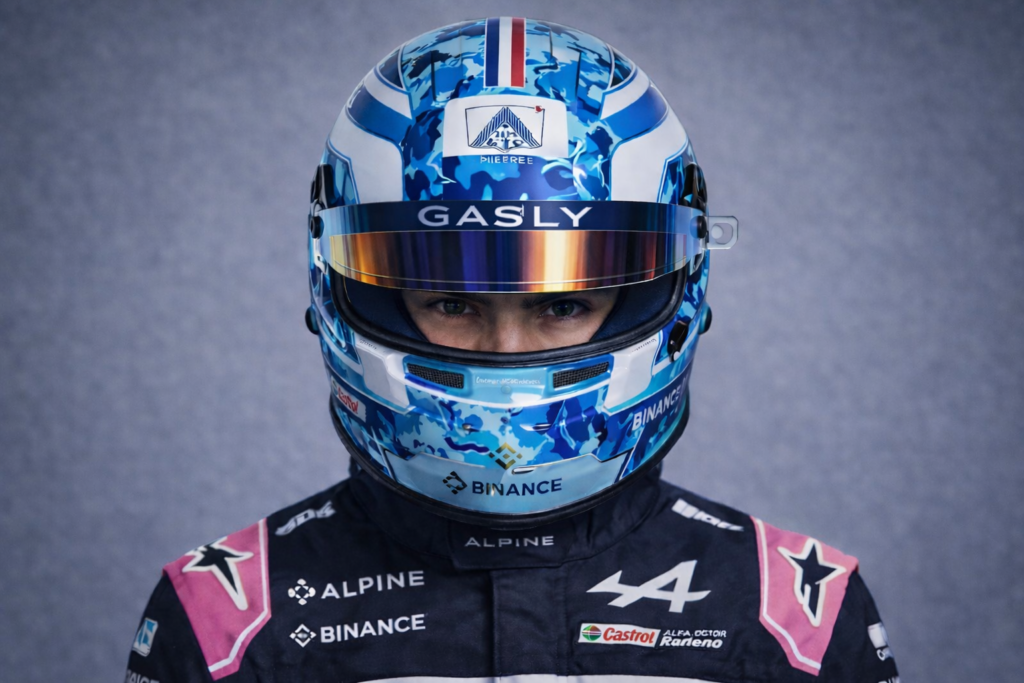
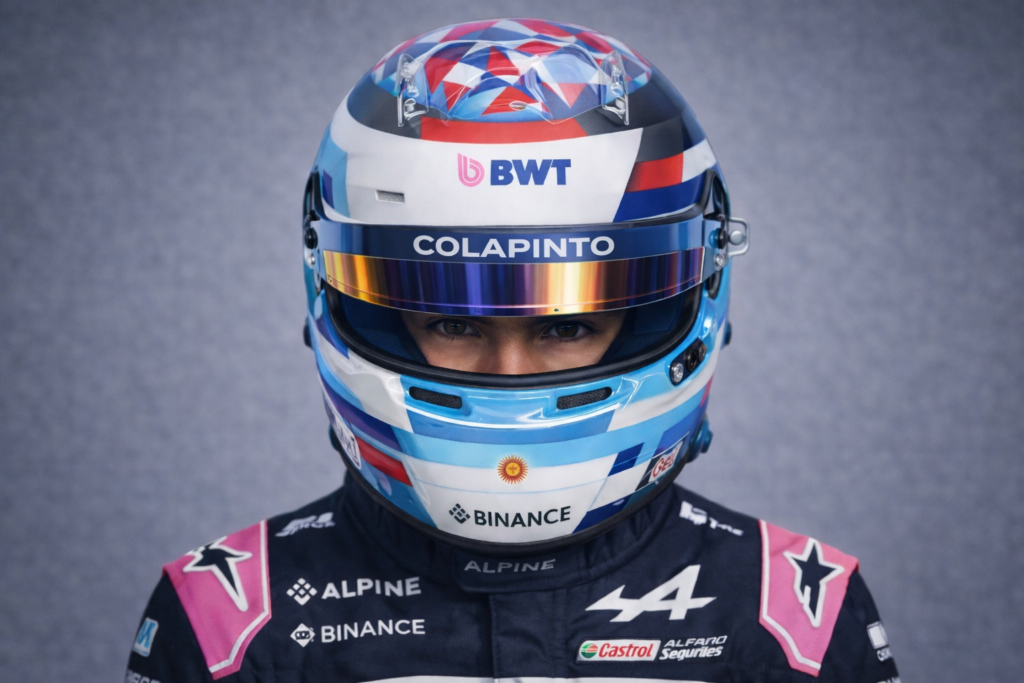
Beneath all of that noise, however, there is a racing operation with genuine technical capability, a manufacturer’s resources, and two drivers in 2026 – Pierre Gasly and Franco Colapinto – who, between them, represent experience, pace, and the kind of motivated hunger that only arrives when a driver feels they have unfinished business.
Alpine have been on the verge of getting it right for long enough that the patience of everyone involved is wearing thin. The 2026 regulations represent their most credible opportunity to actually do it.
The team’s roots trace back to Toleman – the British motorsport outfit that gave Ayrton Senna his Formula 1 debut in 1984 and watched him nearly win the Monaco Grand Prix as a rookie in the rain before the race was controversially stopped.
Toleman became Benetton in 1986, and Benetton became the team that Michael Schumacher used to claim his first two world championships in 1994 and 1995 – seasons that remain controversial for reasons that extended well beyond the racing itself.
Renault acquired Benetton in 2000, and the Renault era delivered Fernando Alonso’s back-to-back championships in 2005 and 2006 – the last time a French constructor stood at the top of Formula 1.
Those seasons represented the peak of what this operation has achieved under any of its identities, and the shadow they cast over everything that followed is long and occasionally oppressive.
The subsequent years brought wins – Robert Kubica’s extraordinary 2008 victory in Canada among them – but also the Crashgate scandal that tarnished the 2008 Singapore result and led to Flavio Briatore’s lifetime ban from the sport. Renault withdrew as a works team after 2011, returned as Renault Sport in 2016 with significant investment and moderate results, then rebranded as Alpine in 2021 to align with Renault’s sports car division.
The Alpine years have been defined by ambition that consistently outpaced delivery. Fifth place finishes in the Constructors’ Championship, a genuinely impressive race win for Esteban Ocon in Hungary in 2021, and a management structure that seemed to change almost seasonally.
Otmar Szafnauer, Laurent Rossi, Bruno Famin – the revolving door of leadership created instability that no amount of resource deployment could fully compensate for.
Alpine matter because Renault’s commitment to Formula 1 as a constructor represents something the sport values – a major European automotive manufacturer choosing to compete at the highest level rather than simply supplying engines. That commitment has been tested repeatedly by results that didn’t justify the investment, but it has held.
They also matter because the French connection runs deep in Formula 1’s cultural identity. A competitive Alpine gives the sport a genuine French team to root for, which has commercial and emotional value in one of the sport’s most important markets.
When Alpine is going well, it resonates beyond the paddock in ways that other midfield results simply don’t.
Alpine, at their best, produce racing that feels genuinely earned rather than strategically manufactured. Gasly is one of the grid’s more instinctive racers – his overtaking moves tend to arrive from creative thinking rather than DRS highways, and his ability to keep a car in contention through difficult stints has been one of his defining qualities since his Toro Rosso days.
Colapinto arrived as a late-season replacement at Williams in 2024 and immediately caught the paddock’s attention with a raw, committed driving style that made experienced observers sit up. His pace in qualifying particularly impressed – the kind of natural speed that suggests the talent was always there, waiting for the right machinery.
The challenge for Alpine has consistently been converting single-lap pace into race results, which requires strategic coherence and operational reliability that hasn’t always been present.
If the 2026 car gives both drivers something they can actually work with, the racing should be worth watching.
Oliver Oakes took over as Team Principal in 2024, becoming one of the youngest principals in the paddock at 37. His background in junior formula racing – he ran Hitech Grand Prix across multiple feeder series – brought a different perspective to the role, more rooted in driver development and operational efficiency than corporate motorsport management. His appointment represented a conscious break from the previous leadership culture.
Flavio Briatore’s return to Alpine in an advisory capacity in 2024 was one of the paddock’s more eyebrow-raising developments, given his history with the team. His influence on the commercial and strategic direction has been acknowledged without being fully detailed, which is perhaps appropriate given the complexities involved.
The Renault power unit operation underpins the team’s technical foundation, and the 2026 regulation changes – which reset the power unit formula – represent an opportunity for Renault’s engine division to close a gap that has existed for several seasons.
Pierre Gasly and Franco Colapinto bring contrasting energies to the 2026 lineup.
Gasly is 29, experienced, and has spent his career oscillating between genuine brilliance and the particular frustration of a driver who knows he is better than his results consistently show.
His 2021 Italian Grand Prix win for AlphaTauri remains one of the more emotionally charged victories of the hybrid era – a driver who had been publicly demoted from Red Bull, fighting back to win at Monza. His move to Alpine in 2023 was supposed to represent a step toward front-running machinery. The machinery hasn’t always cooperated, but his commitment to the project has never wavered.
Colapinto is the wild card – 21 years old, Argentine, and carrying the kind of national passion that makes his every move significant in South America’s largest motorsport market. His late-season Williams appearances suggested a driver with genuine pace and the temperament to handle pressure without being destabilised by it.
A full season with proper preparation should tell Alpine considerably more about what they actually have.
Alpine enter 2026 needing this regulation reset more than almost any other team on the grid.
The previous regulatory framework never quite suited the car’s characteristics, the leadership instability disrupted technical continuity, and the gap between ambition and reality became a running storyline that wore everyone involved down.
The new power unit regulations give Renault’s engine division a fresh start. The new chassis regulations give the technical team a blank sheet of paper. The relative stability in leadership – Oakes has now had longer in the role than most of his predecessors – provides a platform that didn’t exist twelve months ago.
Alpine have the resources to be competitive and the drivers to capitalise on a competitive car. What they have lacked, repeatedly, is the execution to convert those ingredients into sustained results.
The 2026 season is where that changes – or where the conversation about whether it ever will becomes considerably more difficult to avoid.
At the British Grand Prix on 2026-07-05, Franco Colapinto finished P9 and Pierre Gasly finished P10. The team scored 3 constructor points.
The 2026 driver lineup consists of Pierre Gasly, carrying car number 10, and Franco Colapinto, carrying car number 43.
The team’s most recent race win came at the 2021 Hungarian Grand Prix, where Esteban Ocon took the victory.
Flavio Briatore serves as the team principal of BWT Alpine F1 Team.
BWT Alpine F1 Team is based in Enstone, United Kingdom.
The team competes with the A526 chassis during the 2026 Formula 1 season.
BWT Alpine F1 Team is powered by a Mercedes power unit in 2026.
The team first entered Formula 1 in 1986.
At the British Grand Prix on 5 July 2026, Franco Colapinto finished in ninth place and Pierre Gasly finished in tenth place.