
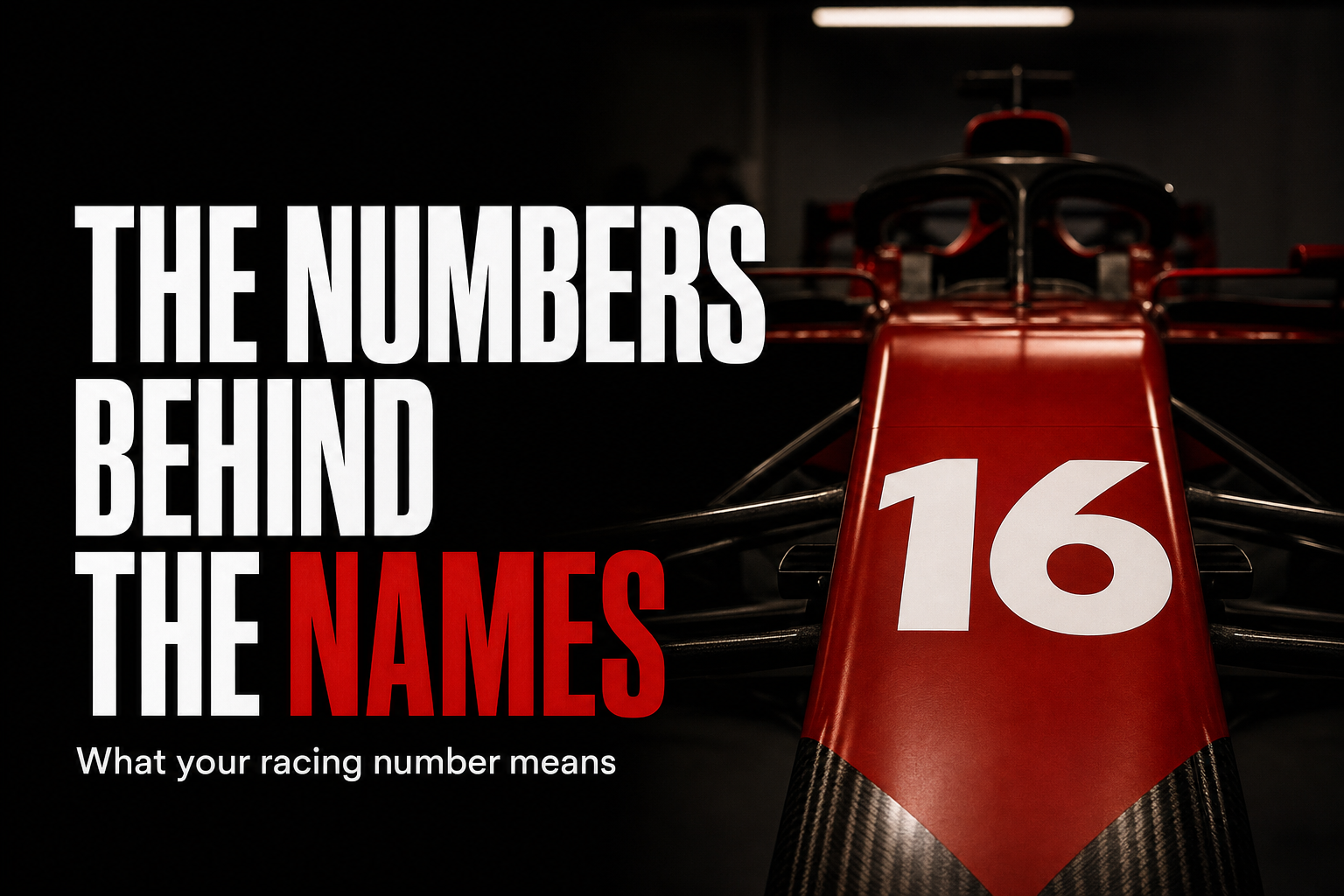

“Your number becomes part of who you are. You see it everywhere, eventually it just feels like you.” That’s Lewis Hamilton on his number 44 and he’s right. Since 2014, Formula 1 drivers have been required to select a permanent racing number that follows them from team to team for their entire career. It sounds like a small administrative change. It turned out to be something more interesting than that.
How It Used to Work
Before the permanent number system, numbers were allocated based on the previous season’s championship standings. The reigning champion carried number 1. Everyone else slotted in behind. It was functional, it was logical and it told you nothing about the person driving the car.
The switch to permanent numbers gave drivers something the sport had never really offered them before: a number that was theirs by choice rather than by finishing position. What they did with that choice is where it gets interesting.
Hamilton’s 44
Of all the permanent numbers in the current era, 44 is probably the most loaded with personal history. Hamilton chose it because it was the number on his go-kart when he first started racing as a child. That’s the whole story and it’s a good one.
There’s something deliberate about carrying a karting number into Formula 1. It’s a refusal to let the sport’s prestige erase where you came from. Every championship, every team change, every new car livery has had that same number on it. When Hamilton won his seventh world title and drew level with Michael Schumacher’s record, the number 44 had been present for every step of the journey from Stevenage to the history books.
Verstappen’s 33, Then 1
Max Verstappen came into Formula 1 as a teenager and picked 33 for reasons that were partly practical (low numbers were available) and partly because he liked how it looked on the car. That’s a perfectly reasonable way to pick a number when you’re a 17-year-old making your debut.
After winning his first world championship in 2021, Verstappen had the option to switch to number 1. He took it. It’s a rare move in the permanent number era and it was a statement. Number 1 carries the weight of tradition in this sport. Choosing to wear it means you’re not just acknowledging what you’ve won. You’re planting a flag.
Vettel’s 5
Sebastian Vettel’s explanation for picking number 5 was disarmingly simple: it was his favourite number. No karting connection, no birth date, no elaborate personal significance. He just liked it.
What’s interesting is that the simplicity of the reasoning didn’t stop the number from becoming deeply meaningful through what happened under it. Four consecutive world championships at Red Bull, four title-winning cars all carrying that same digit. The number earned its weight the hard way, through results rather than backstory.
Leclerc’s 16
Charles Leclerc was born on the sixteenth of October. That’s number 16. It’s a clean, direct choice that a lot of drivers have made in different forms, anchoring their racing identity to something personal rather than professional.
The number has become closely associated with Ferrari’s current generation. There’s a specific weight to any number displayed on a Ferrari and 16 has accumulated its own identity within that context over the years Leclerc has spent at the team.
Russell’s 63
George Russell chose 63 for the same reason Hamilton chose 44: it was his go-kart number. The parallel is worth noting. Two drivers who came through the same junior pathway, both choosing to anchor their Formula 1 identity to where their racing actually started rather than to anything that happened after.
It’s a particular kind of loyalty to your own history. The number doesn’t change when you move to a bigger team or win a bigger race. It stays exactly what it was when you were a kid trying to get noticed.
The Numbers That Belong to History
Not every number is available. The FIA has retired certain numbers associated with legendary drivers and the reasoning is straightforward: some numbers carry a weight that no current driver could reasonably claim or build on.
Ayrton Senna’s 12, worn during specific periods of his career, sits in that category. So does Michael Schumacher’s 7. These aren’t numbers waiting to be chosen. They belong to the history of the sport in a way that the permanent number system quietly acknowledges by placing them out of reach.
It’s a sensible distinction. A driver picking 44 because it was their go-kart number is a personal story. A driver picking 12 because Senna wore it would be borrowing someone else’s.
What the Choices Actually Reveal
Pull back and look at the patterns across the grid and a few categories emerge.
- Karting numbers: Hamilton’s 44 and Russell’s 63 both connect Formula 1 careers to childhood racing. The number is a thread running from the beginning to wherever the career ends up.
- Birth dates: Leclerc’s 16 is the clearest example. Personal but not nostalgic, it’s just a date that matters.
- Simple preference: Vettel’s 5 sits here. Sometimes a number is just a number someone likes and that’s enough.
- Championship tradition: Verstappen switching to 1 after his first title is the only example of a driver in the permanent number era making that particular move and it carried a clear message about how he saw himself in the sport.
None of these categories is more valid than the others. The point of the system is that the choice belongs to the driver. What they do with it is up to them.
Numbers That Grow Into Something
Hamilton put it well. You see the number everywhere and eventually it just feels like you. That process happens regardless of why the number was chosen in the first place. Vettel didn’t pick 5 because of any grand plan, but four world titles later it was inseparable from his identity in the sport.
The permanent number system gave Formula 1 a small but genuine window into how its drivers think about themselves. Not through press releases or team statements, but through a single digit they had to commit to before they knew how their career would go. For the drivers who’ve had long successful careers, those numbers have become part of the visual language of the sport. Painted on cars, printed on merchandise and eventually for the greatest of them, retired alongside the legacy they came to represent.
For anyone wanting to go deeper on the sport’s history and the rules that shape it, the F1 glossary on this site covers the permanent number regulations and much more.
Further reading
- FIA Official Website — The FIA governs the permanent number regulations in Formula 1 and is the primary authority on the rules discussed in this article.
Related picks on Amazon
A few things worth a look if this article got you curious. Links are affiliate: buying through them supports the site at no extra cost to you.
- Lewis Hamilton: My Story (autobiography) — shop on Amazon
- F1 die-cast model car with race number — shop on Amazon
- Official F1 driver replica helmet — shop on Amazon
