

“I’ve enjoyed time away with family and friends, worked hard on my training and now I’m really looking forward to getting back in the car.
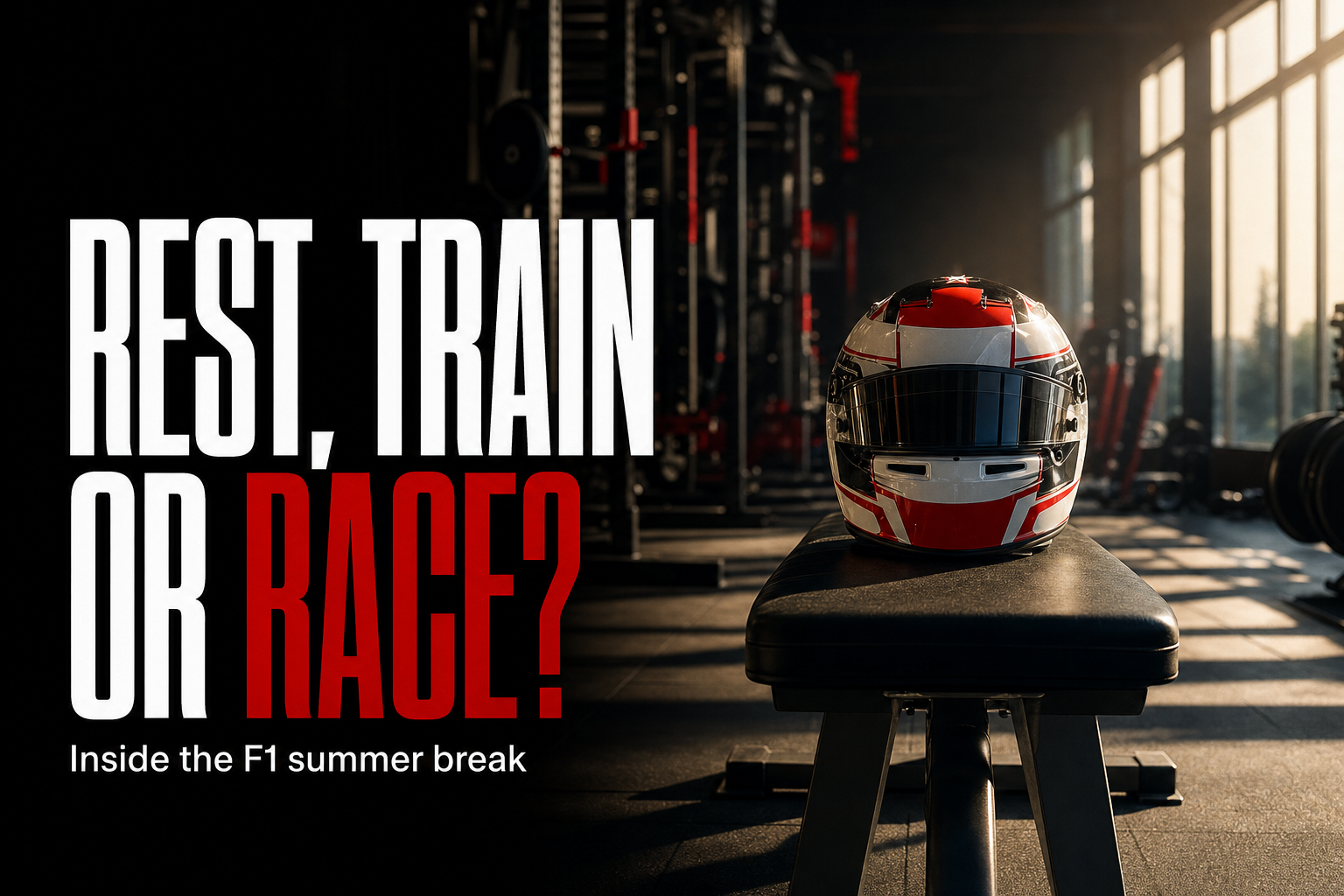
Every August, Formula 1 stops. The paddock empties, the freight sits still and the championship holds its breath for a fortnight. From the outside it looks like everyone goes to the beach. The reality is more complicated than that.
The Pause That Isn’t Really a Pause
The summer break is the sport’s one sustained window of apparent stillness. After months of back-to-back race weekends, the calendar clears and the drivers scatter. Some head home. Some head to the mountains. Some barely leave the simulator chair.
What none of them do, at least not the ones who intend to be competitive in September, is switch off completely. The break shapes the second half of the season as directly as any race weekend. The drivers who use it well tend to be the ones who perform best when racing resumes. That’s not a coincidence.
The Physical Demands Don’t Stop
Formula 1 drivers are serious athletes. The broadcast doesn’t always make that obvious because the most visible part of their job involves sitting in a seat. But the physical demands of driving a modern F1 car are substantial.
The g-forces through high-speed corners, sustained across two hours of racing, require neck and core strength that most athletes in conventional sports never develop. Cockpit temperatures can exceed 50 degrees Celsius. The mental load of processing information at racing speeds, communicating with engineers and making decisions in fractions of seconds produces a fatigue that accumulates across a 24-race season in a way that’s hard to quantify from the outside.
The summer break is the first real recovery window since pre-season testing. How drivers use it matters.
Max Verstappen has spoken about maintaining his physical training programme through August, adjusting the intensity rather than cutting the frequency. Lewis Hamilton has maintained year-round fitness regimes for most of his career, treating the break as a period for different training rather than less of it. The pattern is consistent across the grid’s most durable performers: the break is a gear change, not a stop.
The drivers who arrive at Zandvoort noticeably off the pace are usually the ones who treated August as a genuine holiday. It shows within the first session.
Sim Racing: More Than a Hobby
A growing number of drivers spend a significant chunk of the summer break on simulators. Some use their team’s facility. Others use consumer-grade sim racing hardware at home, which has become sophisticated enough to offer real training value.
Verstappen’s passion for sim racing is well documented and it’s genuinely recreational as well as practical. The hours spent on platforms like iRacing during time away from the real car maintain the specific reflexes and spatial awareness that racing demands. Gym training alone can’t replicate that. The hand-eye coordination, the instinctive braking references, the feel for oversteer at the limit: those things need to be kept sharp and a simulator is the closest available substitute for the car itself.
The teams’ own simulators also run through the break on a programme built around what the car needs next. Setup changes get tested. Development directions get explored. The circuits coming up in September and October get mapped out in detail. A driver who’s spent time understanding the characteristics of those tracks arrives at the event with a familiarity that shortens the adjustment period of a race weekend. That’s a real advantage in a sport where Friday practice time is limited.
The Championship Maths
With roughly half the season remaining when the break begins, the gap to the championship leader is either closable or it isn’t. The teams that make an honest assessment of their position during August tend to make better decisions in September than those who let optimism substitute for analysis.
The decisions made during the break are consequential. Development priorities get set. Upgrade schedules get confirmed or revised. The specific challenges of the remaining rounds get studied. Before and after the mandatory factory shutdown, engineers and strategists use the time to evaluate what the car needs and refine their plans for the run-in. During the shutdown itself, F1 regulations require most performance-related factory work to stop, so the preparation that happens either side of that window carries extra weight.
For teams in a title fight, the break is when the season’s second half gets planned in detail. For teams further down the order, it’s often when honest conversations happen about what’s actually achievable before Abu Dhabi.
What the Return to Racing Reveals
The Dutch Grand Prix is where the season resumes after the 2026 summer break. Zandvoort is a demanding circuit to return to. The banked corners and narrow layout demand immediate commitment and expose any hesitation. Qualifying there reveals within minutes who arrived prepared and who needs a session or two to find their edge again.
That gap matters more than it might seem. In a championship fight, the driver who finds their pace immediately when racing resumes is already ahead in the psychological battle. The title run-in is partly about momentum and the driver who carries momentum out of the summer break rather than spending the first weekend rebuilding it has a meaningful advantage.
What the Best Drivers Actually Do
- Maintain structured physical training through the break, adjusting intensity rather than stopping
- Use simulators to stay sharp and build familiarity with circuits coming up in the second half
- Rest deliberately rather than passively, treating recovery as part of preparation
- Spend time with family and away from the paddock environment, which matters for mental reset
- Arrive at the first race back with their preparation complete rather than using the opening weekend to find form
Recovery Is Part of the Job
There’s a version of the summer break story that treats rest as the enemy of performance. That’s not quite right. Deliberate recovery is part of what keeps a driver sharp across a 24-race season. The mental fatigue that accumulates from months of consecutive race weekends is real and it affects performance in ways that are harder to measure than lap times but no less significant.
The drivers who manage the break best are the ones who understand that rest and preparation aren’t opposites. Time with family, time away from the paddock, time doing something that has nothing to do with Formula 1: those things matter for the mental reset that a long season demands. Alonso’s quote at the top of this piece captures it precisely. Family time, hard training, then back in the car. In that order.
The summer break is two weeks. The second half of the season is twelve or thirteen races. What happens in August shapes what happens from September onwards more than most people watching from the outside would guess. The drivers who treat it seriously tend to be the ones still fighting for something when the Abu Dhabi Grand Prix arrives.
Further reading
- FIA Official Site: The FIA governs the regulations covering the mandatory factory shutdown and summer break rules referenced in the article.
- Formula 1 Official Site: The primary source for the F1 calendar, race schedule and official driver statements about the summer break period.
Related picks on Amazon
A few things worth a look if this article got you curious. Links are affiliate: buying through them supports the site at no extra cost to you.
- Total Competition: Lessons in Strategy from Formula One: shop on Amazon
- F1 sim racing wheel and pedal set for PC: shop on Amazon
- How to Build a Car by Adrian Newey: shop on Amazon
- F1 driver fitness and training guide book: shop on Amazon
