

NEXT RACE
Loading…
starts in
—
Your Time
Track Time
local time
“This team exists to find the next Max Verstappen. Everything else is secondary.” – Helmut Marko
Visa Cash App RB occupies a unique and occasionally uncomfortable position in Formula 1.
They are not quite an independent team and not quite a junior programme – they exist somewhere in between, functioning as Red Bull’s development laboratory while also being expected to perform as a legitimate constructor in their own right.
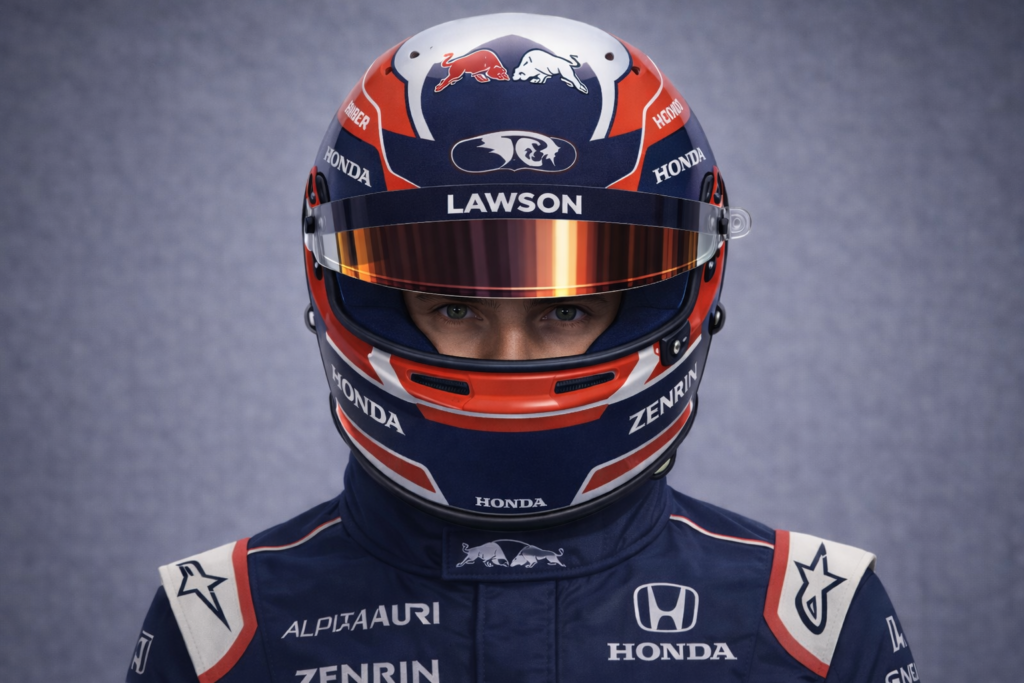
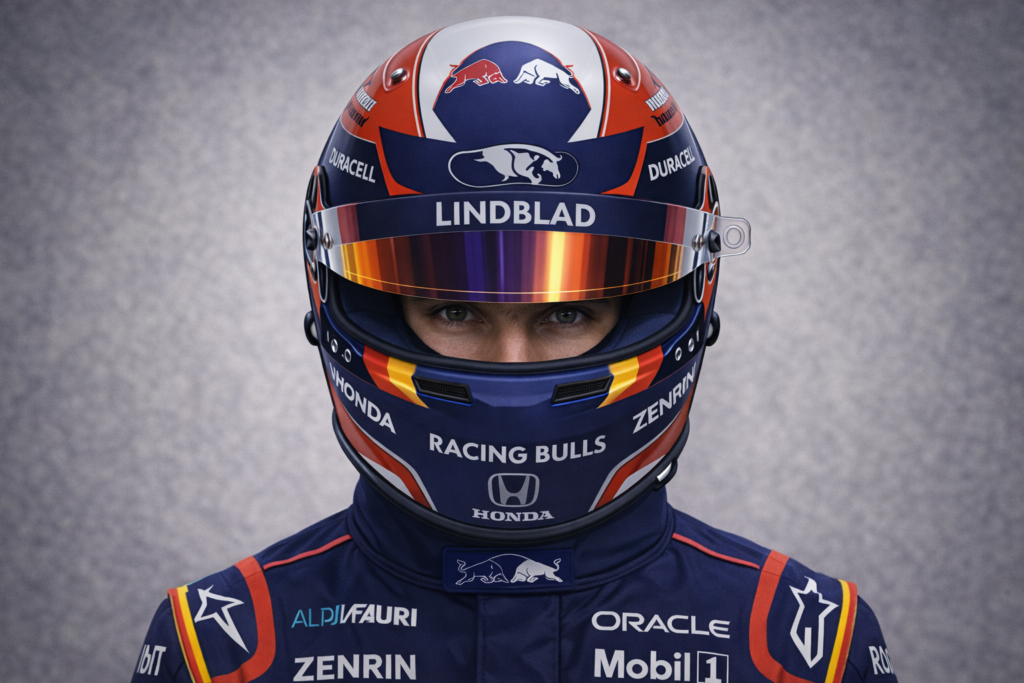
It is a dual mandate that creates genuine tension, and navigating it successfully requires a specific kind of clarity about what the team is actually for. In 2026, with Liam Lawson and Arvid Lindblad sharing the garage, that mandate is as transparent as it has ever been.
This is a team built around the question of who gets promoted next – and everything else, including race results, exists in service of answering it.
The team’s origins trace back to Minardi – one of Formula 1’s most beloved also-rans, an Italian operation that competed from 1985 to 2005 with more heart than horsepower and produced more future champions as alumni than its results ever suggested.
Red Bull acquired Minardi in 2005 alongside the Stewart-Jaguar operation, rebranding it as Scuderia Toro Rosso – Italian for “Red Bull” – as a deliberate feeder structure for the senior team.
Toro Rosso’s finest moment came almost immediately. Sebastian Vettel won the 2008 Italian Grand Prix in the wet in a Toro Rosso – the team’s first and, for many years, only victory – delivering a performance so extraordinary it accelerated his promotion to the senior team and effectively launched one of the sport’s great careers.
The subsequent years were characterised by the rhythm of the junior programme: promising drivers arriving, developing, either earning promotion or departing for other teams. Jaime Alguersuari, Jean-Eric Vergne, Daniil Kvyat, Carlos Sainz, Max Verstappen – the conveyor belt produced talent with impressive regularity, even if the team’s own results rarely reflected that quality.
The rebranding to AlphaTauri in 2020 represented an attempt to give the team a more distinct identity aligned with Red Bull’s fashion brand. It didn’t fundamentally change the operation’s purpose. The further rebrand to RB in 2024, and subsequently Visa Cash App RB with title sponsorship, reflected a commercial repositioning while the core DNA remained constant.
RB matter because the Red Bull junior programme is the most successful driver development system Formula 1 has ever produced. Verstappen, Vettel, Sainz, Ricciardo – all passed through the Red Bull ecosystem, and many through this specific team. For the sport, having a functioning, well-resourced development pathway that actually delivers world-class talent into the senior grid is genuinely valuable. It provides a mechanism for exceptional juniors who might otherwise struggle for opportunities.
For Red Bull as an organisation, the team’s value is almost entirely strategic rather than sporting. Race results matter less than whether the drivers in the car are developing on schedule.
RB tend to operate as an agile midfield team with better resources than their championship position often suggests. The technical crossover with Red Bull Racing – shared intellectual property within regulatory limits – means the car is rarely uncompetitive in a fundamental sense. What varies is the driver quality in any given season, which inevitably affects results more than the machinery does.
When they have two genuinely quick drivers in sync with the car, they can trouble the upper midfield and occasionally ambush a result that surprises even their own pitwall. The racing tends to be uncomplicated – the team doesn’t carry the strategic baggage of trying to win championships, which occasionally allows them to take risks that teams with more to lose won’t consider.
Laurent Mekies serves as Team Principal, having moved across from Ferrari’s sporting director role in 2023. His appointment gave the team a senior figure with genuine front-running experience – someone who has operated inside a championship-contending environment and understands what standards that requires. The technical operation benefits from Red Bull’s broader infrastructure while maintaining its own development capability in Faenza, Italy.
Helmut Marko’s influence over the junior programme and driver decisions remains significant, as it always has. His assessment of driver progress – blunt, occasionally brutal, always consequential – shapes the careers of everyone who passes through the Red Bull system.
Liam Lawson and Arvid Lindblad bring very different profiles to the 2026 lineup. Lawson is the more experienced of the two, having navigated the particular complexity of the Red Bull system with patience and resilience – called up for emergency duty at various points before finally securing a full-time seat. He is quick, combative, and has already demonstrated he belongs at this level. His 2026 season is essentially an extended audition for the senior team, which is both motivating and mildly terrifying.
Lindblad is younger, British, and arrives having impressed thoroughly through the junior categories with a composure that Red Bull’s talent scouts clearly found compelling. He is at the very beginning of his Formula 1 education, which means the team will manage his expectations carefully while extracting as much data as possible about what he can eventually become.
The interesting dynamic is that both drivers know exactly what success looks like in this team: a phone call from Milton Keynes.
RB’s 2026 objectives are defined less by constructors’ championship position than by individual driver development milestones. Can Lawson demonstrate the consistency and pace that justifies senior team consideration? Can Lindblad adapt to Formula 1 machinery quickly enough to provide meaningful data points? Can the team itself remain competitive enough in the midfield to give both drivers the kind of race situations that actually test and develop them?
The answers to those questions matter more to Red Bull’s long-term planning than any trophy Visa Cash App RB might collect along the way.
It is a strange way to run a racing team – and also, clearly, a very effective one.
At the British Grand Prix on 2026-07-05, Liam Lawson finished P6 and Arvid Lindblad finished P7. The team scored 14 constructor points.
The 2026 driver lineup consists of Liam Lawson, carrying car number 30, and Arvid Lindblad, carrying car number 41.
The team has not recorded a race win in its Formula 1 history.
Alan Permane serves as the team principal of Visa Cash App Racing Bulls Formula One Team.
The team is based in Faenza, Italy.
The team is powered by a Red Bull Ford power unit in the 2026 season.
The team competes with the VCARB 03 chassis during the 2026 Formula 1 season.
The team first entered Formula 1 in 1985.
At the British Grand Prix on 5 July 2026, Liam Lawson finished in sixth place and Arvid Lindblad finished in seventh place.