NEXT RACE
Loading…
starts in
—
Your Time
Track Time
local time
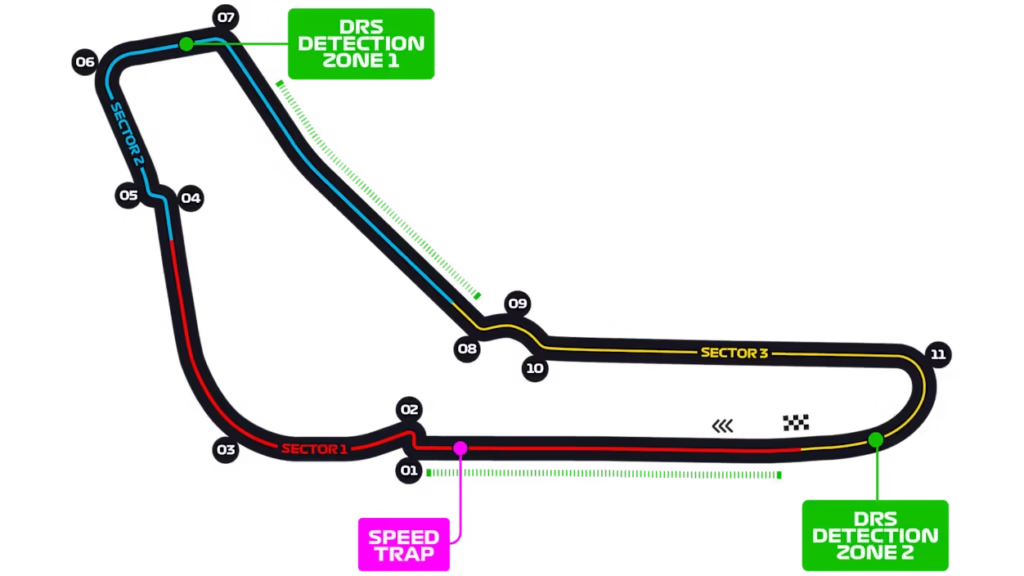
Autodromo Nazionale Monza, located near Milan in Monza, Italy, is one of the most iconic and historic circuits in Formula 1. The circuit has a history dating back to 1922, making it the second-oldest circuit still in use on the F1 calendar. It has served as the venue for the Italian Grand Prix and has been part of the Formula 1 World Championship since 1950.
The 5.793 km circuit runs in a clockwise direction and features 11 turns. Its straightforward layout emphasizes raw speed over technical cornering ability, with two long straights and chicanes creating a unique racing dynamic where aerodynamic efficiency becomes paramount. The high-speed nature of Monza makes it particularly challenging for tire management and fuel strategy, while also creating opportunities for dramatic overtaking maneuvers along the lengthy straights.
Monza is famous for its high-speed characteristics and predominantly flat layout, featuring some of the fastest corners in all of motorsport. The circuit’s unique Parabolica corner and aggressive chicanes demand exceptional skill and nerves from drivers.
Monza is synonymous with pure speed and bravery. Hosting the prestigious Italian Grand Prix, it represents the heartbeat of Italian motorsport and the passionate Tifosi fan culture. The fervent Italian crowd creates an electric and patriotic atmosphere, making it one of the most atmospheric races on the calendar. For Italian drivers and Ferrari teams, victory at Monza holds special significance, and the circuit remains an integral part of Formula 1’s rich heritage and tradition.
A lap at Monza measures 5.793 km. The circuit’s two long straights contribute significantly to this distance and to its reputation as one of the fastest tracks in Formula 1.
Monza has 11 turns. The layout includes aggressive chicanes and high-speed corners, most notably the Parabolica.
Monza first hosted a Formula 1 World Championship race in 1950. The circuit itself has a longer history, having been established in 1922.
The current lap record at Monza is 1:21.046, set in 2024.
The Monza circuit runs in a clockwise direction.
Monza has two DRS zones. These zones, combined with the circuit’s long straights, contribute to the overtaking opportunities the track is known for.
The Formula 1 race distance at Monza is 306.72 km.
Monza hosts the Italian Grand Prix. It is one of the most prestigious events on the Formula 1 calendar and holds particular significance for Italian drivers and Ferrari.
The high-speed nature of Monza makes tire management and fuel strategy especially demanding. The circuit’s layout also means aerodynamic efficiency is paramount, as the two long straights heavily reward low-drag setups.
The Tifosi refers to the fervent Italian fan base that attends the Italian Grand Prix at Monza. Their passionate and patriotic presence contributes to the electric atmosphere that makes Monza one of the most atmospheric races on the calendar.
Monza is known for its unique Parabolica corner and its aggressive chicanes. These features demand exceptional skill and nerves from drivers and are among the defining characteristics of the circuit.
The Monza circuit was established in 1922, making it the second-oldest circuit still in use on the Formula 1 calendar.