NEXT RACE
Loading…
starts in
—
Your Time
Track Time
local time
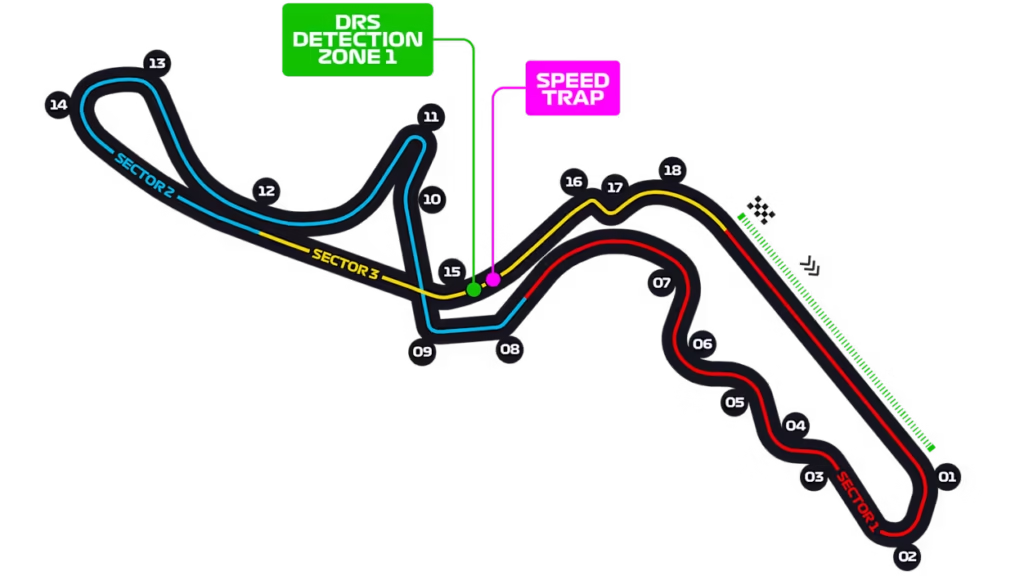
Suzuka International Racing Course is a motorsport facility located in Mie Prefecture, Japan. The circuit has hosted the Japanese Grand Prix since 1976, establishing itself as an iconic destination for Formula 1. Suzuka first hosted a Formula 1 race in 1987. The passionate support of knowledgeable Japanese motorsport enthusiasts has long been a defining feature of race weekends at the venue.
Suzuka’s circuit measures 5.807 km in length and features 18 corners. Its distinctive figure-eight configuration is unique among Formula 1 venues, with the track crossing over itself via an overpass. The layout runs in a clockwise direction and includes challenging elevation changes, flowing corners that encourage high speeds, and technical sections that require meticulous setup and driving precision. The variety of corner types creates a comprehensive test of vehicle performance, driver skill, and team strategy.
The 130R corner is one of Suzuka’s most celebrated features, a high-speed left-hander that demands bravery and commitment from drivers. The circuit also includes tight chicane sections that require precision and contrast sharply with the flowing nature of the surrounding layout. Together, these elements contribute to Suzuka’s reputation as one of Formula 1’s most demanding and respected racing venues.
Suzuka’s uncompromising layout demands respect from every competitor. The combination of flowing high-speed corners, technical chicanes, and elevation changes means the circuit provides a thorough examination of both car and driver. The Japanese Grand Prix at Suzuka has produced some of Formula 1’s most memorable and dramatic moments, and the circuit continues to captivate global audiences with its unforgiving nature and demanding characteristics.
A lap at Suzuka International Racing Course measures 5.807 km. The total race distance covers 307.471 km.
Suzuka has 18 corners. These include a mix of high-speed flowing sections and tight chicanes.
Suzuka first hosted a Formula 1 race in 1987. The circuit has hosted the Japanese Grand Prix since 1976, though not always as a Formula 1 venue.
The current lap record at Suzuka is 1:30.983, set by Lewis Hamilton in 2019.
Suzuka features a distinctive figure-eight configuration, which is unique among Formula 1 circuits. The track crosses over itself via an overpass, creating the characteristic shape.
Suzuka runs in a clockwise direction.
Suzuka has one DRS zone.
Suzuka International Racing Course is located in Suzuka, Mie Prefecture, Japan.
The 2026 Japanese Grand Prix at Suzuka was won by Andrea Kimi Antonelli driving for Mercedes.
Max Verstappen won four consecutive Japanese Grand Prix races at Suzuka, from 2022 through 2025, all driving for Red Bull.
Suzuka presents drivers with elevation changes, high-speed flowing corners, and tight chicane sections, all within its figure-eight layout. The variety of corner types demands precision, bravery, and meticulous car setup.
The 130R is one of Suzuka’s most celebrated corners, a high-speed left-hander that demands commitment and bravery from drivers. It is one of several features that contribute to the circuit’s reputation as one of Formula 1’s most demanding venues.