

“Smooth is fast. Fast is fine. But smooth is fast.”
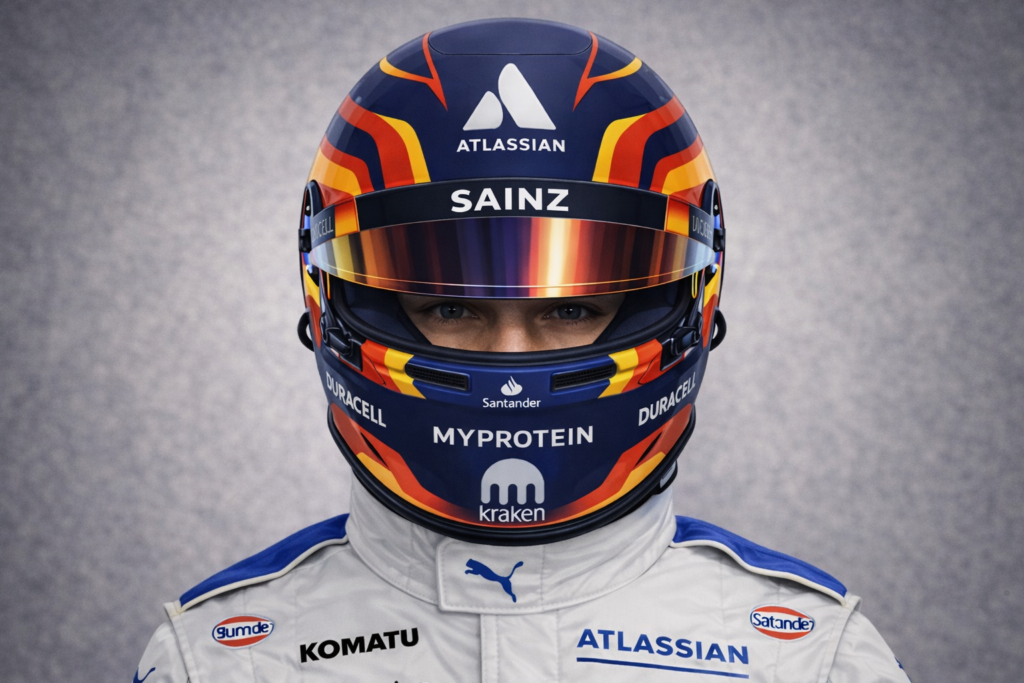
Biography
Recent Form
Five races, zero points. That’s the brutal summary of Sainz’s recent run with Williams. The Monaco Grand Prix and Austrian Grand Prix both ended in retirements, the Barcelona Grand Prix and British Grand Prix saw him lapped and the Belgian Grand Prix brought a P16 finish from nineteenth on the grid. There’s been no consistency to hold onto, just a string of weekends where the car and the results have refused to cooperate.
The one moment that offered any hint of promise was Barcelona, where he climbed from P16 to P12 despite being lapped. That kind of grid-to-finish improvement shows he’s still fighting. But a P12 with no points is a footnote, not a turning point and the five races as a whole paint a picture of a driver being let down by a package that simply isn’t competitive enough right now.
Latest Race
The Belgian Grand Prix on 19 July was another difficult afternoon. Sainz started from nineteenth and worked his way up to P16 by the flag, which at least means he was moving forward rather than backwards. No points came from it. A finish of P16 from that far back on the grid isn’t a disaster in isolation but it’s the fourth consecutive race without scoring and the Williams clearly didn’t have the pace to threaten the points-paying positions at Spa.
2026 So Far
Sainz sits fifteenth in the drivers’ championship with six points to his name. Those six points came earlier in the season. Nothing has been added across the last five races and P15 in the standings reflects exactly where Williams are right now as a team. The trajectory is flat at best. Without a significant step forward from the car it’s hard to see where the next points are coming from.
The Snapshot
Carlos Sainz has built his Formula 1 career on something far less glamorous than hype, and considerably more durable: control.
He isn’t the loudest personality on the grid, nor is he marketed as some generational prodigy arriving to reshape the sport. You won’t see a driver thrashing the car through corners or making headlines for spectacular mistakes. Instead, what Sainz does consistently, methodically, is refine, analyse, and extract everything a machine can offer.
After years navigating the internal politics and technical demands of top teams, his arrival at Williams in 2026 feels different from most driver moves. It’s not a gamble on potential. It’s a statement. Williams is signing a driver with multiple wins, the hard-won experience of operating at the sharp end of the grid, and the technical intelligence to actually help rebuild a project properly rather than just benefit from it. They’re not signing potential. They’re signing experience, technical rigour, and the credibility that actually attracts the infrastructure a rebuild needs.
Why He Matters
Sainz represents something the grid doesn’t have enough of: credibility without ego. For Williams, his presence signals genuine ambition. Teams don’t attract proven race winners unless they’re serious about moving forward, and Sainz’s experience at Ferrari – his understanding of how front-running structures operate, his ability to give detailed, constructive feedback – makes him far more than just a driver slot.
For the broader grid, he’s quietly become one of the most complete all-round operators in Formula 1. He rarely makes the kind of unforced errors that wreck seasons. He doesn’t disappear for stretches. He understands tyre management intuitively, reads race rhythm like a musician reads tempo, and has mastered the subtle art of extracting performance when the car simply isn’t perfect. Some drivers need chaos to perform; others need a perfect machine. Sainz builds his own platform regardless of what’s underneath him.
The Rise – Patience Over Hype
His ascent wasn’t the explosive trajectory that sells sponsorships. It was earned, step by methodical step. Toro Rosso to Renault, McLaren to Ferrari – at each stop, he walked into difficult team dynamics, competitive situations, or both, and found a way not just to survive but to thrive. What sets him apart is that he adapted to each environment rather than expecting each environment to adapt to him.
At Ferrari, he proved something that can’t be faked: he could win. Not manage, not collect points, but execute under genuine pressure in a top team’s machinery. His victories weren’t statistical accidents. They were controlled, strategic performances that reflected months of setup development and race-day intelligence. More importantly, he learned what championship-level preparation actually looks like – the standards, the precision, the relentless attention to marginal gains. That knowledge becomes leverage now at Williams, where the project is still building but the foundation exists.
What He’s Actually Like to Watch
Sainz is methodical behind the wheel in a way that’s almost unfashionable. He doesn’t throw the car around corners or hunt for dramatic overtakes. He positions the vehicle through every apex, building grip progressively rather than forcing it. His steering inputs are clean and economical, and his braking phases are measured. Over the course of a race stint, that smoothness compounds into a genuine advantage.
He’s particularly dangerous when managing the chaos that races inevitably throw up – safety car periods, tyre offset decisions, strategy calls made under pressure. He reads races like a chessboard rather than a sprint, which means when he moves on a driver ahead or defends against pressure, it often looks almost inevitable. The win appears decided before it’s actually won.
Off-Track: The Steadiness
Sainz was raised in motorsport – his father João wasn’t just involved in the sport, he was a rally legend, so discipline and technical language were embedded early on. That influence shows everywhere; he speaks to engineers without pretence, understands data fluently, and approaches car development like a craftsman rather than just an athlete.
What’s notable is that he manages to be analytical without becoming robotic, professional without becoming distant. Away from circuits, he’s measured: golf, fitness, a tight circle of close friends rather than a sprawling entourage. He doesn’t chase spectacle or require constant attention to feel validated. There’s a steadiness to him, the sense that he’s entirely comfortable in his own development curve, trusting the process because he understands it.
Where to Follow Carlos
Follow Carlos directly for behind-the-scenes updates, training clips, and race weekend content: Instagram (@carlossainz55) · X / Twitter (@carlossainz55) · Official merchandise. For fixtures and the wider championship picture, our race calendar tracks every round and standings update.
The Williams Chapter
The real question now isn’t whether Carlos Sainz is quick enough. It’s whether Williams can rise quickly enough around him to make the partnership truly sing. He brings proven race-winning capability, meticulous feedback, and the credibility that helps attract the next tier of talent and resources. If the project aligns properly, he could become the cornerstone of a genuine resurgence.
And if circumstances conspire against it? He’ll still leave the team better than he found it. That’s not a guess – that’s a pattern.
Carlos Sainz – Frequently Asked Questions
Who does Carlos Sainz drive for in 2026?
As of the 2026 Formula 1 season, Carlos Sainz drives for Williams.
What nationality is Carlos Sainz?
Carlos Sainz is Spanish.
How old is Carlos Sainz in the 2026 season?
Carlos Sainz is 31 years old during most of the 2026 season.
What race number does Carlos Sainz use in Formula 1?
Carlos Sainz races with number 55.
Who is Carlos Sainz’s team mate at Williams in 2026?
As of 2026, Carlos Sainz’s Williams team mate is Alex Albon.
When did Carlos Sainz make his Formula 1 debut?
Carlos Sainz made his Formula 1 debut in 2015.
How long is Carlos Sainz’s contract with Williams?
Sainz joined Williams on a two-year agreement covering 2025 and 2026, with options to extend.
Has Carlos Sainz won a Formula 1 race?
Yes. As of 2026, Carlos Sainz has multiple Grand Prix wins and podium finishes in Formula 1.
What is Carlos Sainz known for as a driver?
He is known for strong racecraft, smart tyre management, and detailed technical feedback that teams value for car development.
Is Carlos Sainz related to rally driver Carlos Sainz?
Yes. Carlos Sainz is the son of Carlos Sainz Sr., a two-time World Rally Champion.