

“Still I rise.”
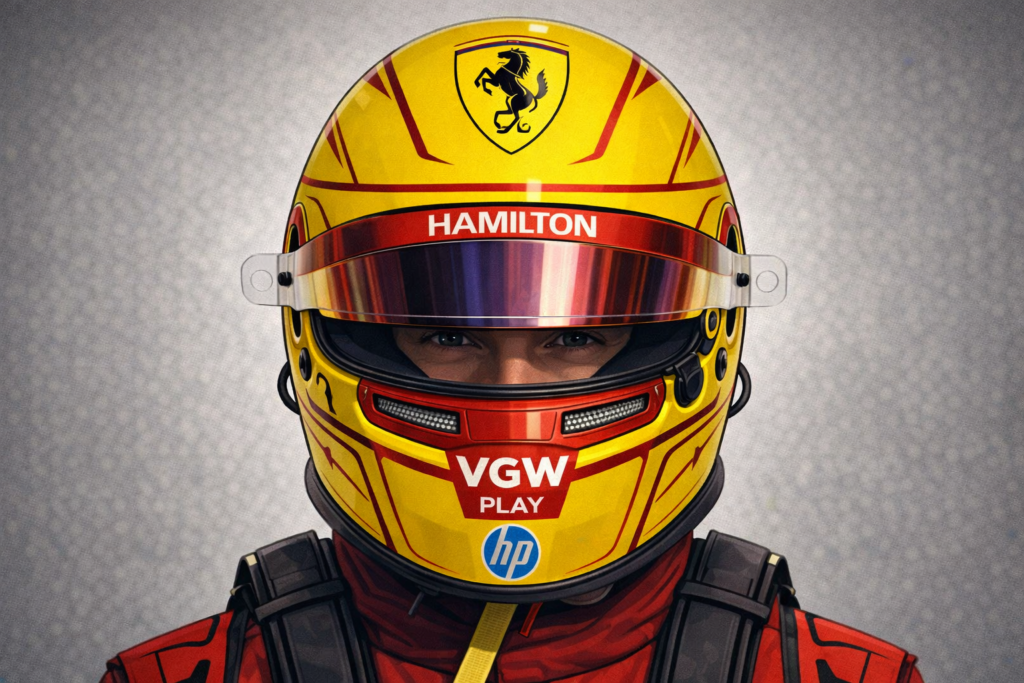
Biography
Recent Form
Lewis Hamilton has put together a strong run of results across the last five races, collecting points finishes at every round and demonstrating consistent pace at the front of the field. The highlight of this stretch came at the Barcelona Grand Prix, where he converted a second-place grid slot into a dominant victory — complete with the fastest lap — underlining that his move to Ferrari has genuine race-winning potential.
Either side of that Barcelona triumph, Hamilton has shown admirable resilience. A second place in Monaco and another in Canada — the latter from fifth on the grid — demonstrated his ability to extract maximum value from the car regardless of starting position. The Austrian Grand Prix was a more muted afternoon, yielding fifth from third on the grid, but he bounced back immediately at Silverstone to secure third place and keep his championship challenge firmly alive.
Latest Race
At the British Grand Prix on 5 July 2026, Hamilton delivered a composed and measured drive to finish third, matching his grid position throughout the race. Racing in front of his home crowd at Silverstone, he secured 15 points to add to his season tally — a solid if unspectacular result that maintained his momentum in the championship fight without the drama of a position gained or lost from where he started.
2026 So Far
Hamilton sits third in the Drivers’ Championship with 147 points and one race victory to his name, placing him firmly in contention as the season reaches its midpoint. His results have been consistently strong — five points finishes from five races in this sample alone — and the Barcelona win confirms that Ferrari can challenge for victories on the right weekend, giving Hamilton every reason to believe the title fight remains within reach.
The Snapshot
Lewis Hamilton doesn’t really need an introduction – but somehow, even after everything, he still divides opinion. Seven world titles. Over 100 wins. Records that used to feel untouchable. And now, in the most unexpected late-career twist imaginable, he’s heading to Ferrari.
Love him or not, Formula 1 has never quite figured out what to do with Lewis Hamilton – and that’s exactly why he matters.
Why He Matters
Hamilton isn’t just statistically dominant. He changed the centre of gravity of the sport.
Before Lewis, Formula 1 still felt like a closed club. After Lewis, it became global in a different way; louder, more cultural, more uncomfortable at times. He forced conversations the sport wasn’t ready for, whilst still doing the one thing it respects above all else: winning.
That combination made him impossible to ignore – and impossible to neatly package.
The Rise
The early story is well known: karting prodigy, signed to McLaren’s young driver programme at 13, ruthless through the junior ranks.
What’s easy to forget is just how fast it all happened.
By 2007, Hamilton arrived in Formula 1 as a rookie and immediately went toe-to-toe with a reigning double world champion – and very nearly won the title in his first season. That doesn’t happen by accident. That happens when talent meets complete fearlessness.
A year later, he won his first championship in Brazil in one of the most dramatic finishes the sport has ever produced. The trajectory was clear: this wasn’t a flash. This was the start of something serious.
The Defining Era: Mercedes
The move to Mercedes in 2013 looked risky at the time. In hindsight, it was one of the smartest decisions any driver has ever made.
When the hybrid era began in 2014, Hamilton and Mercedes didn’t just dominate – they controlled the sport. Titles piled up. Records fell quietly, then all at once. His rivalry with Nico Rosberg burned hot and fast, and when it ended, Lewis entered a different phase: calmer, sharper, more complete.
This is where the numbers got silly. Wins, poles, championships – by the end, he wasn’t chasing history. He was history.
What He’s Actually Like to Watch
At his best, Hamilton is devastating.
He’s one of the greatest wet-weather drivers the sport has ever seen. His tyre management is elite. His ability to feel grip where others can’t is almost unfair. When everything clicks, he doesn’t just beat the field – he drains the life out of it.
He’s also emotional, sometimes fragile, occasionally messy on the radio. And that’s part of the package. You always know where you stand with Lewis – even when he’s annoyed.
Off-Track: The Important Bits
Hamilton has never been content just being a driver.
He’s used his platform to push diversity, sustainability, and broader social change – often awkwardly, sometimes imperfectly, but always publicly. That visibility has earned him criticism from traditionalists and respect from those who see sport as more than lap times.
Fashion, music, activism – he’s built a persona that sits far outside the typical F1 mould. Again: uncomfortable for some. Necessary for others.
Interestingly, Hamilton is a qualified pilot and has spoken about flying as one of the few activities where he can truly disconnect from the intensity of Formula 1.
The Ferrari Chapter
In 2025, Lewis Hamilton did something nobody expected: he signed for Ferrari.
At this stage of his career, it’s not about money or records. It’s about legacy. Ferrari is the final, romantic challenge – the one that can either elevate his story even further, or quietly close the book.
Either way, it guarantees one thing: the sport won’t get boring any time soon.
Where to Follow Lewis
Follow Lewis directly for behind-the-scenes updates, training clips, and race weekend content: Instagram (@lewishamilton) · X / Twitter (@LewisHamilton) · Official merchandise. For fixtures and the wider championship picture, our race calendar tracks every round and standings update.
The Honest Legacy Question
Is Lewis Hamilton the greatest Formula 1 driver of all time?
Statistically, the argument is already there. Contextually, it’s more complicated – and that debate will never end.
What is clear is this: Formula 1 is different because Lewis Hamilton exists. And long after the numbers stop changing, that impact will be the thing people remember.
Lewis Hamilton – Frequently Asked Questions
Who does Lewis Hamilton drive for in 2026?
Lewis Hamilton drives for Scuderia Ferrari in the 2026 Formula 1 season, following his move from Mercedes.
How many Formula 1 world championships does Lewis Hamilton have?
Lewis Hamilton is a seven-time Formula 1 world champion, sharing the all-time record for most titles.
What car does Lewis Hamilton race in during 2026?
As of 2026, Hamilton races Ferrari’s SF-26, the team’s first car built for the new-generation regulations.
How old is Lewis Hamilton in the 2026 season?
Lewis Hamilton is 41 years old during the 2026 Formula 1 season.
Who is Lewis Hamilton’s team mate at Ferrari?
Lewis Hamilton’s Ferrari team mate in 2026 is Charles Leclerc.
Why did Lewis Hamilton join Ferrari after so many years at Mercedes?
Hamilton has said the move represents a new challenge and a fresh chapter in his Formula 1 career.
Can Lewis Hamilton still fight for the F1 title with Ferrari in 2026?
Analysts suggest the 2026 regulation reset could allow Ferrari to challenge, giving Hamilton a realistic opportunity if the car is competitive.
What race number does Lewis Hamilton use?
Lewis Hamilton continues to race with his long-standing number 44.
How is Lewis Hamilton adapting to the 2026 F1 regulations?
Hamilton has said the new rules require significant driving-style adaptation to extract performance from the smaller cars and active aerodynamics.
What is Lewis Hamilton known for off the track?
He is widely known for his fashion work, music interests, and activism focused on diversity and equality, alongside his presence with his dog Roscoe.